Category: Career Guidance

  • Q&A with Tanujj Garg

    Q&A with Tanujj Garg

    Tanujj Garg and his career path in the entertainment business epitomize a fresh new wave in the Indian film industry. The Indian audiences are decidedly treating content as King, and a new generation of producers has its finger on the pulse.

    After completing his education, Tanuj worked with Disney UTV and Viacom 18 before joining Balaji Motion Pictures in 2010 as their CEO. In 2016, he partnered with Atul Kasbekar to launch his own production company, Ellipsis Entertainment. With over 17 years of experience in the entertainment industry, we thought Tanuj would be a perfect resource for an inside view on the actual ‘business’ of entertainment, and he was kind enough to oblige us by answering a few questions.

    Q1. Growing up in Mumbai, the film industry is all pervasive. Did you ever imagine in your student years that your business would be ‘show business’?

    A1. Well, honestly, I had never imagined that I’d eventually be in the Indian media and entertainment business. Having said that, I was always inclined towards this sector; I felt myself organically drawn towards it even though my parents wanted me to pursue a chartered accountancy degree, which I tried to pursue but was miserable at. Then I decided to pursue my passion and one thing led to another. My passion started turning into my profession, which, I think, is the best position for any individual to be in.

    Q2. What kind of education do you think would be advantageous for someone looking to make a career in the movie production business?

    A2. I didn’t really go through any formal education in the movie production process. There’s absolutely nothing better than learning on the job, which is what I did. I learnt things the hard way by actually getting my hands dirty, being on the ground and learning the ropes of the business whilst actually working in the thick of things. There’s no better education than that. Having said that, I pursued my MBA in the UK, with a double specialization in marketing and strategy, which has been a huge advantage. The MBA gives you a generalist business perspective; it provides a holistic view of how to conduct and run a business, which, sub-consciously, has come handy in the organizations I’ve helmed, and now of course, in my own entrepreneurial outfit (Ellipsis Entertainment).

    Q3. Which personality traits would you say are essential for success in this line of work?

    A3. I’d like to believe that this should be true of most other businesses as well but I can speak for the business I am in. What is crucial to our line of work is, first things first, you need to be progressive and sociable, you need to have great people skills, interpersonal skills and communication skills. Like I said earlier, these are crucial to any business today. I can’t think of any business that does not require these skills. I think these are on the softer side. On the more functional side it’s important to have great organizational and coordination skills.

    Q4. What are your thoughts on ‘expectations versus reality’ in terms of the glamour aspect of the movie business?

    A4. Fortunately or unfortunately, as an outsider, one has a very different perception of the industry. One obviously sees just the glamorous side. For people like us who are on the inside, and who are involved in the day-to-day business behind the scenes, it’s like any other business. I can speak for myself. We like to have our heads firmly planted on our shoulders, put our heads down and work hard. But I can see and understand why the industry is so enchanting and mesmerising for the audience, because it’s sexy, larger than life and aspirational! 

    Q5. In your opinion, what is the most prominent factor that differentiates the business of movies from other businesses?

    A5. I don’t think the business of movies is different from any other business. I think the laws and the principles that apply to any other business are as applicable to the movie business. Whether it is horizon planning, financial planning, human resource management, marketing or forecasting; it’s all the same. Of course, ours is a creative business; but I’m sure other businesses are creative in their own way. Deep beneath the veneer of creativity, is the business side. However, it also depends on which side of the camera you are on. If you are behind the scenes (like I am), it is like any other business.

    Q6. How have digital streaming platforms impacted the entertainment industry?

    A6. The recent arrival of the digital OTT wave in our industry has had mixed views, but to my mind it has been a huge blessing for various reasons. For one, it has radically altered the consumption habits of our audience. It has exposed them to a variety of multi-genre content, thereby altering their tastes, attitudes and preferences to a large extent. In any case, I have felt in the last couple of years the Indian audience has hugely evolved, evidenced by the kind of films that have been working at the box office. A lot of rules have changed, a lot of myths have been busted. It is no longer about a ‘star cast’; it is about the story and the narrative. For young, progressive filmmakers/producers like us, this is great news. Ellipsis aims to work towards content that is commercial, yet unconventional. Secondly, from a business perspective, OTT is great because suddenly our options increase; we are no longer dependent on the theatrical route. We have access to the straight-to-digital route too. With this in mind, I think the OTT wave has been hugely welcome. I will, however, qualify this by saying that theatrical is never going to go out of vogue. The theatrical business is going to remain alive and flourishing. It is not an experience you can ever substitute, because the theatrical experience in India is about community watching and about family outings.

    Q7. What do you see as the most exciting aspect of the future of entertainment?

    A7. With regard to films and series, we have already seen a massive explosion in the last couple of years. Especially with the OTT platforms coming in, there is a flood of content making the consumers spoilt for choice. Every other person is literally hooked on to some series or the other, and these are hugely exciting times for content creators and content consumers alike. As content creators we are now creating content not just for the theatrical audiences but also for the digital platforms and audiences. The quantum of content available for the average Indian consumer is massive. Hopefully this is only going to grow over the coming years with more OTT platforms and more technologies coming in. I think the demand for content is going to grow unabated.

    Q8. What has been the most rewarding project for you in your career so far?

    A8. Well, that’s like asking a parent which is his/her favorite child! That’s an unfair question! In some shape or capacity I have been associated with more than 37 films so far. Each of them has created a unique memory. It’s like 37 chapters in my life. It’s a long journey that you live with every film. Of course, in some films I was acting in the capacity of a distributor, in some films a co-producer, and in several others a producer; but the fact remains that there is a huge emotional attachment with every baby that I have had the privilege to release. While it would be unfair of me to single out one or two, I will say “Tumhari Sulu”, “Rang De Basanti”, “Neerja”, “Ek Villain”, “Lootera” and “The Dirty Picture” have been my favs.

  • Wellbeing and Indian Classical Performing Arts

    Wellbeing and Indian Classical Performing Arts

    A healthy lifestyle is nothing but a management system, just like the one at your office or your home. You must have a similar system for your life as well. To boost immunity and improve your overall wellbeing, I highly recommend Indian classical performing arts. It is a lifestyle essential to remain healthy and well.

    Eventually the ultimate goal of human existence, according to Indian philosophy, is Moksha – the liberation of the soul from the life-cycle, or spiritual enlightenment. Worship of sound – Nadopasana, is taught as an essential means to reach Moksha. The deeper you go, the higher the ‘ananda’, or joy, you experience. This sacred approach to sound is a notable feature of Indian culture.

    Indian classical dance and music is one of the oldest unbroken musical traditions in the world. Music is inextricably interwoven not only with the ritualistic and devotional side of religious lives, but it is also influential in day-to-day life experiences. From birth until death, music accompanies a person. Indian classical dance and music do not just engage your five senses and take you through meditative experiences; they are extremely helpful in balancing your mind, body and energies.

    I have personally experienced immense possibilities in my life which inspired me to promote the Indian classical dance form Kathak – to redefine it, beyond just a hobby or a lifestyle, and introduce it to the masses as a wellbeing mantra through ‘Natya Yoga’ training programs. Over the last 21 years my experience of training men and women of different professions and from different parts of the world has reinforced my belief that classical dance and music calms the mind and reinvigorates individuals. It also alleviates health problems; people suffering from lifestyle-related diseases find my program immensely helpful. 

    Following a pattern, a system, brings out the best in us. Nature itself follows a series of patterns, in the form of the Fibonacci series. Our system is designed to learn and grow in a pattern, and when you arrange a set of patterned series, it works naturally to bring out the best in you! While learning a classical format, you are tapping on a certain Taal, on systematic beats; your body is moving in sync with your feet, and so is your mind. These recurring patterns create a union of mind, body and energies. This union has a powerful impact on your life, often far beyond what we can imagine!

    Be it stress reduction, insomnia prevention, emotion control, high blood pressure, or diabetes; I have experienced magical results in my students when they become accustomed to this art form and make it a part of their everyday life. Students have experienced improved attention in sports and studies, and it has helped the middle-aged in conditioning their muscles, bones and ligaments. It can help people with a history of depression by merely releasing good hormones and sending happy signals to the brain. By indulging in this one art, you can achieve all these benefits, all in one go.

    While learning and practicing an art form one is able to express their emotions and share their deepest thoughts without being judged. This relieves stress from the mind, which is the root cause of most diseases. Through Kathak, one also learns and masters the art of imagination and expression, which attracts positive and constructive thoughts and gives positive signals to your subconscious mind. The subconscious mind has the power to change your life!

    Emotional scars are more severe than physical wounds. We should not ignore them just because they cannot be seen. We tend to neglect these and move on. We believe in the common phrase, ‘seeing is believing’, and so ignore emotional scars, which causes those scars to be buried deep inside us. This leads to emotional illness, and many other psychological disorders. So, act in the present, attend to those wounds in the present, before you take them along with you to the future, where they may evolve into something that is beyond your control. To see your life change in a positive direction you need to let things change on the inside, because this is what will reflect outside; and art indeed is the best way to induce such changes. When you commit to the positive things in life – such as a useful hobby, a healthy habit and lifestyle – try it out, give it time and settle into it at your own pace. Fall in love with music and motion, and it will love you back, unconditionally – filling you with health and happiness!

  • The Future of Business Belongs to the Youth

    The Future of Business Belongs to the Youth

    As we see the disruptive environment that Covid has thrust on us as business owners, leaders and professionals, one must wonder if the challenges associated with pivoting and formulating recovery strategies directly correlates to the fact that we are married to our legacy business models, unable to easily innovate and adapt. On the other hand, our youth have been reared in an era of hyperconnectivity, global connectiveness and digital transformation; allowing them to take these cataclysmic business shifts in stride. Our youth recognize that we are stakeholders of the planet – mandating sustainability and social inclusiveness, allowing businesses to truly embrace the world as a global marketplace.

    So, how can the ‘old guard’ empower the next generation of entrepreneurs, business leaders and professionals to achieve the full measure of their potential? Incorporating disruptive, rapidly progressing technologies with the wisdom and lessons-learned through years of experience? For the youth, as they prepare to step into life, moving toward a future of decision-making, responsibility and adventure, I have a few suggestions which I hope will allow them to be the change-makers of the future, healing our badly damaged planet, incorporating technological innovation with the established business methodologies of the past.

    Do not say goodbye to education. Your education is only just beginning. Life never stops teaching, so you should never stop learning. As President John F. Kennedy said, ‘Leadership and learning are indispensable to one another’.  To be a great leader, continue to adjust your perspective, refine your skills, enhance your knowledge and recognize that experience, while important, represents the past, but education empowers the future.

    Be ethical and altruistic leaders, building a legacy along with a career. Make ‘giving back’ an integral part of your ethos, weaving it into your business model from the very first day. Embrace sustainability as our collective mandate for the future. We did not inherit the planet from the past; we are borrowing it from the future. So far, we have done a horrible job of preparing the future for the next generation. We recognize that we have a responsibility to prepare you for our collective future now; therefore, as we give you the tools on which to build this future, recognize the gift you have in the Sustainable Development Goals*.  Select one or two of these Goals, which are a blueprint to the future. Your impact on one goal will have an ancillary impact on many others. Perhaps the most important goal is number 17: Partnerships for the Goals; recognizing that we are stronger together. We have no ‘Planet B’.  We can only heal our troubled world if we work together. It can no longer be us against each other; it must be us together for a solution. 

    You must find ways to differentiate yourselves. These are the times when fortunes and made and fortunes are lost.To be the former, don’t be afraid to throw away ‘the way it’s always been done’ and write a new way-forward.  Recognize the value in the word ‘team’. As Phil Jackson said, ‘The strength of the team is each individual member. The strength of each member is the team’.  When great minds come together with purpose, commitment and vision, the results can be transformational.  As a business owner or leader, trust in the value of your employees, making them stakeholders in your company’s future.  Delegate responsibility giving your employees the freedom and confidence to develop and refine their skills, and count on the diversity of their perspective when the chips are down and your company needs to pivot.  As leaders, we often get trapped in the cattle chutes of worry, burdened with solving problems without sharing that burden with our team.  Use your team to help ‘hack’ apart the problem and brainstorm the solution, and you will have a company that will always be the industry or sector leader.  YOU have the power to define the future. Your personal and professional success or failure is not predestined, arbitrary or accidental. You cannot attach blame or pass away the accountability. When adversity becomes a chapter in the handbook of your business, YOU have the power to decide how that chapter is written.  It begins by making a commitment to persevere in the face of adversity and the determination to stay the course.

    Take risks. To quote William Shedd, ‘A ship is safe in the harbor, but that’s not what a ship was built for’. Greatness doesn’t come from comfort zones.  Dream big, work hard, and don’t give up. You may have to try 1,000 keys before you can find the one that opens the door, but if you quit, that door will stay shut forever.  

    Be open to adjusting your route and relishing the unexpected detours that life bestows. What you expect to be, the life plan that you’ve drawn for yourself, will be as ever-changing as a Dubai street map. The detours will lead you to unimaginable experiences, destinations and people, often missed by those who are too inflexible, fearful or distracted to see these diversions as opportunities. Put down your phone. Look up. SEE the world. Destiny will walk right by those who are too busy taking selfies.

    Be strong in your convictions, even if those convictions are contrary to popular opinion. With each juncture in life, you will need to make a decision. Do not be afraid to swim against the current. Make your decision, believe in that decision, and follow it through to the end – regardless of the outcome. Do not doubt yourself. YOU are the one person with whom you can have complete trust. Make mistakes. Mistakes are as much a part of life as successes, and they often teach you the largest, most important lessons. Do not be afraid to fail. Failure is one of the necessary stepping-stones of life. Follow your endeavors through to the end – sometimes the end is bitter, and sometimes sweet, but each conclusion you reach will leave you stronger than you were at inception. There will always be people who tell you ‘it can’t be done’. Remember, people say you can’t because they are afraid you WILL. 

    Follow your dreams, but do not be afraid to change those dreams. As you grow and evolve, so will your hopes, goals and aspirations. Life is unpredictable, and ever changing. Be brave enough to change with it. As Darwin said, ‘It is not the strongest of the species that survives, nor the most intelligent; it is the one most adaptable to change’. Do not be afraid to embrace change. The ones who are crazy enough to believe they can change the world, are the ones who do. 

    While it is never good to judge a book by its cover, learn to trust your instincts. They rarely steer you wrong. Always treat others with dignity and compassion. Be helpful, not hurtful. You may never know how deeply an unkind word will affect someone. Be empathetic. Compassion, honesty, commitment and humor are necessary qualities found in all great leaders. Believe that YOU have what it takes to be a great leader.  If you believe it, you will achieve it.

    You never know how strong you are until being strong is your only option. Do not hold on to the past. Do not be afraid of the future. Enjoy today and learn from it. If you make a mess of today, forgive yourself, and start fresh with the sunrise. Each day is a clean slate. Each path you take will be an adventure, and remember, the greatest surprises and joys will be found on those unexpected detours.

    • Sustainable Development Goals: The Sustainable Development Goals (SDGs) – also known as Global Goals – were set by the UN General Assembly in 2015 as a part of the UN Resolution called ‘The 2030 Agenda’. There are a total of 17 SGDs, each set with the intention of achieving a better and more sustainable future for all. The SGDs are integrated and interdependent, and have the definitive purpose of balancing development with social, economic and environmental sustainability.
    • The 17 SGDs are:
    1. No Poverty
    2. Zero Hunger
    3. Good Health and Well-being
    4. Quality Education
    5. Gender Equality
    6. Clean Water and Sanitation
    7. Affordable and Clean Energy
    8. Decent Work and Economic Growth
    9. Industry, Innovation and Infrastructure
    10. Reducing Inequality
    11. Sustainable Cities and Communities
    12. Responsible Consumption and Production
    13. Climate Action
    14. Life Below Water
    15. Life On Land
    16. Peace, Justice, and Strong Institutions
    17. Partnerships for the Goals
  • Law as a Career

    Law as a Career

    Careers today are all about specialization and versatility; gone is the era when all one could aspire to be was a lawyer, an engineer or a doctor.

    The complexity of the legal scenario has created hundreds of career options that serve a variety of core and non-core legal functions. The role of a legal professional is expanding by the minute with choices like lawyer, mediator, arbitrator, paralegal, consultant, and so forth. The field of law has experienced staggering growth in the last few years. One of the contributing factors for this has been the fact that the legal industry is coming up as one of the more lucrative prospects in today’s job market. Associates at leading firms start at very good packages, and if they prove their mettle they also get rewarded with handsome bonuses. Many non-lawyers also reap significant financial rewards in the legal profession.

    Increased diversification and segmentation has led to the growth of legal specialties and sub-specialties that cater to almost every legal interest. A law student wanting to join litigation can specialize in criminal law, service law, family law or any of a dozen other practice areas. Those who would prefer to join the corporate world can choose from areas like tax, mergers, acquisitions, finance or others that may satisfy their personal interests.

    But before someone actually chooses law as a career, the first thing to take into account is their temperament. If you are always interested in finding out about the problems others are facing, are constantly surrounded by people who want your advice regarding various issues, and if you hate routine… well then law is definitely the field for you! At the heart of law lies the fundamental purpose of helping others resolve their legal problems. Law is one field which is basically an amalgamation of all other fields put together. It is one area where you never cease to learn and end up ‘practicing’ even when you become a specialist!

    Navigating an ever-changing legal system, vast bodies of case law and the unending demands of the legal profession create a stimulating environment for the legal professional; but this is not easy for everyone to handle. Only if you have the knack of grappling with conceptually challenging issues, the ability to reason with logic and the clarity to analyze the case and statutory law, along with being a master at researching complex legal issues and oral and written communications, should you think of taking up law.

    As a student, I was always encouraged to become a lawyer by my teachers and parents. This was mainly due to my inquisitive nature and zest for presenting a logical argument for everything. After passing out of college with a degree in law, I joined academics and research instead of directly going into litigation. I believe this worked in my favour, as when I finally did start with litigation I realized the advantage of being academically stronger with a fine grasp of legal intricacies, which can get overlooked in the hectic life of a litigator.

    “Navigating an ever-changing legal system, vast bodies of case law and the unending demands of the legal profession create a stimulating environment for the legal professional; but this is not easy for everyone to handle”

    Taking up law, either directly after school or as a post-graduate course, opens up numerous avenues for a person. You can not only start your own practice but can also join any company as their legal advisor. Having your own consultancy in the field of your choice, or even being a facilitator for assisting other parties in completing their legal obligations – a task which is becoming more and more time consuming and back breaking in today’s world – is also one of the many things that can be taken up after completing law. Students interested in a career in the administrative services or politics often take up law as they feel that law as a subject equips them better for the life ahead.

    Historically, the legal profession has weathered many economic slowdowns quite well as compared to other professions. In fact, some practice areas such as litigation, bankruptcy and reorganization, foreclosures and regulatory compliance have actually benefitted from economic slowdown. As a result, legal professionals are always able to find work – even in times of an economic crisis.

    With physical boundaries losing their importance in the world today, more firms and corporations are crossing international borders and expanding through mergers, acquisitions, consolidation and collaboration with foreign counsel. Globalization of law has increased the opportunities available to law professionals.

    Law as a profession is constantly changing and evolving. Today a legal professional needs to be a problem solver and an innovator. He must have the capacity to take up new challenges, master new technology and be a multi-tasker in order to keep up with an ever evolving legal system. It is the trade of lawyers to question everything, yield nothing and talk by the hour. But before you are able to do that, it needs to be understood that a lot of tears, toil and tenacity goes into making a successful lawyer. To end with, on a lighter note, let me say that as a lawyer:

    You win some, you lose some; but you get paid for them all!

  • Leap of Faith – Corporate Leader to Entrepreneur

    Leap of Faith – Corporate Leader to Entrepreneur

    They say “Grown men don’t cry”. I did, in the initial stages of becoming an entrepreneur!

    Flash back – thirteen years ago – when I was at the peak of my corporate career as the Chief Operating Officer for India and South Asia of India’s leading, Swiss-owned tourism company Kuoni Destination management. Things could not have been better, but for the internal nudge most mornings when I reached work, “What are you contributing today?”

     I have always believed that you should quit when you are at the top – in no matter what you do. Quit, not out of defeat or insecurity, but out of the confidence in your own self to be able to start something from ground zero all over again. Thoughts of building a small, boutique resort which challenged traditional norms of hospitality had been taking shape in my mind for over a decade by then.

    So I took the plunge from the corporate world to entrepreneurship in 2008, when I started building the Tree of Life Resort & Spa, Jaipur. It was just 13 villas on 7 acres of land, 15 kilometers outside Jaipur city. Well-wishers and industry friends cautioned me on the business model and my loan for the project was rejected in the first round on account of ‘project not being viable’. I pushed on, believing in my gut feeling that this is what travelers of the future would look out for – space, privacy, calm. And yes, it was in those days of insecurity that I occasionally cried, wondering if I had made the right move.

    Fast forward to 2020 – the Tree of Life Resorts is presently operating nine properties across the country, and we should be closing another four this year. Over the last decade we have stuck to the non-negotiables that I started out with a decade ago: Stay small – each of our properties are between 10 and 20 keys; Away from city centers – we will always be 10 to 15 kilometers away from the noise and crowds of city centers; Pet-friendly – all our resorts welcome our four legged furries; No buffets – we prefer to serve our food fresh and on the table. And post Corona, while hotels and resorts try and adjust to the ‘new normal’ in travel, we have been practicing these norms for a decade now!

    What did it take for me to do what I did?

    First – a blind trust in my own self and in what I was doing. Yes, I occasionally wavered, but not once did I lose confidence in the path I had set out for myself. I just knew it had to work.

    Next – I was not in it for ‘big bucks’, like most entrepreneurs are. I wanted to create a space which I believed in and have fun operating it. Even today, while the hospitality industry operates on ROI – Return on Investment, I operate the Tree of Life Resorts on ROE – Return on Emotion. I want my guests to enjoy what we offer and to keep coming back to us. Money is important, but it does not drive us. So yes, improvise – but do not waiver from what you believe in.

    And, most importantly for me – the sort of people I associate with in business. Both sides must have a similar belief system, otherwise no matter how lucrative the deal is, I walk away from it. The challenges as the Tree of Life Resort grows are actually related only to growth – how ’big’ do we want to get? Size matters, but ‘small’ is also a size! I see us staying in the boutique niche that we have carved for ourselves. The number of properties under the brand is not important – how satisfied are our customers; do we continue to believe in what the brand stands for; are we able to look after our team members to the best of our availability; are we considered good business partners – these are the priorities for us as we move ahead.

  • What Does It Take to Be a Successful Real Estate Agent?

    What Does It Take to Be a Successful Real Estate Agent?

    First off, let us define ‘successful’ as personally fulfilling and financially rewarding. Follow some important rules and a career in real estate will bring you those rewards.

    Rule number one

    Estate agency is not a get-rich-quick scheme. It is a profession in which you must be trained and constantly improve. Learn everything there is to know about property. Learn about the history of property, the art of construction and architecture, the improvements that have been made over the years and also the mistakes that have been made, especially in recent years. Learn everything about the future of construction, sustainability, ecology, smart technology and more. Learn about the basic principles of architecture and interior design. Understand that, just like properties are constantly evolving, so is the profession of selling it. Be ahead of the game, learn about the latest software, including virtual reality viewings.

    Rule number two

    Be passionate about what you do. Real estate is the number one commodity for every living being on the planet. Whether you help a young family to buy their very first home or whether you assist a king to buy a castle in Europe, be truthful and honest and always try to understand your clients’ needs. Listen more than you speak. Observe more than you show. When you speak, do so mostly to ask questions. Be your customers’ advisor.

    If you want to reach the top of your game, you will truly have to excel in three main areas which are the pillars of every successful estate agency. These are: A) first class service, B) exceptional presentation and C) best possible exposure.

    Rules one and two will help you to provide a first class service.

    Your presentation of the property will have to make it stand out from the crowd and shine in front of potential buyers. Your presentation has to include professional photography, possibly interior design or staging, as well as state-of-the-art marketing. Join or build your own team of marketing specialists and invest in a modern, stylish and easily navigable website.

    Depending on the market segment and geographical area in which you operate, exposure of the property to the widest and biggest possible market is of great importance. The general rule is that – the higher the price, the further you need to reach for the suitable buyer of your property. The mix of exposure consists of traditional print advertising, social media and online activities, as well as direct sales including exhibitions and private events. This can be very costly and only very few specialists and skilled companies can operate successfully in the highest segments, which brings us to the next rule.

    Rule number three

    Consider joining a franchise or license operation. The two main pillars of presentation and exposure require very hard work and considerable expenses. Many of those services are provided by, or at least supported by, franchise operations. Do your market research, decide in which segment you want to work, and then on the basis of your decisions choose the right franchisor or license partner who can help you to reach the top.

    Above all, remember to enjoy your profession, always try to excel and success will come to you.

  • Restaurant Franchise – Is It for Me?

    Restaurant Franchise – Is It for Me?

    As a franchise you don’t start a journey, you actually board a running train

    The restaurant industry employs the highest number of people and, pre-Covid, it was growing at the rate of 9% YOY, which is higher than India’s GDP rate. Yet, restaurants see the highest failure rate as compared to any other industry. The restaurant industry attracts all kinds of people – from sportsmen, to actors, to businessmen and even politicians. Still, over 40% of new restaurants are unable to make it through their first three years. Surprisingly, even a business which has glamour, cash transactions, limelight, high growth rate and demand may not survive.

    Perhaps you too have thought about owning your own business because you want to be your own boss. Should you start a business from scratch? Should you buy an existing business from owners who are seeking to sell so they can retire? Or, should you buy a franchise? In my experience, the top few reasons that can lead to the failure of a restaurant venture are lack of understanding of the restaurant business, too many decision makers, inconsistent menu and taste, supplier issues, incorrect location, high rentals, lack of management, no audits or controls, and ineffective marketing strategy.

    On the other hand, chain restaurants and cafés have long lives. Mc Donald’s, KFC, Applebee’s , Chili’s, Starbucks, Gloria Jean’s Coffee, Dominos, Pizza Hut, TGI Friday, etc.; all of these brands have more than 1000+ outlets across various countries. These brands have been operating for over two decades and are still growing. And, while there are many advantages to opening a franchise, you will also find some challenges. Here are some pointers to help figure out whether a franchise would be the right choice for you.

    Proven business model

    You may pay a little more to buy a franchise than to open your own restaurant, but the franchise is already a proven system. It is already a successful business and generates profits. The biggest advantage of franchising is the reduction of the risk you will be taking for your investment. This is because franchises typically get up and running faster, and turn profitable more quickly. You may reach profitability sooner because your franchise is turn-key.

    Marketing support

    For the most part, standalone restaurant owners don’t have any support. But that is not the case with franchises. There are proper and dedicated teams which work on marketing, artwork, handling social media, and helping franchises in local marketing and corporate tie-ups. They constantly work on brand building and winning customers. A franchise owner also usually has access to a network of franchise entrepreneurs who have already been through the start-up process. So, not only is there a franchise support system in place, but also a network of people to offer advice.

    Brand recognition

    As a franchise you don’t start a journey, you actually board a running train. Consumers are familiar with franchise restaurants, so you instantly have a ready supply of eager diners. The demand for your restaurant may be immediate, and customer acquisition costs will be lower, especially if you run a well-established franchise. Often, your guests will have eaten at your chosen restaurant while visiting another city, or they may have seen a commercial online. Because of this, you don’t have a hard sell when it comes to encouraging people to give your restaurant franchise a try. Do be sure when choosing your franchise to choose one that’s well-known and has staying power – it’s best to look for franchises that have a record of success. This helps you know that your odds are just as good.

    “Whether you open your own restaurant or a franchise, your quality of life will be different than the norm”

    Good reputation

    For the most part, restaurant franchise owners are well-respected in their communities. Some restaurant owners may like the immediate notoriety that comes with opening a franchise. When running a franchise, you can capitalize on this reputation to market your restaurant and become a leader in your community.

    Lower inventory prices

    You can take advantage of the collective buying power of your franchise group and will most likely have lower inventory prices than a stand-alone restaurant. Your bargaining power with vendors is also likely to be higher due to the name recognition.

    Audits and management support

    Franchise Restaurants usually have a strong system and controls, which are applied at all outlets. There are often different audits which are conducted at each store. Mystery shoppers, quality assurance, timely staff training, inventory audits, SOPs training, accounts audits, operational audits, hygiene and safety audits; these audits are conducted to ensure that business will run smoothly. These checks and control are as important as oxygen. Many of these are usually missed in stand-alone places.

    Manpower struggles

    Finding restaurant help is challenging, and it is no different with a restaurant franchise. Restaurant workers are often transient, and turnover is normally quite high. Recruiting, training and retaining your staff is time consuming and costly. It can also be quite frustrating to train a new employee only to have them leave six months later. To help with employee retention, pay close attention to training and consider an incentive system to encourage longevity.

    Life of a restaurateur

    Whether you open your own restaurant or a franchise, your quality of life will be different than the norm. Hours are long. You’re often the first one there and the last one to leave. Your hours may not coincide with those of your family. It’s hard to take a vacation. From your birthday to Christmas, New Year’s Eve, Valentine Day, or any festival, you have to be at your restaurant.

    Royalty payments

    These don’t go away. Every single year, your franchise owes royalty payments to the franchisor. This is usually for operations and advertising support.

    Inadequate support

    Some franchisors may promise support, but in the end, they might not provide all that you need. You may find your marketing support lacking, or you may not have someone to bounce ideas off of. As we mentioned earlier, research this so you don’t end up in a bad situation.

    Final thoughts

    Opening a restaurant is an exciting venture, and for many people a restaurant franchise is a good option. Do consider all the factors carefully before making your decision. Note that buying a franchise is good for team-oriented people. It is also a better option for those who don’t have a lot of industry or business experience, because they are usually well-supported by their head offices.

    Take some time, consider your options and do your due diligence before making a decision.

  • The Journey of an Artist

    The Journey of an Artist

    One memory from my childhood that stands out clearly above all else, is of me sitting at the dining table, sketching. My mother would save all sorts of paper, pencils and pens for me to use when I returned from school. Such freedom gave me a foundation of curiosity to explore art of all kinds.

    Through school, college and beyond, I seemed anchored in creating my own world in different hues. It never occurred to me to study art formally, and I pursued my education in psychology instead, which was another subject that I enjoyed intensely. I went on to get a degree in Education followed by a Diploma in Counselling.

    It was while working at SAARTHAK – an NGO active in the field of mental health – that I realized, first hand, the calming and soothing effect art had on most people. I started working out art-related activities for small groups of children and adults. These were not art-therapy based as much as they were therapeutic in nature. 

    The art room soon became a safe and encouraging environment for members to be in. It was insightful to see how people across age groups responded to color, line, space and materials.

    It was around this time that my focus shifted to my own creative journey and I decided to give it my full attention by exploring mediums and subjects that excited me. I spent more time learning, reading, painting and sketching than I had ever done before. It was challenging yet highly rewarding. This culminated in my first solo show in 2005 at the India Habitat Center.

    With time, my interest in art and psychology were integrated and for the past eleven years I have had the opportunity to work at AADI (Action for Ability Development and Inclusion) as an Art Facilitator for people with disabilities. Everyone is encouraged to discover their own comfort level and understand that there is no right or wrong way in art. To accept and appreciate differences and celebrate them is the norm. Innovative and exciting use of everyday items such as earbuds, shaving brushes, plastic forks, candle wax, cotton wool, toothbrushes, and so forth, created unconventional textures and gave rise to new ideas that could be explored further. We have explored flash-cards, coffee-table books, social stories and social media to keep us inspired.

    The longitudinal nature of my work at AADI has given me some interesting opportunities to see members take their art from tentative mark-making to creating full-fledged and confident artworks. We have had five exhibitions at the AADI Art Gallery over this period. These have been enthusiastically visualized and executed by the art club members and attended by an ever-growing and diverse group of viewers. These opportunities have taken learning into a different realm of development of life, experiential and organizational skills.

    In February, 2018, we were invited by the Department of Education, Delhi University, to make a presentation at the International Symposium on ‘Redefining Disability through Art’ and again in March, 2019, to speak on ‘Disabilities and Arts, Prospects and Possibilities’.  When the lockdown happened, we went online with our art sessions at AADI and continue to explore new topics that keep the club members active and involved in art and current affairs.

    Meanwhile, my own art exploration takes me down varied paths. I have had the amazing opportunity to illustrate for Mr. Ruskin Bond’s book, ‘While the Birds Still Sing’, and am presently working on a set of illustrations for a children’s book. All this happens alongside regular hours of painting at my studio and teaching a diverse group of talented individuals through workshops and classes. Most of what I do now is something I couldn’t have imagined doing when I took the first tentative steps to follow my passion instead of my education.  Enthusiasm and perseverance have helped me along the surprise-filled journey most artists follow. But I realize that my training had started years earlier, and unbeknown to me, the seeds of what I now reap were sown at the dining table of my childhood home.

  • The Enduring Relevance of Design

    The Enduring Relevance of Design

    “If you want a great job which will guarantee you a happy and successful career, design is the way to go”

    Worldwide, creative industries continue to outgrow more established professions year in and year out. If you want a great job which will guarantee you a happy and successful career, design is the way to go. The scholars of today need to keep up with the dynamic pace of change that the world is experiencing. There can be no room for negative thinking. We need to see change as positive and be a positive part of that change.

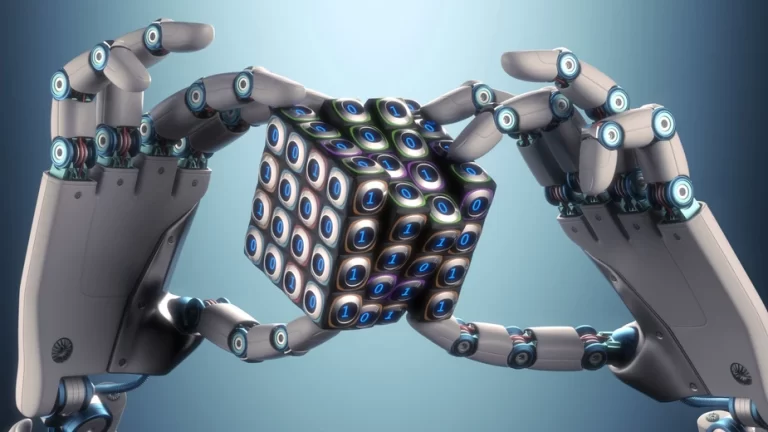
    The advent of AI, which we term as Augmented Intelligence – nothing ‘artificial’ thank you – along with Robotics has brought forth a dramatic paradigm shift to the way the world is developing. Technology is advancing on a daily basis and any responsible organisation will always keep up to date with advances. The soon-to-be world of the students of today will be vastly different to the world we have experienced. AI and Robotics will bring with them a whole new way of working, requiring a whole new skill set.

    Robots are not creative; students of design need to be. The basics of established learning will be eaten into by Big Data, ready for the AI machine to disgorge required information at a frighteningly rapid pace. Actually the word frightening is wrong; I should say exciting, stimulating, empowering pace. It’s all very wonderful, really. When referring to AI and robots we don’t talk about scary technology aimed at ruling the world but rather Aladdin’s genie, eager to please with the power to make magic happen.

    I often refer to the Harvard Business Review for inspiration. After all, you can’t get much better than this. Looking back on past attitudes to development, the status quo could be harsh. The dog-eat-dog, ‘push your way to the top’ philosophy prevailed. Fortunately, those days have gone. It is encouraging to see that the key word that comes out in these articles now is ‘empathy’, and developing empathetic as well as brilliant scholars is at the heart of our endeavour. Of course this more gentle approach does not dismiss the massive change in technology that exists, rather it embraces it. The enhanced human skills of the future needed for growth have been identified.

    Today’s young professionals grew up in an age of mind-boggling technological change, having seen the growth of the internet, the invention of the smartphone, and the development of machine-learning systems. ‘What should I learn today so that I’ll have a job in the future?’ is a question most of them have pondered over at some point.

    “Robots are not creative; students of design need to be”

    I believe we need to concentrate on the following important elements that robots cannot do.

    communication

    Storytelling – how good is it? The most basic form of communication is constructing a compelling story. The good news, from a competitive standpoint, is that most people have turned their brain over to bad software, resulting in the all-too-familiar ‘death by PowerPoint’. Although efforts have been launched to create robot authors, and the impact of robots on fake news and echo chambers is undeniably significant, the ability to communicate compellingly will always be in high demand and hard to automate.

    Content

    Communication must be about a particular topic. If you know a great deal about a given domain, you have a rich base on which to draw. Moreover, if you have an appreciation for the dynamics of that domain, you have something that mere ‘googling’ can never replicate.

    Context

    Automated systems are usually very bad at recognising context. understanding the context, business model, competition, and leadership of a client or an employer makes your understanding of content more useful.

    Management

    Gleaning facts and even finding the solutions to problems is of little help if you cannot manage those facts efficiently. Process is power.

    Emotional Competence

    Robots will never truly understand the human heart. Our options may be set by rationality, but it is emotion that binds us to action. The most basic level of emotional competence is being able to recognise the emotions at play in the context of analysis and action. The next level is the ability to successfully intervene in an emotionally complex situation, when people are hurt or uncertain. At the highest level, emotional competence involves persuading individuals and groups by evoking emotion (while simultaneously recognising that some team members don’t buy into what you’re saying).

    Teaching

    Teaching, or rather, mentoring. If the way we interact with those we are trying to develop becomes the imparting of mere facts, then no good is done. Empathy is vital, care and concern, knowing the individual – all very human qualities.

    Connections

    It is not what you know, but who you know that counts. How often have we heard this? And, although by no means entirely true, there is a lot of reality in this statement.

    An Ethical Compass

    We are beginning to realise just how important ethics and the capacity for moral judgement are in the field of applied AI. The fact that the world will be increasingly controlled by machines lacking an ethical compass amplifies the importance of having people in our future workforce who possess strong moral values.

    Design students need to be ‘equipped for every good work in every way’. That is why they are special.

  • Entrepreneurship versus Family Business: A Difficult Choice

    Entrepreneurship versus Family Business: A Difficult Choice

    Life becomes tough at points where we have to make some important decisions which have a lifelong impact. One such decision is related to making career choices. Out of the many alternatives available, each with its own pros and cons, one must cautiously weigh each one of them to make a prudent career decision. One such combination of choices may be – opting for a self-created entrepreneurial venture, or choosing to join the already established family business.

    Let us now evaluate these two options on the basis of some common parameters. A self-created venture calls for extreme levels of enthusiasm, creativity, and preparedness – to start from scratch in arranging the factors of production, bearing all the risks, and shouldering all the responsibilities alone. This requires a cluster of 4 C’s, including Courage, Conception, Capability and Capital, to establish an enterprise without the background support. Entrepreneurship, therefore, is not an easy venture to enter into. However, it creates immense satisfaction and a sense of independence for an individual to start with something of one’s own, and that too, on one’s own. It is an inner motivation that pushes one to touch the sky of one’s dreams. The beauty of a self-created enterprise lies in the fact that it creates a constant urge for moving on and making one’s dreams come true. Additionally, it can bring that rare inner happiness which one has been craving for, and which is felt when one accomplishes one’s dreams. For all this to happen, it is essential for an individual to be self-motivated, disciplined, target-oriented, inclined to move with the times, and capable of adapting to change. There is also a strong need to be on one’s toes, to work really hard in the direction of dream fulfillment.

    An alternative to entrepreneurship, if available, may be joining the family business and taking the family legacy ahead and forward. One can be the good son or daughter of the house and can take up the family business, aligning one’s personal dreams with the happiness of the family.

    In doing so, there are the benefits of constant background support, capital availability, guidance, and training; and one can be free from the fear of starting from square one. There is a degree of convenience of having things already processed and functional, thereby giving the individual an opportunity to channelize their energy in the direction of business expansion and diversification. This may not only bring a good name to the family business but will also reap long-term benefits for future generations.

    Towards the end, the question arises, “Is the individual ready to take up what his/her forefathers have already created, or is he the one who is constantly making an effort to chase his or her dreams and accomplish them on his own”? The discussion is a never-ending debate and a final choice can be made on the basis of several factors taken into account together. The individual has to understand his own feelings and set his own goals to reach a final conclusion.