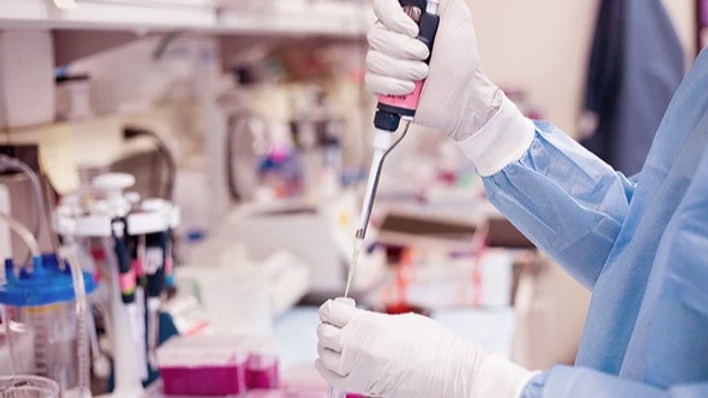
Pathology, or, in current nomenclature, Laboratory Medicine has been the backstage department in healthcare which gives silent support to clinicians. Lab Medicine has various specialisations, such as Pathology, Biochemistry, and Microbiology. In a Pathology Laboratory, there are doctors who have specialised in one of the Laboratory Medicine subjects, a technical team that perform the tests on the bench, and researchers who hold a Ph.D. in basic science subjects.
After completing your MBBS, you can specialise in Pathology, Microbiology or Biochemistry. In this era of specialisation, most Pathologists super specialise in Hemato-pathology, Histopathology, Cytopathology or Molecular Pathology. Some pathologists still continue to be general pathologists who work in haematology, clinical pathology and cytopathology, and manage the Department of Medicine in smaller healthcare setups. The Clinical Biochemists form the backbone of the laboratory and report all the biochemical tests which help in the diagnosis of thyroid, kidney, and liver diseases to name a few. The Clinical Microbiologists are at the helm of managing the diagnosis of all the infectious diseases such as HIV, hepatitis, urinary tract infection, typhoid, tuberculosis, SARS, and Cov2. They also formulate and manage the infection control practices of hospitals and play a crucial role in the management of outbreaks like the Covid-19 outbreak.
The Hemato-pathologist specializes after post-graduation in Pathology and helps diagnose all diseases related to blood-cancers such as Leukemia and Lymphoma, as well as other diseases including thalassemia, anemia, and many more. They do this by using sophisticated tools of flow cytometry and molecular biology. The Histopathologist looks at all the biopsy tissues after staining with simple and specialized stains and works closely with the clinician, specially the cancer surgeon, to form a diagnosis.
For a keen researcher, there is always the option to study new targets for various diseases – to understand the progress of the disease, treatment of the disease and diagnosis of the disease. With treatments being extremely targeted, the role of such researchers is wide.
Most of the investigations in Laboratory Medicine are performed by trained technicians, who are under-graduates or post-graduates in Laboratory Medicine. These are then analysed and interpreted by specialists in Laboratory Medicine. The technical team are the scaffolding of a laboratory.
During this Covid-19 period the Laboratory Medicine specialists have been silently working in the laboratory and supporting all emergency testing, in both Covid and non-Covid hospitals. The role of each specialty in Laboratory Medicine is crucial. Covid-19 infection leads to various inflammatory responses for the Biochemist to detect, hematological changes for the Hematologist to diagnose, and for the Microbiologist, the detection of the virus is most exciting. The Microbiologist, along with the Molecular Specialist, would work to detect the virus and also learn more about the response generated by our body. The role of Laboratory Medicine in the post Covid-19 era will be very interesting, especially for the Infectious Disease and Clinical Microbiology specialists.
If we have learnt anything from the worldwide Covid-19 pandemic, it is the importance of a good education in a safe environment that leads to a high demand occupation and provides for long term secure employment opportunities.
Australia is a friendly and welcoming country, our nation values individual freedoms, and the rights of citizens and visitors are protected under a transparent legal system. Our cities have some of the lowest crime rates in the world and our streets and public spaces are open and safe.
Recognised as a world leader in education, Australia is expected to overtake the UK as the world’s second most popular study destination. Our high-quality education, easy access to student support services, multicultural society and fantastic lifestyle make Australia an attractive study destination.
Australian vocational and technical colleges are committed to equipping students with practical skills and knowledge to help them succeed in their chosen industry. As global demand booms for entrepreneurial and innovative thinkers, Australian education providers have re-engineered their approach to teaching and learning to inspire thought leadership and creativity among students in every discipline.
Australian vocational and technical colleges teach students the practical skills and theoretical knowledge needed to help find success in a fast-changing world and to remain agile in uncertain times. The focus is on equipping students with an education designed to help them succeed in the global workforce; and with qualifications that will make them very attractive to potential employers in Australia, at home and around the world.
Many Australian vocational courses include work experience programs and internships so that students can gain hands-on industry experience and grow their professional network while they study. Students are also permitted to work up to 20 hours per week while studying; which can be a great way to find study-related work, or simply pay for the lifestyle in Australia.
Traditional ‘trade courses’ such as automotive mechanics are in high demand and working as an automotive mechanic provides a good work-life balance and an exciting and varied career path; with employment opportunities available not only in Australia in both regional and city areas, but also world-wide.
Institute in Focus
In Australia, Oceania College of Technology specializes in providing training for the Automotive Industry which is industry-focused and driven, providing hands-on skill development and theoretical training. This includes industry placements and internships in a variety of courses, such as the following:
Light Vehicle Mechanical Technology
Automotive Diesel Engine Technology
Heavy Commercial Vehicle Mechanical Technology
Body Repair and Refinishing
Automotive Mechanical Diagnostics
The college is now taking expressions of interest and applications for its April 2022 semester intake. Email: int.admissions@oct.edu.au for additional details or to request an application/enrolment form.
Travelling – it leaves you speechless and turns you into a story teller.
– Ibn Battuta
Travel and you will explore the beauty of this world; where every place will excite you and give new experiences and create memories that will not only bring peace to your mind, but keep your heart happy. My love for photography was innate. I believed in a simple philosophy – anything that is beautiful should be captured and kept in the memory. Today the world is full of opportunities that once were never thought of. Look around and with a little commitment you can turn your dream into reality. In following this profession I have been able to travel to many countries. I experienced locations that I, as a tourist, wouldn’t have cared to go to. I remember once when I had gone to new zealand for a shoot and my team and I trekked to Mt. Cook with all our heavy equipment since there was no mode of transport available, simply so that we could create memories for the people we were shooting for.
We travelled to Death Valley, Nevada – in the middle of nowhere – for the sheer amazement of it. We waited hours for sunrises and sunsets while indulging in the pleasure of watching the beauty of the wonders created by god. I roamed in the streets of Venice to capture the romance in its old culture. I have shot in the deserts of Dubai, leaving a part of me there. I have been a part of the memories of couples whose life’s journey is just about to begin.
Shooting is my passion – but it takes an incredible amount of patience, commitment and the heart of a wanderer to get out of your comfort zone and experience the treats this world has to offer. Every place has a uniqueness, just waiting to be explored by a photographer’s perspective. You can weave the story that you want your pictures to tell. Nothing inspires me more than interesting people and gorgeous places, and when you combine the two it is pure magic, and you freeze that time to create memories that will last forever.
Being a fashion and a travel photographer has its own perks. All you need is a good camera and an eye for your surroundings. You become an independent storyteller and your imagination has no boundaries. But there is lot of hard work needed to get there.
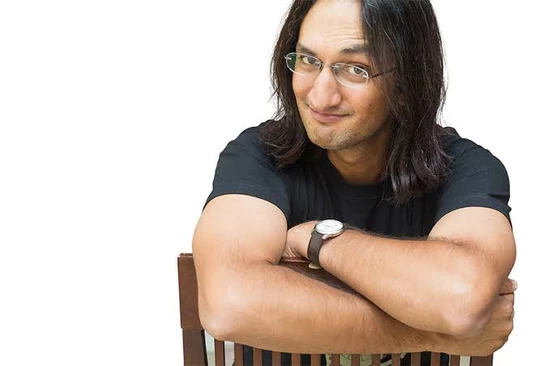
Hailed by Forbes Magazine as ‘the global face of Indian stand-up’, Papa CJ is an award-winning, world-renowned international stand-up comedian. He has performed over 2000 shows in over 25 countries across the world, and as per the Harvard business Review is ‘one of the most influential comedians around the world’. He holds an MBA degree from the University of Oxford and is an experienced motivational speaker. He has been invited to speak at Harvard University and the University of Oxford.
Some of his lesser known achievements include being a corporate coach, having trained employees at over 50 blue-chip companies globally; he also consults with brands on concepts and content strategy; and his pet project is his initiative called The Happiness Project, whereby he performs in support of charitable causes across the world. His maiden book, an autobiography titled ‘Naked’, was launched at the Jaipur Literature Festival in January 2020 and has met with excellent reviews all around. We had the opportunity to ask him a few questions about how he came to find his calling in the world of comedy.
Growing up in India, do you recall how you first became familiar with the art of stand-up comedy?
I was exposed to stand-up comedy in the UK. After completing my MBA degree from the University of Oxford I took a job as a management consultant in London. After 3 years in that job I had paid back my loans and so I took a one-year sabbatical. During that year off I went to the Edinburgh Fringe Festival and saw stand-up comedy for the first time. I loved what I saw and three months later I took to the stage for the first time. I did 700 shows across the UK in my first 3 years and have never looked back since.
When did you start to think of it as a career option?
Stand-up comedy in the UK was great for learning the craft but I had to take up jobs on the side to be able to support myself. I moved back to India in early 2008 and did my first multi-city India tour that year. In early 2009, I started the English language comedy circuit in Delhi and slowly English language comedy began to enter the popular conscience. However, I’d say it took till 2011 for me to earn enough to be able to legitimately call stand-up a career option.
How did your family react to your decision to shift from a dependable consulting job to stand-up comedy?
My family has always been incredibly supportive of my endeavors and it was the same with stand-up comedy. It also helped that at no point was I not sustaining myself financially. It was only 10 years into my comedy career that my parents told me that they thought I’d do stand-up as a hobby for 6 months and then stop, but to their surprise I kept going on.
What is the most appealing aspect of your work?
That would be the fact that I don’t consider it ‘work’. It’s play. And for me there is no high greater than performing in front of a live audience and seeing them laugh.
What has been your most memorable performance so far?
I have performed to a sold out Sydney Opera House and prestigious stages in New York, Las Vegas, Johannesburg, London, Singapore and many other cities across the world. However these aren’t the shows that give me the most joy. Under my pro-bono initiative called The Papa CJ Happiness Project, I visit the homes and hospital rooms of people who have been unwell for a long time. Those are the performances that mean the most for me because I am not only able to lift the spirits of someone who has been in an unhappy space for a while but also bring tears of joy to their loved ones by making their family member laugh.
How have you seen yourself evolve over the years?
The first line in my autobiography titled ‘Naked’ is ‘stand-up comedy is an outward expression of an inward journey’. The answer to this question is pretty much the whole book and you’ll have to read it to find out.
If it were magically possible to do so, (knowing what you now know) would you change anything about your education and the path you chose?
As cliché as it sounds, I don’t think that way. You do what you feel is right at the time and my life choices are what have brought me to where I am today. So I wouldn’t change anything.
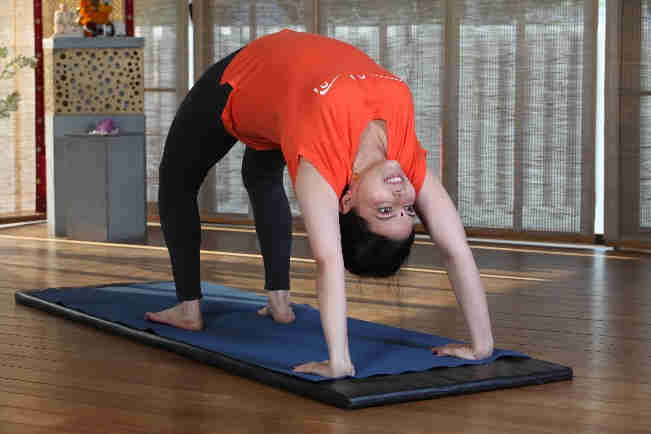
I met Guruji, Dr. B.K.S. Iyengar in 1996, at the lowest point in my life; and there was no looking back after that. After suffering for almost 12 years and being virtually bedridden, when I had to use a wheelchair I felt that all doors had closed for me. I felt utterly helpless and hopeless. Doctors said that I could never ever live a normal life again. Spinal surgery was presented as my last option, as I had suffered a slipped disc at the age of 15; and as no x-ray revealed this at the time, the condition was not treated properly. I was so disheartened that I wrote, ‘I Can Never Ever Become Alright Again’ on a paper with a bold, black marker, and stuck it on my study table. It was impossible for someone as young as I was to accept that she had become an invalid.
Luckily, Guruji diagnosed my problem without even looking at my MRI reports. He only needed a glimpse of the part of my neck that was visible above the t-shirt to know what the problem was. In that moment, I realized how learned he was. That was when I decided to surrender myself fully to his knowledge and experience. It was an instant connection, like that between a mother and child.
I never realized it at that time, but Guruji had seen some unusual qualities in me, right then. Finally my training began and he admitted me into the Medical Class, which took place on Tuesdays and Wednesdays. When I heard that the class was only twice a week, I thought this was too little; but I soon realized that those two classes would make me tired for the rest of the week! All of a sudden, a body that lay flat on the bed became alive and active.
As a scientist, I was amazed to see Guruji’s knowledge and experience, as he had not studied in school beyond Class Eight. Generally, in the Medical Class Guruji never explained the logic of what he was doing to any student, but he would make it a point to explain it all to me. Interestingly enough, I would theoretically understand what he said and slowly my body also started responding.
On the twelfth day of my medical class, he asked me to perform Adhomukha Vrikshasana (hand-stand) and I looked at him with a bewildered expression, wondering how I could lift my heavy body on my weak and non-functional hands, but by the time I could understand anything he had positioned me to stand on my two hands. I suddenly realised that my non-functional hands could be made functional by practicing every day and the confidence which I had lost for twelve years, was back in a mere twelve days.
When he started training me there were many different poses every day, as he was giving me sequences according to my needs, which changed with the daily progress. These were difficult poses for any normal person, and yet I was able to do them. I can attribute my success in learning those asanas to the unique qualities of Iyengar yoga:
Sequencing of asanas
Timing of asanas
Improvisation of asanas
Usage of props invented by Dr. B.K.S Iyengar.
These qualities are what make Iyengar Yoga extraordinary, and they are the reason why it can be practiced by everyone, no matter what their physical condition may be. The results are phenomenal.
I did not even realize it, but at some point in time, while healing me, Guruji began to train me as a future Teacher. Now I feel that he had already decided that I had to open the first Iyengar Yoga Centre in India’s capital, New Delhi; which had been his dream for forty long years. ‘Yogakshema’ is the first Iyengar yoga centre in Delhi, which I established, and it was inaugurated by Dr. B.K.S Iyengar on 25th April, 2007. At Yogakshema, I conduct normal and medical classes to help suffering humanity. The thought in my mind which gave birth to Yogakshema was – “Whatever I have lost nobody should, and what I have achieved through yoga should be shared with all.”
If I could go back to playing professional tennis again, I would in a heartbeat!
A journey that started on the tennis courts of Modern School, Barakhmaba Road culminated in me achieving my dream of representing India and winning for my country. I had the fortune of playing in the Davis Cup for India and also winning an Asian Games Bronze Medal at the 2002 Busan Asian Games, South Korea.
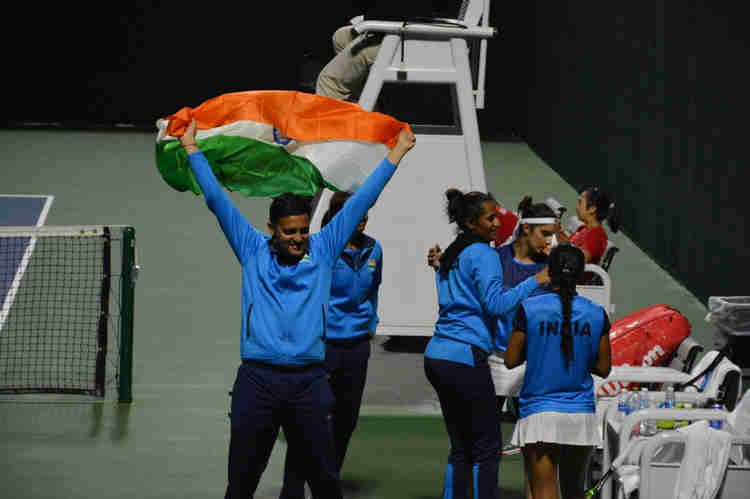
Currently, I have the honour of being the Captain of the Indian Fed Cup team, and we recently created history by becoming the first Indian team ever to advance to the World Group Playoffs in Fed Cup competition.
The road was always tough, but challenging and exciting. Growing up in the eighties and nineties – with no support for sports – chasing my dream was an uphill task. Fortunately for me, I have a loving and very supportive family that always encouraged me to chase my dream wholeheartedly. My school supported me in every way they could, my teachers never putting any pressure on me to top in academics, but always holding me accountable for keeping my grades respectable. I became India No. 1 in both Boys Under-16 and Under-18 categories, and went on the get my degree in B.Com (Hons.) from Sriram College of Commerce, Delhi University.
My journey as a professional tennis player took me to several parts of the world, which really helped me grow as a human being and made me more aware and sensitive towards different people and their cultures. I made many friends along the way who remain dear friends till date, even though we barely meet due to the distance.
To be a professional player required a lot of desire, discipline, determination and dedication from an early age. I didn’t attend parties or go out with friends as I was always busy training or playing tournaments. I was so passionate towards my game that nothing distracted me from what I wanted to achieve. My day started at 4:30 am and ended at 7 pm after training before school, attending school, and then training again after school. It was exhausting, but always seemed so easy to do.
There were many defeats along the way, but every defeat only spurred me to work harder and become better at my craft. Injuries also played a part, and again the same resolve helped me bounce back.
Where I suppose I lacked the most was in support that I got to help me pursue my dream. Tennis and travelling to play tournaments is expensive, and I received no sponsorship or help from any company or government – it was only my parents savings which helped me reach a level where I could play and stand on my own two feet, and eventually pay my own bills. The first time I received any money from the government was after I won an Asian Games Medal. But I never played for the money, I played because it was my passion, my dream – and the fact that it helped me pay my bills also never hurt.
“Dreams do come true if you work towards them with every ounce of energy you have”
There were many losses, but I never felt defeated; there were many injuries, but I never felt hurt; every time I got knocked down I chose to stand up again and fight, as that was the only way forward. I remember in 1998 during the semi-finals of the National Championship I was leading 6-4, 5-4, 30-15, when I fell down and broke my ankle and was out of the game for four months. It was especially hard, as not only was I not able to win the Nationals that year, but also the two finalists were going to be selected to represent India at the Asian Games that year, an opportunity I missed. I did go on to play in the 2002 Asian Games and I won a Bronze Medal for the country.
In the year 2000 I made my Davis Cup Debut against South Korea in my hometown of Delhi. In 1991, I was a ball boy when India played South Korea in Davis Cup in Delhi, Ramesh Krishnan and Leander Paes played for India and in 2000 I made my debut on the same court, playing alongside Leander Paes in a must-win match for us; Ramesh Krishnan was our Davis Cup Captain. Dreams do come true if you work towards them with every ounce of energy you have.
In 2001, I suffered a knee injury which kept me out of the game for six months. Most people thought my career was over, but they did not know my resolve. After healing myself I returned to tennis and had some of my best results over the next five years, which included the Asian Games Medal, National Championship and many international tournament victories. I finally had to retire in early 2007 as my dust allergy flared up due to the construction for the 2010 Commonwealth Games in Delhi and I had to stop playing professionally. That was a tough pill to swallow as I wasn’t ready to retire; I knew I had a lot more tennis left in me, but alas, on medical advice I had to stop.
Since 2008 I have been mentoring and coaching youngsters who want to go down the same path as me and pursue tennis as a profession. I was appointed Indian Captain for the Junior Davis Cup Team in 2010 and in the six years I captained the team, I was able to take our team to the World Group, where only 16 teams from all over the world compete. We qualified from our Asia Oceania Group and some of those youngsters today are representing India in the Davis Cup.
In 2019, I was appointed Captain of the Indian Fed Cup Team, a huge honour and a big responsibility. Our team had never ever been able to make it to the World Group Play-Offs. In 2020, we have done it and have become the first Indian team ever to qualify for the World Group Play-Offs. It’s a big stepping stone for women’s tennis in India and I am sure it will give a big boost to all the women and young girls who aspire to pursue tennis. It has been a shot in the arm for Indian tennis in general.
To everyone who wants to succeed in sport, in life, I say: your will has to be greater than your skill. Chase your dreams with everything in your powers and enjoy the journey. You may succeed, you may not succeed in achieving your dream, but you will always know that you gave it your best!
We all have choices to make about the career we want to go into.
When we make this vital choice we are still very young and we decide based upon many factors. Probably, the three key issues that determine what route we take are education, Desire and Peer pressure. Most people begin their career by combining these three in their thinking. We may have a degree in economics, but our real interest lies in social welfare, but our family and friends might want us to go into their family business or some other route, and so it goes on.
It is a big decision and not easy.
BUT even if you make the wrong decision and spend a few years doing something you decide is not for you, you can still change. And often people change their life by becoming an entrepreneur. You are never too young or too old to start your own business or join a friend in their business. It is NEVER too late to change. Some people become entrepreneurs as old as their sixties, or even older.
BUT you must remember that to be an entrepreneur is high risk, and must have the right personality and character to do this very difficult job.
Make no mistake; being an entrepreneur is one of the hardest things to do.
What are the character traits of the most successful ones? If you don’t have some of these at a minimum, you may struggle to make it in the tough world of start-ups.
Passion for the project
Belief in the project
Strength of Purpose
Adaptability
Resilience
Perseverance
Determination
It also pays to be a good listener and take advice from advisers BUT without compromise from the core purpose.
Additionally, you have to know that at any moment things can change and you will need to manoeuvre fast to save the day. Black Swans are now a normal part of life and being an entrepreneur means you are vulnerable to the effects of them.
You need a grasp of numbers as “Cash is always King” and understanding the key financial metrics are vital to success. You cannot rely on others on this. Understand how the numbers work and what they mean for your business.
You must be a good team player. If you are the leader of the team then lead but listen and motivate your core team. Lead all the company members and inject the passion you have for the project into all of them.
You need to be the culture manager as all staff will follow your lead. They will also follow your behaviour patterns – if you are rude they will be rude; if you are angry, so will they be; if you are kind, so will they be. Decide what type of company you want to create and it can be formed in your image.
As an entrepreneur you will live a lonely life. Especially if you are the leader. Be ready to have ups and downs and be ready for your family and friends to not understand why you are that way. Only peers in similar businesses will understand your feelings. So being a leader of a start-up is a VERY difficult thing to do and a career choice that is easy to make but not so easy to be successful at.
Entrepreneurs have an ingredient within them that drives them forward. Often this ingredient has been added to their character early in their lives. Many successful founders say they were determined to prove to others they could do it! Could be the parents OR the siblings OR any key influencer in their youth. It is quite often not money that drives them, but success and ego.
“So being a leader of a start-up is a VERY difficult thing to do and a career choice that is easy to make but not so easy to be successful at”
So how do you know if you can be a successful entrepreneur?
Well, to start you need to have the flame burning within you. If this passion does not exist then you are probably making a mistake.
You need to have a long term horizon. You probably won’t make much money for a few years.
You will need to understand that it will probably take five to ten years before the business shows success enough to reward you. It is very unlikely to happen overnight.
My personal experience:
I started a number of software businesses in the eighties and nineties when it was great to be a software entrepreneur. The heady days when anything was possible. I surrounded myself with people better than me in their discipline – a top sales guy, a top marketeer, a great tech guru, etc. Without the team, I would have failed. No one can do it alone.
After exiting a couple of businesses (one was sold to a part of Moody’s India) I started my investment company in 2012. Again, learning from the past and what I believe strongly in, I surrounded myself with top talent. We are now the leading early stage investor in UK! Teamwork always prevails over a one man band!
We have now invested in over 200 start-up companies and it is quite clear why people succeed or fail. They succeed because:
The founding team have complimentary qualities
A clear, understandable product vision
A clear route to market
An ability to pivot and change as and when the black swans emerge
Plus, it always helps if there is a team of at least two at the start. The team should have compatible qualities and skills. A great example is a company we invested in seven years ago. It is now worth 450 million dollars. Why? Because the initial founding team of three are still together and they have compatible skillsets. There is a great sales guy as CEO, a top techy as CTO and a well organised person as COO. They work brilliantly as a team of three. We now invest ONLY if we like the team. The ideal team is like the one above; with a leader who has the vision, passion and people skills to get talent to work with him or her. A leader can get the best talent at a fraction of the cost that they would expect elsewhere. They do this by selling the vision and creating the path to success.
This brings me back to why you would want to become an entrepreneur?
Simple answers:
If you want the best ride of your life full of adventure and ups and downs
If you want to be your own boss – Some people are very happy going to an office of a big company and seemingly doing a job, but they don’t often like this job. They will get paid better than in a start-up, BUT can they say it’s exciting ? Can they say they did something with their lives? Can they say they tried to change the world?
There are (at least) two types of people; the doers and the sleepers. The doers are the entrepreneurs. They change things. They move the paradigm. They actually matter more than the sleepers in the big scheme of things. The sleepers sleep at their big corporate desk.
You should decide which one you are going to be. There is nothing wrong with being a sleeper of course…most people are! But it is so much more exciting to be a doer and be in charge of your own destiny and life. Even if it goes wrong. You are responsible for your own future, not reliant on a big company. And remember that it is even harder now to work for a big company after the pandemic. Nothing is secure any more. They can fire you easily and you are then left in a void. Taking charge of your life, tough as that can be, gives you more autonomy and more responsibility for your future.
So my answer to “Who wants to be an entrepreneur?” would be EVERYONE. It is tough. It is volatile. You might be poorer. You might have more sleepless nights. BUT, my goodness, it is more fulfilling. It is more exciting and it is much better to be in charge of your own life. After all we only have one of those!
Good luck entrepreneurs around the world! Come on, help change the world for the better!
I recently I had an interview with a young professional. We discussed the position, with questions back and forth where he made a very good impression. At the end of the interview, he asked an interesting question: what would be your recommendation on how to take care of my development for such positions?
Before I say anything else, this is one of the best approaches one can take. This person wasn’t looking at simply getting a job, he was looking at developing himself for a career that he finds interesting and motivating, and possibly has or doesn’t have the skills for. In essence, he was getting feedback on how others view him and was getting pointers for his personal development. No rocket science, but an elementary, important, and future-oriented question.
If you are strictly thinking about development only on the level of ‘knowledge’, then please remember, that development is not only about this. It is also about social, spiritual, emotional, and physical areas that could be played out in our personality, skills, emotional intelligence, relationships, conflict resolution, behaviors, habits, disciplines, time management, work-life balance, just to name a few.
“If you are strictly thinking about development only on the level of ‘knowledge’, then please remember, that development is not only about this”
But how do you get there? Is there a recipe? A formula? I doubt it. You might read different books and get different answers, but the three main things that have worked greatly as a basis for this development journey have been the following:
Companionship: Today more than ever, many people that pass through our lives leave traces, and influence, and guidance, and so many other things with us, whether we want it or not. Simply said; we are influenced by the network of people that surround us. Be deliberate about the type of people you are spending important time with, what are you learning from them? What habits are rubbing of? Are you developing and elevating each other? Are they there backing you up and are you backing them up? What kind of mentoring and support system do you have? Don’t walk alone, walk strongly accompanied.
Curiosity: Keep your mind and self in a learning mode. Try out new things, experiment with new ways of approaching situations, learn from others, ask questions, engage in a micro-learning, put yourself outside of your comfort zone. By doing this you are discovering new aspects and gaining new perspectives that will enrich you. Research, apply, learn.
“Be deliberate about the type of people you are spending important time with, what are you learning from them?”
Reiteration: Development never ends. It is an unremitting activity. It requires discipline to create the time within that endless cycle to be able to self-develop and to self-reflect on the needs that you must develop. Do it, continue, don’t stop, repeat, and start again.
When your development journey in all areas is important you will find the ways to do it (curiosity). You will find people, friends, mentors, peer coaches, that will be there with you along the way, sharing accountability with you (companionship). And you will be trying new things again and again, improving, learning, going through the next cycle, reaching the next level (reiteration).
To be sure, there are many different approaches to this. This is my ‘recipe’ I am sharing with you.
I am definitely interested in your stories, please feel free to connect with me through LinkedIn and share how you are growing and developing yourself.