Category: Career Guidance

  • Why Reading Sustains

    Why Reading Sustains

    “Is reading an activity restricted to those who embark on a career of higher education and teaching? No, not really. While it is true that today’s digital world provides irresistible audio-visual distractions, there continues to be an explosion in publishing”

    Teaching at the university for over three and a half decades, I can no longer remember a single day bereft of reading. As a graduate, I speculated about the unknown future but elected to do an MA in English Literature; to which my love for reading brought its own epiphanies and closure.  At the end of five years of a specialized course in literature, I was very clear that I did not want to study law or attempt the civil services. As a career choice, I opted to teach awhile because teaching allowed me to earn a little money; but, more importantly, it let me continue with the habit of accessing university libraries, which are extraordinary spaces in a poor country like ours. I could browse and read abundantly in college libraries as a student and subsequently as a teacher. I also haunted second hand book stores and pavement stalls in different parts of Delhi, on different days of the week. My access to a varied number of books allowed me to chase ideas and concepts and read endless books of fiction, biography, poetry, non-fiction, learned essays and theories every day of the week.

    I cannot say that I started off as an extraordinary teacher from my first day at the job since that did not happen. Initially, I was frozen with terror at the thought of speaking for over forty minutes. I wrote out lectures copiously and practiced them in front of mirrors for weeks before my fear could thaw out and I could lecture to a class full of young people. In the initial teaching year, it was a huge effort to stay one step ahead of my class. While I was stimulated and excited by the ideas and concepts that found their way in discussions, I remained apprehensive about not having read enough to further my arguments. I planned to continue to read and teach and learn along the way, till something more exciting turned up and presented itself as the true vocation.

    I discovered innumerable books that had been written which I had never heard of and the possibility that I might never finish reading most of them began to slowly dawn upon me. Despite a reasonable reading habit from early years at school and diligent supplementary readings thereafter, I realized that one lifetime is seldom enough to read all the books that exist in any language; and as more people accessed writing and publishing, the numbers of books outside prescribed syllabi grew in geometrical proportions on an everyday basis. I discovered eventually that reading was the only consistent skill set I had at my disposal. Therefore, my vocation was after all about absorbing, analyzing and discussing the books that I read and their contexts.

    Is reading an activity restricted to those who embark on a career of higher education and teaching? No, not really. While it is true that today’s digital world provides irresistible audio-visual distractions, there continues to be an explosion in publishing. The printed book continues to have its day, despite its e-competitors, although free access to books and libraries remains a hurdle.

    “Turning to the printed page, leafing through literature, poetry, and written narratives; people have been looking for answers, for understanding, for connections, and perhaps for solace and reassurance that they no longer find in the monotonous, fear-filled, socially distanced and sanitized worlds that they inhabit”

    It is first and foremost a privilege to be able to read. Languages and scripts are the most valuable tools that human civilizations have devised. Humans use language all the time, for a whole number of different activities. Language is needed to identify and classify and name things in the world for us to function at the most basic level. Languages have evolved around a huge range of references. Languages inform, disseminate, instruct and entertain; and at the optimum levels give us both literature and poetry, written in innumerable languages all over the world. Literature and poetry, vehicles of the human imagination also contain in portable form: stories, myths, chronicles, dramas and histories that have been handed down in different cultures for a very long time. The written word holds clues and secrets about the human past that are readily unlocked for every curious reader, keen to learn. Yet, despite the generous nature of the book, to take down a real book from a shelf and read it at an unhurried pace has become one of the less-chosen options for twenty-first century neophytes.

    At the peak of this technological age, when the world and its aunt were cruising along on mono-lingual global expressways, Covid-19 struck, and brought the entire world to a halt.  A humungous pandemic, unpredictable and uncontrollable, continues to keep the world as we knew it in abeyance. It has been a continuous dark night and devoid of all manner of quick fixes; with the result that everyone who can read has gone back to doing so. Turning to the printed page, leafing through literature, poetry, and written narratives; people have been looking for answers, for understanding, for connections, and perhaps for solace and reassurance that they no longer find in the monotonous, fear-filled, socially distanced and sanitized worlds that they inhabit.

    A few decades ago, in the last quarter of the previous century, most of us gleaned valuable inputs about the world we lived in and its varied cultures through the books we read. Without really planning any of it, we have been returned to the same space. It is time for us to listen and learn all over again, if we are to make sense of our lives and make our world humane again. What better way to do this than by listening quietly to the voices that confide in us in many languages, speaking of their deepest feelings and fears and sharing their secret hopes and dreams; voices of older human ancestors who lived through difficult times and wisely wrote them down, providing us with innumerable word repositories. It is this treasure trove – guarded by sentinels from an older time, providing glimpses into ancient history, wars, pandemics and mass destruction – that allows us to hope that there will be light at the end of the tunnel.

    The article was originally published in Career Ahead January 2021 issue.
  • Model of Hope

    Model of Hope

    Is it difficult to imagine that a boy battling intellectual disorder would make a mark in golf? Well, there is an interesting story to tell.

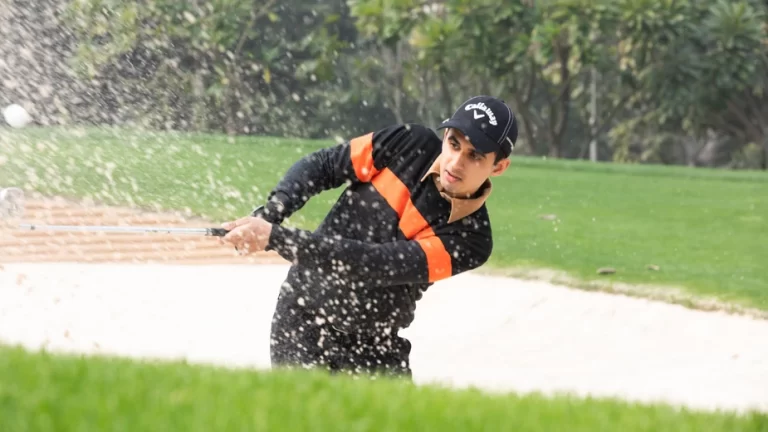
    My name is Ranveer Singh Saini. I am a 20-year-old special needs golfer, a Gold and Silver Medalist in the Special Olympics, World Games.

    But this is not how I started!

    I was diagnosed with Autism at the age of two. My childhood was full of odds and hurdles – numerous interventions, therapies, special education, occupational therapy, speech stimulation, sensory diet, calming medicines. These were part of my daily routine. A report chart that indicated slow progress! My world was limited to my parents, my caretakers, a few close friends and my siblings.

    One day my parents took me to the golf course, and that was it. It was as if golf was drawing me towards it. I started accompanying my parents to the golf course every single day and started taking it as a challenge. As a game of concentration, accuracy, body and mind control, golf seemed to be the last game which my therapists and special educators suggested. However, overcoming all stumbling blocks, I started training under the National Coach Mr. Anitya Chand and began practicing and pursuing golf with a professional perspective.

    Finally one day, that turned out to be life-changing! The Asia Pacific Golf Masters, Macau, 2013 – the mega event that opened new pathways in my life. Being the only special needs golfer from India, I was representing the hope of millions at the Asia Pacific Golf Masters, Macau, 2013. And today I humbly admit that I didn’t let my nation down. And then, there was no looking back.

    Winner of five gold medals at the Asia Pacific Golf Masters, Macau – my victory featured as a record in the Limca Book of Records for four consecutive years (2013-2016). I was bestowed with one of the ten People of the Year 2016 award by Limca Book of Records and was awarded ‘Sportsperson of the year 2015’ by Sports Illustrated India.

  • Q&A with Tatiana Kolovou

    Q&A with Tatiana Kolovou

    As a Senior Lecturer at the Kelley School of business, Indiana University, Tatiana Kolovou teaches Business communication and Cross Cultural Communication to undergrads and MBA students. Tatiana is a professional speaker, trainer and LinkedIn Author, having authored 16 courses in the LinkedIn library, including the best-selling Communication Tips, which has over 2 million views. Born and raised in Athens, Greece, Tatiana has been based in the US for the last 35 years.

    We had a great opportunity to talk with Tatiana about the importance of first impressions and how one can work on improving their communication skills.

    Q1. From a professional standpoint, how important is a good ‘first impression’?

    A1. It is critical. Our brain subconsciously makes a decision if someone is a friend or an enemy, it’s a kind of primal reflex that we have. Even if we meet someone on the street who we are not going to see again – we quickly decide. First impressions are formed in milliseconds, not even one second or three seconds; and we know this from published research on social cognition. So we must be quite mindful in the contexts where we want to be aware of what impression we make. Mind you, we are not always cognisant of first impressions we make when we meet someone in the market, grocery store, bookstore, or on the street; but if it is in the business world, when we are meeting someone for the first time we may want to influence that more and must be mindful to that effect.

    Q2. What are the crucial aspects that determine the impression we make on others?

    A2. Research on social cognition tells us that there are two dimensions – the first is likeability; the concept of warmth, deciding if someone is a friend or not, and we make that decision first. But, we then also decide if we trust the person enough to want to be on their team or to listen to what they say – that is the competence aspect. So, there are two components – warmth and competence. This study was first done at Harvard by Amy Cuddy and her research team. And even though we weigh both components, we first decide on warmth and then proceed with competence. These are crucial aspects of that first impression. For instance, in the context of a day care service where we take children, we want for the teachers to be not only very well organized and for the place to be clean, but we want the teachers first to greet our children and be warm with them. But then, we also want to trust that our children will learn. So that’s a good example of warmth and competence. The same stands for someone starting a presentation in a meeting – we want them (even though they may get right to the point) to make an effort to be welcoming at least, or to show warmth before the meeting begins, because we make decisions based on that.  Since I also teach cross cultural communication, I would have to add here, that this depends on the context.

    Q3. What factors help to build trust when the aim is to influence others or sway their opinion?

    A3. To build trust you have to have a comparatively longer-standing relationship. Perhaps more than one or two interactions, or you have to have back and forth in a working / professional relationship. Building trust again depends on the context. Many times people trust you before they even know you, because you may be associated with an organization they trust. If it’s a famous consulting company or firm that is a known brand, one assumes that this person is trustworthy and should get a chance, as opposed to someone unknown. But in a context where you’re working with someone, you look at many different aspects of how trust is influenced – for example, the person’s reputation or what we call their ‘brand’.

    There are certain behaviours that build trust. Does the person follow through? Do they keep their word? Do they have a network that can be useful to you? Do they bring together a good argument? Do they have their facts right? And, most importantly I would say, for people to influence others and sway their opinion, they have to be looking out for that other person. So if I’m trying to convince someone that they should do something, I should say, ‘this is good for you’; I have to focus on the person and what’s in it for them. I need to know them and what they want, and what they value. A very important part of trust-building is understanding your counterpart and what is a win for them as well. This takes us back to relationships – showing warmth and connecting with others at their level. So, knowing your context and knowing your audience to create that connection is an important factor.

    Q4. What are the non-verbal aspects of communication that one can work on to improve their presence? Which specific non-verbal communication has the most impact?

    A4. Presence definitely is based on non-verbals. Just one face-to-face interaction carries over ten thousand non-verbals; because non-verbals include intonation in the voice, use of space, how you stand, where you sit, what you’re wearing, how you gesture, and facial expressions. You can imagine that all of this is important. In a business setting or a meeting ‘how you show up’ would be quite significant, and that involves literally – your aura – your energy that you bring with you; how you stand and how you walk into a room, or how you sit in a chair. That’s how you show up.

    Next, eye contact – I would say out of all non-verbal communications this comes first. Not just constant eye contact, but respectful and flexible, because in some cultures looking straight in someone’s eyes does not have the meaning it would in others, and we need to be sensitive to that. A lot of what we communicate is with our eye contact.

    In the business setting, another critical non-verbal is a firm or confident handshake (I’m referring to the pre-Covid era of course). A handshake communicates confidence and ease between the person who is initiating it and the person receiving it. And then gestures and facial expressions are obviously significant. Dress and everything that involves dress – how a person carries themselves. For instance, if you see a person wearing a very expensive or well-tailored suit, but if they are not comfortable or confident in their stance – that sends a message. The same way, sometimes women wear heels higher than they are comfortable in. This can make them feel awkward, not comfortable in their own skin. So however you dress, you should be mindful to communicate a comfortable, for you, message. You want to be comfortable, and you want that to be part of what carries your brand. There is a really good book called ‘Power Cues’ by Nick Morgan, which discusses this in detail.

    Q5. What is an effective method to improve speaking skills?

    A5. It takes practice. In his book ‘Outliers’ Malcom Gladwell talks about 10,000-hour activities, the idea that people can become experts in any subject in 10,000 hours. I would say speaking takes more than that, as a non-native English speaker it’s definitely taken me more than that. But if there’s one thing to improve your speaking skills, its practice – practice, practice, practice. And possibly, put yourself in situations where you have to speak with conviction, where you have to get attention. My daughter, for instance, is a second year college student, and she is at home because of Covid and is attending university online. Because she felt quite secluded, I recommended that she volunteer with the girls’ swimming team for the local high school. We had a long conversation about how speaking in coaching – standing on the deck and calling out commands, needing to get attention from others and being comfortable hearing your voice – that is a fantastic practice opportunity to improve one’s speaking skills. So, try to put yourself in situations where you have to do a lot of practice. Practice impromptu speaking; there are several apps to help with this. One is called ‘LikeSo’ and it is in the app store. Another one that I really appreciate because it’s very innovative and progressive is called ORAI – Oratory Artificial Intelligence. You can practice impromptu speeches and keep improving your scores, and you can do this privately.

    Q6. How has the current scenario post-Covid, with most official work taking place online, impacted business communication?

    A6. Reflecting back to your question on first impressions – remember that even before Covid, our first impressions quite often are made with the picture that we post on our LinkedIn profile; or the intonation of our voice in our outgoing voicemail; or the tone and respect that we show in an email that we send out. So, first impressions are not always face-to-face. And in a the post-Covid, or Covid world we live in now, our first impressions are carried by our background and in our lighting, in the position of our camera, in all the ways that we are able to affect or show energy that comes across in a camera. I believe that post-Covid, we are still going to carry on a lot of business virtually, because it’s cheaper and more efficient. So it’s going to be very important that our communication maintains a certain level of crispness and impact. Being attentive to details and being able to carry our brand positively is extremely important.  For more on this topic, see reference #4 in the latest LinkedIn Trends for 2021.

    Q7. In your personal experience, what are the innate qualities of good leaders and effective communicators?

    A7. Number one is awareness. Be aware how you come across. Get feedback from others. Some of the best feedback that I’ve received is feedback that I wasn’t expecting. But I do ask – what did you think of me when you first met me? How did this come across? You need to ask questions of people you can trust. Have some awareness of how you show up and how you come across and then see if you can influence it.

    Good leaders and communicators understand their audience and they come prepared; they don’t bring a cookie-cutter approach to everything. Once they know who their audience is and what they need, they change their style, they adapt. Mind you, this does not mean that they are being manipulative or inauthentic. They are showing flexibility, they are not rigid.

    Good leaders and communicators build trust first and they have a network that can help most. Remember, building a network is not something you do when you need a job or you need something. Having a network is the ability to pick up the phone and ask somebody (who may be living thousands of miles away) to do you a favour; and, because of the energy and goodwill that you’ve invested in the relationship, things happen. So, good leaders and communicators have that.

    Good leaders and communicators function with a strong sense of integrity in everything they do. They function with integrity even when no one is looking. With trustworthiness and definite competence they will get the job done, they will get it done right and detailed as if they own it, even if they may not. And they do it with a level of care, and relationship and with best intent for everyone involved.

  • An Insight Into Design and Architecture

    An Insight Into Design and Architecture

    I stepped into Interior Design with a rosy picture of beautiful things and beautiful homes, but very early in my career I discovered that to be a successful interior designer, many more skill sets are required, it’s not just about design…

    I was lucky to have had the opportunity to design the luxury train ‘Palace on Wheels’; that said, I realize now that I was quite young at the time and did not at first realize the intensity of the project. Overnight, I had to start interacting with ministers, bureaucrats, government and railway employees and the media! I also discovered what government red tape was all about. I think somewhere in the back of my mind I knew that this project would not be easy, but in spite of that I was not ready for what hit me! The project had to be designed and executed in a span of five to six months. The train was booked to run on a specific date. There was no grace period, no buffer days. Still, in spite of all the constraints, we came out hugely successful. This project taught me discipline, how to multitask and work round the clock for high pressure projects. That same year, ‘Palace on Wheels’ was nominated as one of the best three trains in the world. Soon after this project, we designed another luxury train for Gujarat – ‘The Royal Orient’, which was an even more challenging project than the first.

    During this time I often felt that I had bitten off more than I could chew, but I soon discovered that there was still more to come. ‘The law of attraction’ seemed to be doing its job! I enjoyed a good challenge so it seemed that’s what the universe had in store for me.

    The next project that came my way was in the deep interiors of the jungles of Madhya Pradesh. My client was a wildlife enthusiast, but because he was based in London I was left to handle the project on my own. I was the only woman on site, having to guide a workforce of three hundred men for six months, tucked away in the interiors of the jungles of Kanha.

    A construction site is very different to a resort in the jungle. Resorts are well maintained so that you don’t accidentally trip over wild life! With all the digging we undertook, we had hundreds of tiny scorpions crawling around every day. The land was infested by scorpions! Snakes, including kraits and cobras, abounded; and the cherry on the cake was our very own ‘in-house’ python, which lived motionlessly on our 27 acre site!

    This is just a sneak peek into some of the challenges that one comes across in this industry – but the rewards are tremendous! The learning experiences are amazing. Walking through the narrow lanes of quaint towns and exploring all the craft and culture of this country are experiences that cannot be matched. I met many amazing people, all through these challenges. I met karigars (artisans), contractors, consultants, environmentalists, conservationists and artists. I was blessed with fabulous supporting clients; clients who, in fact, taught me about the importance of being a responsible designer.

    Design and architecture can initially be overwhelming, but learning the trade slow and steady is the key. Pacing it out also makes it fun. One also has the option of branching out into one specific area of design. I know of many talented Architects and Interior Designers who have chosen to specialize in specific areas of design such as furniture design, lighting, art, landscaping, drip irrigation or providing sustainable and green options to clients. Each of these areas is very challenging, fun and economically rewarding.

    My first architectural project

    Over the years I have come to the conclusion that a good interior designer needs to have a clear understanding of architecture, and vice versa. I often take breaks from work and travel, and I was on one such break when I was offered a project which I could not refuse. I had no staff, so I hired a single draftsman and just the two of us went on to design what turned out to be one of my favorite projects. It was my first architectural project but it matched the standards of the best in the industry.

    Some sensible choices towards design

    I don’t think we, as humans, should burden the planet any further. Even ancient practices that were used to energize spaces, such as Feng-Shui and Vastu, consider cluttering the house as inauspicious. A minimalistic approach, using designs and materials that are everlasting and can be handed down generations, recycling of products, using materials that are biodegradable, nontoxic and organic and consume energy and water in a responsible manner are some simple ways to reduce the carbon footprint and build a sustainable and sensible world around us.

  • World of Modern Beauty Entrepreneurs

    World of Modern Beauty Entrepreneurs

    We all know how beauty entrepreneurs and influencers have taken the driver’s seat when it comes to captivating people’s attention with innovative contents, make-up techniques, beauty hacks, product reviews and marking tremendous impact in the world of beauty business. Beauty market is growing at a phenomenal pace in India and spreading its roots stronger every day. Men, women, girls or boys all have come to the same platform of looking glamorous and personal grooming lately has been widely accepted like never before. Large numbers of global brands are eyeing on Indian market these days and major international salon chains and cosmetic brands are making their way to Indian market rapidly. We all know beauty has a way of capturing attentions and thanks to willing and growing consumers who have educated themselves on the latest trends and fashion. The changing market conditions and international trending beauty industry bolstered the demand for highly competent beauty professionals who can take the key positions as make-up artist, Hairstylist, Trainers, bloggers, retail managers for cosmetic brands, retail beauty consultants, aviation groomers, TV/film industry, Theaters, video albums, Netflix series, freelancers, and the name doesn’t end.

    The world of beauty entrepreneurs has many pathways, here are few out lines for aspiring modern-day entrepreneurs for a successful future ahead.

    Importance of Professional Certification: No matter whatever key roll you pursue to be in future the utmost importance is being professionally trained from any major well stablished academy and highly experienced trainers. Creative visions are seeing things that others tend to miss; this curiosity to examine things from all the angles may lead to discover more creativity. Look for exclusively designed curriculum which offers intensive conceptual practical study and training for a make-up artistry/hair styling professional course, and emphasize on highly professional trainings. Aspirants need strong visual understanding for a creative approach, market research and definitely a lot of hard work is required. If the question is who can apply the answers would be everyone and anyone willing to stablish there career as a beauty entrepreneurs. The aim of such program is to develop make-up professional and elevate interpersonal skills so that students can adapt confidence to the changing demands in people oriented industry.

    Scope of professional courses:

    Major academies are providing diploma and specially designed course in two categories; one is   Bridal make-up and hairstyling and second is fashion editorial make-up which includes body art, prosthetic and many more. After specialization make-up professionals work either as freelancers or in the industry of media, advertising, cosmetic retail, and entertainment industry for theaters, movies/TV series and even work for designers to create a certain look for models, fashion photographers. They can even go beyond being beauty consultant; Asst. make-up artist for a well stablished professional artist, having their own makeup studio, or being beauty bloggers, beauty trainers, celebrity make-up artist and the list goes on. Opportunities are wide spread and endless, it all depends on the aspirant’s caliber and knowledge to take the best advantage of becoming a part of this billion dollar beauty industry.

    What to expect from yourself: Becoming a great make-up artist and successful in the same professional field is eventually everybody’s dream but to achieve one has to work on skill sets which comes through knowledge, exposure and practice. Practice and only practice is the only key to success therefore one should never stop practicing on skill sets such as different face shapes, skin texture, skin tones, eye shapes. Hence the more practice can only bring perfection. There are more ways of gaining experience which includes working backstage at fashion shows, assisting stablished make-up artist and collaborating with other upcoming budding professionals like stylist, photographers, designers and people in other creative fields.

    As a beauty professional myself I’m always being asked one question mostly, “Why should I get a certification course when I can learn from You Tube, beauty bloggers, beauty influencers and make-up videos? Well I would like to show the bigger picture here. First thing first, there is nothing wrong if you want to be self-taught and learn from these platforms but these can only guide you to a certain level i.e. for your daily routine in make-up and skincare and an update on how to use a new product which has been recently launched in the market. Not to forget we are living in an era where the competition is tough and industry is demanding and if you are planning your way to step into the industry of beauty professionals then professional education in the stream is vital because having a certificate shows your recognition of a valid professional eventually leading to many projects, clients and opportunities in future.

    Off lately I’m been asked one question which surpasses all the questions “There are so many make-up artist in the industry what will be my chance to survive and getting opportunities”. Undoubtedly the number of people opting for a career as a make-up artist has massively increased in the past few years but that doesn’t say there is no future rather it shows the future is much more brighter, market will never stop with more new immerging national and international brands marking opportunities in the beauty business which is endless moreover people adopting grooming has become a part of their lifestyle and its growing every single day. The hard work put into your craft and wise investment never goes in vain.

    The famous – Estee Lauder once said- I never dreamed about success, I worked for it.

    Well I would like to say here- Dream about success and eventually work for it.

  • Intrinsic Motivation in Career Choices

    Intrinsic Motivation in Career Choices

    Careers today are different from what they used to be a couple of decades ago. Family businesses are no longer the norm and venturing into novel fields is relatively common. Students can study whatever they are interested in and pursue their dream jobs. However, you will find that many professionals today are not keen on settling in their initial jobs, which is primarily due to the absence of inner motivation and a sense of purpose.

    A common occurrence seen in colleges and universities is that students show a preference for taking courses in science and engineering subjects. These subjects are presented to them as the ideal choice for career prospects. The reality, however, is that the scope of careers within these fields is limited to one’s interest in the defined subject-areas. This occurrence is not just limited to science, it applies to various fields that students are often pushed into because they either lack the grades to qualify for the course of their choice or lack the support to take on something that lies outside their social standard.

    When these students are faced with the daunting task of choosing a suitable career path, they experience mental health and stress issues before they even start giving job interviews. They feel confused because they concern themselves with finding the ideal career path for success instead of thinking about the ideal path for themselves. The answer, however, can be found by looking inside ourselves and understanding our personal motivation and interests.

    Mihaly Csikszentmihalyi, a psychologist and author of the book ‘Flow’, studied creative and accomplished people for over a decade. He concluded that genuinely creative people work for work’s own sake – that fame was just a bonus for them. What drives accomplished professionals, more than rewards, is the inner desire to contribute and create order where there was none before.

    Csikszentmihalyi states that when we are intrinsically motivated, we pursue every task with the highest degree of concentration and passion and often get lost in our work. Therefore, it is extremely important to find out where our interests lie because that is where we will discover our purpose and inner motivation, which will also help us strive for success and maintain our well-being.

    Read the full article here in our January2021 issue.

  • India’s QSR Industry and My Journey

    India’s QSR Industry and My Journey

    The contribution by the Indian food service sector is multi-dimensional. Being a people intensive industry, it engages more than five million people directly and seven to eight million indirectly. The industry employs unskilled, fully skilled as well as differently-abled people.

    The food service industry encourages growth and value addition in many related industries such as real estate, commercial kitchen and equipment, beverages, food processing and supply chain. research shows that both the organized and unorganized sectors have been contributing to the economy and employment. It is important to note that currently only 30% of the industry is organized, clearly indicating a large growth opportunity.

    Quick Service Restaurants (QSRs) enjoy the largest share of revenue in the food service industry and 44.7% share of the food service market in 2019-20, with a size of INR 16,920 crore/ USD 2.35 billion. This segment in India is largely dominated by international chains including Domino’s, KFC, McDonald’s, Pizza Hut, Burger King, and Subway. The large Indian QSR players are Haldiram’s, Bikanerwala, Wow Momo and Jumbo King.

    The evolution of aggregator deliverers (such as Swiggy and Zomato) in India has challenged QSRs who previously dominated the delivery market. Consumers now have a plethora of F&B options that can reach them swiftly. QSRs are somewhat cautious of being overly reliant on aggregator deliverers given, in part, that none of the aggregators are yet profitable. To this extent, there is a latent interest in maintaining control over delivery and all aspects its value chain.

    The food service delivery market in India is already among the top ten in terms of Gross Market Value (GMV) – a key metric that measures value at the level of consumer spend (as opposed to aggregator income for example). Delivery aggregators – companies that capture orders from customers and deliver the ordered restaurant meals – are largely responsible for the recent rapid growth. The growth in the food delivery business has been powered by the rise of aggregators, cloud kitchens, logistics providers, own-brand ordering apps and a plethora of ancillary services that include enhanced POS software, innovation in technical fields such as AI and robotics, and data analytics.

    Currently, growth strategies being pursued by aggregators appear clear: acquire new customers, enter new markets and expand share – and do this primarily on a ‘value’ or discounting stance. To this end, profitability has been a secondary issue but there are signs that this is changing, especially as Covid is likely to have a very material impact on balance sheets. There are still significant growth opportunities for entrepreneurs in this segment – from technology solutions to specialized logistic solutions and of course cloud kitchen concepts.

    My Journey

    My career spans over 30 years. I started at the bottom of the pyramid – washing dishes and bussing tables during a summer job while at The Doon School! After working part-time during school and college vacations, I did my Hotel and Restaurant Management degree from the Cornell Hotel School, USA.  Subsequently, I worked for two years in the US – at The Four Seasons Hotel, Philadelphia and Spring Garden Bar & Grills, North Carolina.

    I came back to India in 1992 and joined Nirula’s as a Technical Advisor and worked in various areas including operations, business development, marketing and PR. I helped establish Nirula’s in Muscat, Oman. In my second stint between 2006 and early 2012, I was a co-investor and CEO. We significantly grew the busines and contemporized the brand. This included creating new smaller formats which were replicable in various retail settings including airports, metro stations and highways. Nirula’s expanded from 35 outlets in 2 cities to 85 outlets in 8 cities. The Nirula’s brand has a strong emotional connect across generations, as it is Indian to the core of its heart, while still being international in look and feel.

    From 2001 to 2004, I set up over 100 Pizza Hut and KFC restaurants in India, Sri Lanka, Mauritius and Bangladesh for Yum Restaurants as Manager (Development) for the Indian Sub-Continent. I was then Joint Managing Director of MARS Hotels and Restaurants in Mumbai, India from 2004 to 2006; the company operated diverse F&B Concepts and boutique Hotels in Mumbai, Pune and Bangalore.

    Eventually, by identifying the niche for operational consulting and leveraging my diversity of work and start-up experience, I founded Tasanaya Hospitality in 2012. We serve clients across the Food Service, Hotel, Retail, and other related industries and have executed over 100 projects in the past 8 years. I have a very hands-on approach, have always promoted empowerment in my teams and fostered a culture of innovation. I like to recruit people who are driven, hard-working and take initiative.

  • Wildlife Photography – An Alternative Path to Professional Fulfillment

    Wildlife Photography – An Alternative Path to Professional Fulfillment

    I often don’t know how to talk about what I ‘do’ – at different points of my life, I have been a writer, an editor, a wildlife photographer, a short documentary maker, and a digital marketer. I frequently juggle a few of these professions simultaneously. 

    I have had a varied career, to put it mildly. Some might even say a bit too varied to be ‘stable’. In all honesty, it’s a dilemma that I have happily embraced. Why? Because I love what I do, more than anything else in the world. And that’s not something that comes easily.

    Let me state my case – not to defend my choices but to offer a perspective different from the primary one we are exposed to – in the hope that those attracted to ‘alternative’ careers can feel less timid in pursuing such careers and don’t make the same mistakes that I did. 

    To do this, I will turn back the clock a couple of decades.

    After completing my Master’s in English Literature in 2002, I commenced on a fairly regular path for someone of my education. For almost a decade, I pursued content writing, editing, and communications roles in medium-to-large sized corporate organizations, and I did well professionally. My work was appreciated by peers and supervisors, I was promoted regularly – sometimes within an organization and sometimes by jumping ship. That said, I was never really satisfied. I was beginning to strongly feel what is now commonly known as the urge to express oneself in what one does for a living. I knew that I would not be able to sustain this.

    I gave up a flourishing communications career in 2015 and, not really knowing what direction to take, I embarked on a journey as a freelance professional. The need to express burgeoned relentlessly and with it resurfaced a childhood appreciation for the natural world. And that is when I picked up a DSLR for the very first time. Struggling to find a niche in the world of content creation, I would often go to the nearby Okhla Bird Sanctuary to get away from it all and practice my photography skills.

    Little did know then that nature and photography would soon take over my life – and I mean in the best way possible.

    In 2017, Canada happened. The decision to move was an easy one (I wanted to be closer to my 4 year-old son, who had left with my ex-wife) and the immigration process was even simpler. Contrary to popular opinion, I decided to not go with an immigration lawyer/expert; instructions on the Canadian immigration website were very easy to follow and the steps were clearly outlined. The only thing that required serious effort was procuring the necessary documents – transcripts from university, letters from past employers, and so forth.

    Moving to Canada was the easy part, however. For the next year, I struggled to re-establish myself as a full-time content professional. First, I was out of touch and out of practice. Second, becoming a corporate slave again was a dreary proposition. Third, my photography was growing by leaps and bounds as I explored the vast expanses and amazing wildlife that Canada had to offer. To support myself, I eventually worked with a furniture company in their factory and later in their customer care department. The good thing about this arrangement was that I had plenty of time to go out and take pictures, and I eventually landed a freelance gig as a portrait photographer with Photos Unlimited.

    In mid-2018, I met a biologist who heard me out and advised that I enroll in Fleming College’s Environmental Visual communication (EVC) program. This truly unique program is placed at the cusp of science and art – it teaches students the skills to communicate effectively about science and the environment through videography, photography, social media and campaign management.

    I realized that this is exactly what I needed to give structure to my desperate need to express artistically. Most of all, the prospect of being able to use art to create positive change and help conserve endangered habitats and species was too tantalizing to let go.

    Before I embarked on this 8-month-long Ontario Graduate Certificate program – I considered other options as well, including a Master’s in Environmental Education. For someone with my experience and inclinations, EVC turned out to be the most suitable option. Not only did it allow an Arts student such as myself to enter a field that is usually reserved for biology majors, it actually drew upon the skills I had learnt during my decade-long career and built upon them by adding a strong visual element. For someone seeking a stronger theoretical base in environment-related issues, I recommend opting for a degree program. EVC is all about building skills needed to communicate about environmental issues, with a strong focus on the visual side. Apart from learning how to use advanced audio-visual equipment and accompanying software, the program also focuses on storytelling for diverse audiences and campaign management.

    Since completing EVC, I have had the opportunity to work for a number of Canadian environmental organizations as a short documentary maker and photographer, notably Birds Canada and The Atmospheric Fund. I have also taught photography at a few workshops. While I have been happy to expand my repertoire and work with scientists, climate change experts, ornithologists, arborists, and the like; being around wildlife is what has given me the most joy. EVC also made me competent at using social media for business purposes, and I have used these skills to promote and sell my own wildlife photography through online channels such as Etsy and my own website. My work has been widely appreciated and I have been invited to do exhibitions as well.

    With Covid-19 having hit hard in 2020, career options in the field of conservation have been limited. Nevertheless, as we increasingly realize that as a species we stand on the brink of several environmental crises, communication about environmental issues is now a vital profession and a viable career option. Scientists and science organisations have also begun to realise that tackling these issues cannot be done in silos by “experts” – everyone needs to be involved and that is where visual communication comes in.

    From a personal perspective, it has been a long journey for me – from the Himalayan peaks and jungles of India to the Boreal and Carolinian forests of Ontario. Now, as a wildlife photographer and as an environmental communicator, the path ahead for me is very clear. Not only do I wish keep creating art that reveals the immense beauty of the world we live in, I also wish to be an advocate for environmental justice and tell stories of the marvelous creatures that co-habit the planet with us. 

  • Hospitality – Experiences and Innovation

    Hospitality – Experiences and Innovation

    Although becoming a hotelier was an impromptu decision for me, I can’t see myself doing anything else! My career has enabled me to travel all over India and the world, allowing me to gain first-hand knowledge from some of the top hoteliers in the industry.

    The hospitality industry naturally engenders a multi-cultural environment. Working in a hotel does not mean that internationalism within the establishment stops at the clients, as the people behind the reception, in the kitchen and at the offices come from all corners of the world, and bring with them their own language, varying cultural backgrounds and ideas on how to efficiently work within the industry.

    During my internship I worked with people from different cultural backgrounds and all these people taught me how to maximize my working capabilities based on their own personal experience, from their own place of origin. This not only enriched my practical skills but my knowledge of other parts of our country and the world. Working with such diversity all around me resulted in great development of my communication skills and, ultimately, the feeling of being a part of one big team.

    The hospitality industry allowed me to develop professionally and as a person. Not only did I master the professional skills I had learnt during my education, but with time and commitment I learnt others, as I was put to the test with exposure to a vast variety of colleagues, clients and situations. From organisational skills, communication and working in a team, to more technical competencies such as serving, revenue management, accounting and facilities management; I learnt it all.

    One of the most important factors in hospitality, literally, is taking care of people. My experience taught me that it takes empathy and commitment to put another person’s needs and desires ahead of your own – while keeping a smile on your face. Customers want an experience, irrespective of their reasons to stay in a hotel, and just as people differ greatly, so does the care and commitment each hotelier exhibits to the clients’ needs. I always enjoyed stepping out of the box to ensure that the needs of my customers were met.

    I love hospitality simply because it’s fun and enjoyable. All the dynamics, all the shifting with different responsibilities and the feeling I got when I started in training and ended up in management positions is more than satisfactory. For me personally, the fact that I got the opportunity to meet and socialize with people representing a wide range of nationalities is the career highlight of my profession. The hotel industry is a pretty interesting and pleasant domain to get involved in. As with any other job, it has its ups and downs, and that’s the great part of it: there is always a place for innovation and there will always be innovators like myself.

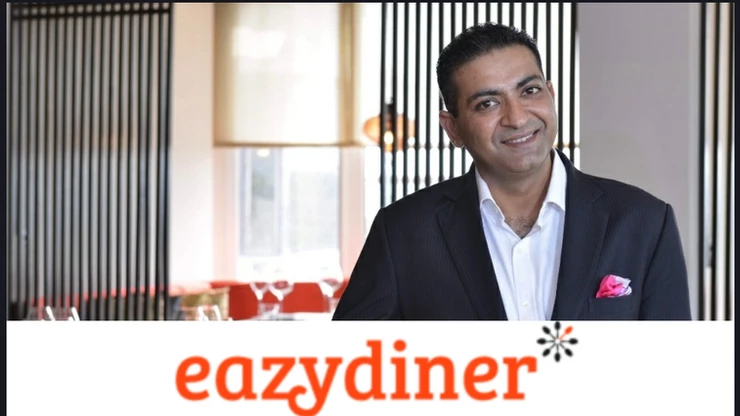
    One such innovation I am proud to be a part of is EazyDiner. I have been a part of the hospitality industry since 1997 and have been with EazyDiner, as Co-founder and Chief Innovation Officer, creating India’s leading restaurant reservation app since 2014. EazyDiner is one of the success stories in the new wave of digital start-ups in the Food and Beverage industry.

    Being a major foodie with a strong desire to change the way India dines, I have maintained the role of Chief Innovations Officer, with primary focus on app development, creating crazy deals and initiating and executing new ideas with customers always in mind. As one of the Co-founders, I have been involved in the establishment of the initial platform of the company and in executing the core values and goals. From sales to team building (which incorporated recruitment and training), I have actively contributed to the growth of EazyDiner. I have been involved in and strategizing for and execution of customer building, from zero to almost 6.5 million. I was also deputed to Dubai in 2016 for the launch of EazyDiner from the foundation level, resulting in a success story for the company.

    My Advice to the Younger Generation

    • If you are at a complete loss when it comes to career choice, talk to people who know you. Family, friends, tutors, and so on can often give illuminating feedback.
    • Turn to someone you admire. Everyone has a role model in their lives, someone who could be the most inspirational person for you. Often, you want to follow in the footsteps of your role model and it is motivating and inspiring to be like them.
    • Don’t base your career choice on job titles. Roles change over time, and you may well have the chance to develop yours. For this reason, focus on finding companies where you feel you would develop professionally, rather than being led solely by job title.
    • Follow your heart and avoid the traps of employment and accidental career paths. Many people spend years in education, only to stumble into the first job offered to them, and 20 years later they find themselves in a career they hate.  Make the right choices at the start of your career to ensure that you have the freedom and flexibility to evolve as you move through life.
    • Seek career advice as you prepare to join the workforce and pay attention to tips from advisors, as they are the counsellors who have your best interests at heart. Always remember, you are the future.

    My Advice to professionals

    Once you have embarked on your career pathway, time gets away at lightning speed. My advice would be to regularly spend time really thinking about your career. Professional development is vital for growth, both career-wise and personally. Do a career mapping by giving yourself a career objective and/or pathway. Have a concrete time frame of where you want to be in certain period of time – with defined goals such as seeing yourself getting promoted or even owning your own business one day. These motivational thoughts keep you excited as well as grounded.

  • To the Class of 2020 – Dare to Dream

    To the Class of 2020 – Dare to Dream

    “When you are faced with an uncertain future or when suddenly the path you are on takes an unexpected turn, it is advisable to explore a wide variety of options rather than sticking single-mindedly to one”

    Within a few short months, the world has transformed. Such unexpected events disrupt our routines, our plans, our goals. The pandemic has caught us unawares and with increased uncertainty it has impacted the graduating students immensely. In my interaction with several students I have realised that many of them are shattered as their plans have all gone out of the window, and they are concerned and confused as they have to rethink their career choices.

    At this juncture, as a society, we need to come together, support and help. This is an important time for families to build a bond with their kids and motivate them to stay positive so that they do not fall into depression and other mental ailments. The situation is affecting everybody, but my advice to the students would be – look at this as a golden opportunity to explore your skills and what you would love to do. It is an important time where a student can reflect and rethink, as life is all about being prepared for the uncertain.

    In these unprecedented and uncertain times, understandably, a student is more restless than ever. They need to be guided to utilize this period in the best way possible. While the ongoing crisis will have a long-lasting impact on every sector, the need of the hour is to give our students the right direction so that their career plans are not disrupted.

    Students:

    Learn. Learn, and learn more.

    “You may feel unmoored, you may lose your bearings and oscillate, but it is all right as the career path is an emotional experience of what you want to do and what you land up with, and of finally taking a decision to follow what you love”

    “It is an important time where a student can reflect and rethink, as life is all about being prepared for the uncertain”

    When you are faced with an uncertain future or when suddenly the path you are on takes an unexpected turn, it is advisable to explore a wide variety of options rather than sticking single-mindedly to one. One should stay positive, as, even when there was no pandemic, you must have heard of many people who opted for a career change in their forties, as suddenly it dawned on them that this is not what they love. A career path is necessarily a messy journey of exploration. It is a good time to explore options by taking up virtual internships, which are available from the comfort of your home. It is a time to explore opportunities and to discover yourself. Do not waste this time; utilize each minute.

    To dare to do something new you must move out of your comfort zone, and that takes courage. As humans, we generally feel safe and secure with what we know, even when we are in a miserable situation. To help you move out of your comfort zone, visualize what it would be like when you have reached your big dream. Open your boundaries and dream in 3-D. Visualize every little detail, with all five senses, what life could be like when you are actually there. Close your eyes and daydream. Stop only when you can ‘see’ yourself in your perfect day, with a wide grin on your face and a nice, warm feeling inside. Now open your eyes and write it all down. Every little bit of it; where you are, what you feel, who is there, what you are doing. Is it warm? Are you in a city or in the country? Is it a special celebration?

    Make it a vivid ‘Vision’ of your perfect day. Imagination is the root of everything we do, and by far the most powerful tool to succeed. Unless you can imagine yourself being richer, happier, healthier, fitter, or whatever else you want, the chances of you ever getting there are slim. Your brain needs to ‘see’ the results of your actions before it will allow you to apply your time and effort in striving for them.

    You may feel unmoored, you may lose your bearings and oscillate, but it is all right as the career path is an emotional experience of what you want to do and what you land up with, and of finally taking a decision to follow what you love. But this fraught stage is a necessary part of the journey, because it allows you to process a lot of complex emotions and conflicting desires, and ultimately prevents you from shutting down prematurely and missing the better options that still lie ahead.

    The current crisis is likely to prolong this confused state for many of us. While frustrating at times, the state has its benefits. As Steve Jobs wrote, ‘Your work is going to fill a large part of your life, and the only way to be truly satisfied is to do what you believe is great work. And the only way to do great work is to love what you do. If you haven’t found it yet, keep looking. Don’t settle. As with all matters of the heart, you’ll know when you find it’.