Category: Career Guidance

  • A Conversation With My Younger Self

    A Conversation With My Younger Self

    “Make the decision to be courageous, knowing that courage is the antivenom to regret”

    If I could turn back the hands of the clock twenty-five years, what would I tell myself, as I set out to begin what would undoubtedly become one of the most unexpected career journeys? What lessons would be the most important? What experiences would be the most transformational? Which people would have biggest impact? I’m not entirely sure a conversation with my twenty-four-year self would have been well received, as that is the age when I thought I had all the answers. I thought my pathway was resolute and inflexible. I thought that success came from climbing a predesigned, institutionally accepted career ladder was the goal to business promotion, success and, ultimately, happiness.

    How wrong I was.

    As I reflect on the many years since my inauguration into business – and government, since that’s where my career journey began – there are some key points that my far-too-confident self might well have embraced, or at least filed away for future guidance, assurance, and perspective. No one wants to hear “I told you so”, and I certainly would not mentor my younger self in that way. Rather, I respect the fact that many of the most valuable lessons I learned, making me who I am today, came from those formidable years when I was just starting to figure things out.

    Courage

    Make the decision to be courageous, knowing that courage is the antivenom to regret. Every action you take in life, every juncture you face, from baby steps to giant leaps, will require you to make a decision, and making decisions requires courage. Too often, people lack the confidence to make resolute choices. We ask others for their opinions, approvals, or consensus, and all this does is muddy the water of thought, and force you to second guess yourself, or even worse… make no decision at all.

    Be strong in your convictions, even if those convictions are contrary to popular opinion. Do not be afraid to swim against the current. Make your decision, believe in that decision, and follow it through to the end – regardless of the outcome. Do not doubt yourself. YOU are the one person with whom you can have complete trust. Have the courage to make mistakes. Mistakes are as much a part of life as successes, and they often teach you the largest, most important lessons. Do not be afraid to fail. Failure is one of the necessary stepping-stones of life. Follow your endeavors through to the end – sometimes the end is bitter, and sometimes sweet, but each conclusion you reach will leave you stronger than you were at inception. There will always be people who tell you, “It can’t be done”. Remember, the ones who can’t are afraid you WILL. But you will never know if you can be the one to “get it done” unless you have the courage to begin.

    Take risks. To quote William Shedd, “A ship is safe in the harbor, but that’s not what a ship was built for”. Greatness doesn’t come from comfort zones. Dream big, work hard, and don’t give up. You may have to try 1,000 keys before you can find the one that opens the door, but if you quit, that door will stay shut forever.

    “Mistakes are as much a part of life as successes, and they often teach you the largest, most important lessons.”

    “..you grow and mature, so will your hopes, goals, and aspirations. Life is unpredictable, and ever changing. Be brave enough to change with it”

    Flexibility

    Follow your dreams, but do not be afraid to change those dreams. As you grow and mature, so will your hopes, goals, and aspirations. Life is unpredictable, and ever changing. Be brave enough to change with it. As Darwin said, “It is not the strongest of the species that survives, nor the most intelligent; it is the one most adaptable to change”. Do not be afraid to embrace change. The ones who are crazy enough to believe they can change the world, are the ones who do.

    To be truly flexible, you must also remember that life never stops teaching so you should never stop learning. If you are firmly rooted in one contrived pathway, you will miss the most incredible, life-changing experiences and people that appear when you least expect them. To cast away old dreams and goals, and to allow grander visions to take their place requires both courage and a willingness to pivot, but in doing so, you will open imaginable doorways to opportunity.

    Pay Attention

    We often get so bogged down in ourselves – our technology and devices, our thoughts, or beliefs, our responsibilities, that we fail to pay attention to what – and who, is around us. Put down your phone. Look up. SEE that world. Destiny will walk right by those who are too busy taking selfies.

    Take the time to strike up conversation. Get to know the strangers who are around you as you sit at a coffee bar, ride the metro, or wait in line at the supermarket. These meaningful interactions can often lead to the most impactful new friendships, business relationships, opportunities and can take you down extraordinary pathways. Always try to find a way to be valuable to the people you meet, making it more about what you can do for them than what they can do for you. This is how you build a substantial network – this is how you can come together to truly BE the change that the world so desperately needs.

    Travel

    Travel. See the world. Prioritize your spending on experiences, rather than material possessions. Appreciate cultures, foods, and landmarks. Recognize that people are people, despite differences in race, gender, language, tradition, or religion. There are good and bad people – good and bad behaviors – in all countries and cultures. Be respectful. You are the stewards of our planet, and you have the power to heal the turmoil that the past generations have created. We have no “Planet B”, and it can no longer be us against each other… it must be us together for a solution.

    When you travel and embrace the differences and divergent perspectives of others, you grow, mature, and develop your own emotional intelligence and tolerance – making you an effective leader and compassionate human being.

    “Always try to find a way to be valuable to the people you meet, making it more about what you can do for them than what they can do for you. This is how you build a substantial network – this is how you can come together to truly BE the change that the world so desperately needs”

    “To be a true leader, you do not have to have all the answers. Value your team, respect divergent opinions, be open to innovation. Be an achiever, doer, shaper, impactor, creator, and most importantly, be a collaborator”

    Leadership

    Everyone is born with the capacity to be a leader, but few ever recognize, develop, and nurture the skills necessary to truly lead – courage, integrity, tolerance, and commitment to purpose. Leaders create leaders, but to be a great leader, you must learn from those in the past who have exhibited bravery under duress, kindness in place of cruelty, courage during crisis and strength when the tribe was weak.

    We have all worked for bad leaders at some point. Be the leader you wished you had in that situation. To be a true leader, you do not have to have all the answers. Value your team, respect divergent opinions, be open to innovation. Be an achiever, doer, shaper, impactor, creator, and most importantly, be a collaborator.

    In Summary

    In this very disruptive future we are facing, remember that the biggest impact sometimes comes from the smallest gesture. The future demands a regrowth of our human development capabilities. Do not be afraid of adversity, as adversity is one of the steppingstones of greatness. Never seek comfort from those who have decided to be comfortable, because greatness does not come from being comfortable.

    Be kind to yourself, while being kind to others. If you make a mistake, forgive yourself and start fresh with the sunrise. Make ‘being happy’ a priority and know that you can’t wait until life isn’t hard anymore to be happy. Set aside the things that you knew about the past and CREATE the things that will be true about the future. You are in competition with no one. Don’t worry about playing the ‘game’ better than others, simply, each day try to be a better leader, teammate, friend, parent, spouse… human being, than you were yesterday. If you can do this, then you will have achieved your ultimate success.

  • The ‘Business’ of Giving Back

    The ‘Business’ of Giving Back

    “..in a world that is ever conscious of our global footprint both environmentally and socially, companies are being forced to re-evaluate their contribution to the sustainability of our communities and the planet as a whole”

    A community is only as strong as the businesses that support it. In this post-COVID business world, we are recognizing that our businesses can no longer be islands of isolation, fiercely guarding our IP, operating in the cattle chutes of customer retention, competition and profit-making. While these elements are important to the strength and success of a business, corporate social responsibility and ‘giving back’ is becoming more and more essential to a strong, forward-thinking business model.

    Once upon a time, a business would make a charitable donation, accept the tax write-off, and continue with their operations, focusing mainly on profits and the bottom line. Now however, in a world that is ever conscious of our global footprint both environmentally and socially, companies are being forced to re-evaluate their contribution to the sustainability of our communities and the planet as a whole. Companies are standing up non-profit foundations, supporting social enterprises, and choosing to support organizations that can yield an ROI (return of impact) that they can pass on to their employees, customers, and stakeholders.

    The United Nations’ Sustainable Development Goals (SDGs) have given us a powerful framework for collective responsibility. As businesses must now have a conscience in order to truly make a sustainable impact, and by incorporating the SDGs into their business models, companies are choosing to support non-profit causes that prioritize the SDGs, helping these businesses to improve their environmental footprint and contribute positively to the unity of our societies, thus giving their customers and stakeholders a compelling reason to choose them over competitors. But to achieve the full measure of effect from corporate social responsibility, ‘giving back’ needs to be embraced in a systemic fashion, with companies of all sizes – from the large multi-national to the microenterprise – taking measurable action.

    The ‘give back’ economy will be integral to the future of business. Giving back does not merely mean contributing to charity, it means that we give back to our planet by ensuring that we have a responsible supply chain, reduce our carbon footprint, and help to contribute positively to our diverse society. It means that we recognize the role we play as business owners in our collective community economy, ensuring that we thrive, rather than decay. It is no secret that together we are stronger. But we must now consider how we can collaborate with one another to support and improve our communities.

    “It is not disingenuous to promote your commitment to social good, rather, it is important to share your value with the public, as this allows customers to make an informed and responsible choice when considering your product or service”

    “Together, we have the power to heal our global fractures. Together, we can reach new heights of innovation and achievement”

    The most obvious form of giving back is through charitable, tax-deductive contributions. While this is an easy and valuable choice, it is essential that we clearly understand the mission, vision, strategy, and fiscal management of the charities we choose. How much of our contribution is going to administration and how much is actually going to impact? Out of the amount of time and money that a business prioritizes to impact, can the value of this impact be quantified? If it can, and a business is satisfied with measurement, they must make sure that they share this contribution and measure of impact in their annual report, on social media, and weave it into the ‘story’ of their model of operations. It is not disingenuous to promote your commitment to social good, rather, it is important to share your value with the public, as this allows customers to make an informed and responsible choice when considering your product or service.

    Through the formation of a company-aligned foundation, a company can make a direct impact in line with the mission, vision, industry/sector in which they operate. Tying business operations to a vehicle for environmental and/or social impact can be a powerful mechanism for impact, easily allowing customers, partners, employees, and stakeholders to not only have a clear line of sight into the social responsibility of the company, but to actively participate in this impact. When a company has an associated foundation, they can closely manage the mission, the administration and fiscal responsibility, and they can better align the purpose of the foundation with the operations of the company.

    “..a company, one of your greatest assets, aside from the quality of your employees, is your reputation. You can’t have one without the other”

    Companies who make their employees, customers, and stakeholders a part of their mission of ‘giving’, realize a measurable uptick in the attitudes, performance, and happiness of their business environment, which further translates into enhanced productivity, less turnover, an environment conducive to innovative thinking and greater profitability. Encouraging and rewarding employees for volunteering in the company foundation, for other non-profits or in the community shows the employee that the company respects and understands their responsibility to be a good steward to both people and planet. Creating a workplace environment where employees are given the means to contribute to the company foundation or to a non-profit of their choice through payroll deductions, allows them to participate in a company culture based on unity, philanthropy, and accountability. This gives the company a distinctive edge over competitors, and brands them as a ‘company with a conscience’, which translates itself into reputational acceleration. For a company, one of your greatest assets, aside from the quality of your employees, is your reputation. You can’t have one without the other.

    In this new era, where we all recognize how fragile we are as a global society, we must work together to be a part of the solution. Genuine and quantifiable impact will require all businesses, from Fortune 1000s to microenterprises, to embrace a platform of collective responsibility and a prioritization of the ‘give back’. We owe it to humanity – the future generations who will be responsible for healing the damage that they themselves did nothing to create – to adopt a cooperative mandate of social responsibility. As business leaders, we must take deliberate steps to embrace the SDGs, minimizing our footprint and the damage we cause to the environment, while uplifting, inspiring, and empowering societies. Together, we have the power to heal our global fractures. Together, we can reach new heights of innovation and achievement. Together, we have the power to ‘give’ the future to the hopeful generations who will be charged with carrying our world forward, ensuring that we will continue to thrive, environmentally, socially, and economically.

  • Find Your Voice and Serve With Impact

    Find Your Voice and Serve With Impact

    ‘‘Finding Your Voice’ is about finding YOUR authentic vibration and then playing ‘tunes’ in your way – and what I mean by ‘tunes’ are the ‘Songs of Life’, how you play life! ‘

    Before we begin to unravel how to Find Your Voice and Serve With Impact, let’s first get clear what this really means and why it’s so critical, for not only achieving success but even more so for experiencing fulfilment.

    I like to break it into two obvious parts, yet there is actually a third part too:

    Part 1: Finding Your Voice

    Part 2: Serving With Impact

    Part 3: Creating Your Legacy that Continues to Create Impact for Generations to Come

    So let’s unpack the first two, beginning with ‘Finding Your Voice’. When most of my clients first present to me, they believe this is the part where I will share with them how to become world-class professional speakers. Yet, this part is so much more than public speaking – it’s about finding your core energy.

    If you have joined me at any of my events you’ll be familiar with my line, “we are not talking about ANY JI, we are talking about ENERJI“.

    As Indians, when we visit our relatives we are conditioned from a very early age to show respect when addressing our elders, so when we greet our Aunty we show respect by addressing her as “Aunty Ji”; and same for others such as, “Nani Ji”, “Papa Ji”, “Uncle Ji”, you get the idea!

    At my events, especially with young people, I ask, “Which ‘Ji’ is the most important Ji?”

    The most popular response is, “Mummy Ji.”

    I pause and then abruptly say “No”, to the shock of the audience; and then with a smile on my face I share, “the most important ‘Ji’ is ENERJI”.

    So, now armed with that, I want you to know that ENERJI is your Authentic Energy.

    This then leads us into why ‘Finding Your Voice’ is about finding your ENERJI.

    We can all agree that musical instruments communicate through vibration and that vibration is energy. Also, when those instruments vibrate at certain frequencies (notes) they create a sound or tune, which some may perceive as noise and others as music! Either way, the interesting thing is that a piano can play the same song as a guitar and we can easily recognize the song from both of them. Yet, is it not true they have a different way of playing the same tune/song? Even though it’s the same song, they have their own unique, distinctive and AUTHENTIC way of playing it, as does the saxophone, violin, flute, and so on.

    ‘Mastering the ‘Science of Achievement’ is one thing, yet applying that science to ‘achieve’ fulfilment is futile. As fulfilment is an art (not a science) and that requires you to get in tune with YOUR instrument and play tunes YOUR way through your Finding Your Voice your authentic energy – your ENERJI.’

    Do you know our Voice is classified as an instrument? In fact, it is actually classified as a musical instrument. I can personally vouch for this as my daughter Rosie enters the prestigious ‘Musician of the Year’ contest every year and in the application section where it asks to specify your musical instrument, she enters ‘VOICE’, as she is a singer.

    ThusFinding Your Voice’ is about finding YOUR authentic vibration and then playing ‘tunes’ in your way – and what I mean by ‘tunes’ are the ‘Songs of Life’, how you play life!

    As one of my favorite songs states, you’ve got to…

    Play your own type of music, sing your own special song. Even if no one else sings along

    There’s plenty of evidence that we can become elite performers in business, sports, arts, and as parents and achieve phenomenal success, yet not be vibrating from our authentic energy (ENERJI).

    I am blessed to serve many elite performers in business, sports and arts and it is not uncommon, especially from certain cultures, that they are vibrating from other people’s ENERJI’s; especially those that they love, cherish or even fear, for example Daddy Ji, Aunty Ji, or even Professor Ji! This is what creates a feeling of emptiness and lack of fulfilment in so many elite performers, even though to everyone else it seems they ‘have it all’.

    As you go on in your professional journeys, I would ask you to be aware that we can follow pathways of success and achieve phenomenal success in any field we desire as long as we invest resources of time, money and energy into it. Mastering the ‘Science of Achievement’ is one thing, yet applying that science to ‘achieve’ fulfilment is futile. As fulfilment is an art (not a science) and that requires you to get in tune with YOUR instrument and play tunes YOUR way through your Finding Your Voice your authentic energy – your ENERJI.

    “Serving others is the greatest vehicle for fulfilment and being able to serve others from our authentic core being is the highest level of bliss I believe we can experience, as that is when we are closest to our spirit, source, God, Universe, or whatever label you may choose”

    Onto the second part, ‘Serve With Impact’. Once you have found your voice – your ENERJI – it’s now time to Serve With Impact. Which means that it’s time to bring that ENERJI into everything you do, including whatever you are already doing in your career and life, as well as other vehicles that allow you to express even more of your ENERJI consistently.

    Serving with greater impact can include serving more people and serving deeper with those that you already serve. It also means serving from the real authentic you. This is where fulfilment comes into play. Serving others is the greatest vehicle for fulfilment and being able to serve others from our authentic core being is the highest level of bliss I believe we can experience, as that is when we are closest to our spirit, source, God, Universe, or whatever label you may choose.

    Next, let’s move onto ‘How To Find Your Voice and Serve With Impact’. How do we find our true self, our ENERJI?

    There are many tools and disciplines available to help us ‘find our passion or purpose’, with the common denominator that we are searching for experiences that allow us to connect (vibrate) with those core emotions which make us feel most alive. The most effective processes include identifying with our values, beliefs and identity.

    Here it is important to remind you once again that there is a big difference between the ‘science of achieving something’, including identifying our values and beliefs, and the ‘art of experiencing something’. The key distinction is not what we are doing, but how we are doing it and from where. Allow me to explain.

    If I were to ask you to stop reading this article right now and begin to list your values and then follow a process to illicit the hierarchy of your values (that is, what is their order of importance), do you think your answers would be the same if I asked you to do the same exercise during times when you are experiencing trauma, grief or stress? I would guess not, and the scientist in us would be evaluating which is correct, yet the artist in us may see both as correct. This is why so many people get frustrated by not knowing with certainty their ‘purpose in life’.

    Allow me to share how I support my clients to connect with their ENERJI. Firstly, I remind them that our ENERJI is best found in the moments when we do things we love, and when we:

    • Conquer Our Fears
    • Overcome Adversity
    • Release Ourselves From ‘Emotional Constipation‘ (a term I created based on my own personal experience and that of my clients. It is where we hold onto things from the past in the form of suppressed energy)
    • Immerse in Deep Meditation

    I urge you to implement the above or find someone who can support you to do so, because the truth is, it is when you feel and experience your greatness that your limitations are removed and you may illicit your core values (emotions) that light you up as they come forth, whilst connecting you with your true source.

    “It is when you feel and experience your greatness that your limitations are removed and you may illicit your core values (emotions) that light you up as they come forth, whilst connecting you with your true source”

    AND ‘Serving with Impact’is putting that unique vibrational energy into some order, so you may make your own music (service).

    In fact, this is where public speaking actually comes into play, as it is about creating some order out of the noise and, in public speaking terms, it’s about creating content that is memorable for you and your audience and also positions you as an authority in your topic. Then it’s about communicating, or delivering your content/messages with confidence, in an engaging and transformational way by using secret proven systems of the world’s greatest speakers – thus allowing you to express your ENERJI in all areas of your life.

    Finally, we come to the third part, ‘Creating Your Legacy’. This is for those who want to express their gift, their ENERJI to others through different mediums; outside of their current vehicles, such as business, career or home life. This is where my clients fully utilize their tools as world-class speakers; as once they have tasted authentic fulfilment, the desire to serve is greater. Thus, I take them on a journey to create systems and organizations (their foundations) that allow them to serve their message / music in their authentic way with even more impact, now and for generations to come. It’s their ultimate gift back to God / the Universe.

    I wish you all the best on your journey as you Find Your Voice and Serve With Impact, and I look forward to the day our ENERJIs connect again!

    Until then,

    Keep serving – authentically and consistently.

  • Steering Your Entrepreneurial Ambition

    Steering Your Entrepreneurial Ambition

    “Entrepreneurship is a lifestyle. It transforms you as an individual, completely”

    So, you want to be an Entrepreneur? This is indeed a great thought. And like many other great thoughts, this could be a flight to fancy, or an actual, strenuous yet rewarding journey. It all depends on you what you make out of the spark in you.

    How to become an entrepreneur cannot be taught in a classroom. It requires ground-level execution, as in a real-life lab. To give you an analogy, it is like being on a war front. You really cannot have many choices, you have to take decisions, you have to live by your decisions, and you have to be confident, resilient and be ready to play every possible role there and then to win the battle. And to your next battle, you cannot afford to carry the baggage of failure, you can carry only the learnings from there.

    Let’s engage in a little self-introspection. But before that, let me tell you that no two entrepreneurs are exactly the same. Hence, do not compare yourself, and do not make the decision of becoming the entrepreneur, or not becoming one, by comparing yourself with others. Every entrepreneurial success or failure has its own set of footprints, its own journey over the years, its own DNA, and reasons of the state of the venture.

    Coming back to self-introspection – understand yourself very well, your circumstances, your abilities, your responsibilities and your gut and determination to create an impact. If you have that fire in you which can push you to extreme levels and can make you challenge the status-quo and do something innovative to solve the problem you have observed, you could be relatively better placed to take the plunge as an entrepreneur.   Having a huge bank balance to back you up does not guarantee your success as an entrepreneur, just as not having money cannot stop you from becoming an entrepreneur. Investors put their money on people and in the execution of ideas, not just on the idea.

    Being an entrepreneur is a journey that might be taken up as a lone ranger, but it is actually enabled through great teamwork. So, learn to share, to let go, to set expectations, and to meet expectations. On top of this, one must learn to celebrate success together, and also to share the pain of failure together. Remember, if a venture has failed, it is not the failure of ‘you’, or your team. Do not play the blame game to pin the failure on someone. It was an idea that failed, hence, move on with what you have learnt for the future. Earn respect, earn die-hard loyalty – you will become a successful entrepreneur if you have a team you trust, and if the team trusts you, completely.

    “Trust people, build processes, put in place checks and balances, and manage your emotions”

    Every venture faces huge pressure during the scaling up phase, which includes the pinch points of ‘let go’. As an entrepreneur, you have conceived the idea, nurtured it, gradually scaled it up to a level that it now needs large teams, maybe multi-locational presence as well, and you start feeling the pain of losing power. You assume that once you let go of control, your business will be snatched away from you. You do not find the same degree of passion in the professional managers appointed by you. You do not find the same alignment of thinking and vision. Well, it will never be. Your business is a job for them. Yet, you still need to ‘let go’ of the single-handed control, else your business will not grow beyond certain limits. Trust people, build processes, put in place checks and balances, and manage your emotions.

    Even though there are degrees and diplomas in entrepreneurship available in every part of this world, it is only your hands-on experience as an entrepreneur that will get you the right wisdom. Yes, it is true that a good education can increase the probability of success and will give you opportunity to build and leverage networks. Do not compromise on basic build-up and education.

    There is no ‘right’ age – we have seen examples of successful ventures with founders having started them in their 40s and 50s.  Yet, the sooner you begin, it could enable you to be better placed because of your energy levels, a comparatively less binding set of responsibilities at the personal front.

    By the way, entrepreneurship is not a career option at all. It is not a job. You cannot run a venture with the mindset of an employee. It has to be a complete change in your thinking and perspective. You have to wear the hat of a business owner.  You cannot have a 9 to 5 work clock as an entrepreneur.  You have to constantly think, innovate, find ways and means to grow your venture, to find solutions to your challenges. Entrepreneurship is a lifestyle. It transforms you as an individual, completely.

  • Q&A with Chef Manjunath Mural

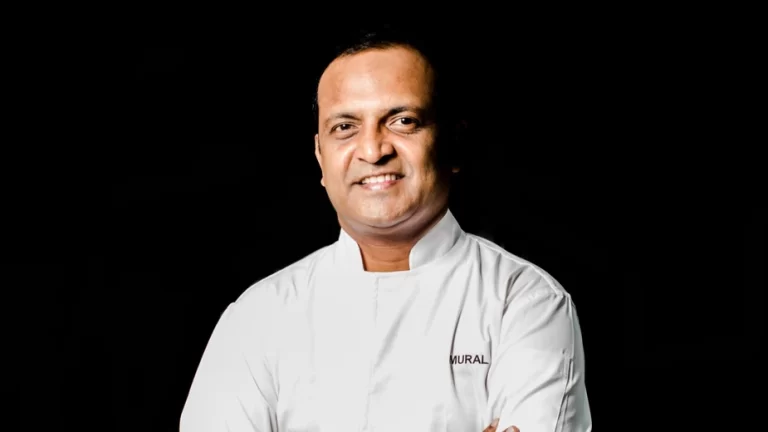
    Q&A with Chef Manjunath Mural

    Chef Manjunath Mural’s lifelong dream is to be able to present Indian cuisine in a manner that is relevant to diners from across the globe – to make ‘haute Indian cuisine’ as accepted as haute French dining. He resents the “niche”, “family restaurant” image of Indian cuisine that is so common in big cities around the world, and wishes to showcase the depths of history, tradition, ingredients and techniques that are profoundly ingrained in Indian cuisine.

    As the Executive Chef of Song of India in Singapore, Chef Mural was the first Indian Executive Chef to earn a Michelin star for an Indian restaurant in Southeast Asia. Song of India went on to earn a Michelin star four times in a row with him at the helm. For Chef Mural, earning the Michelin star was just one way of working towards his dream of presenting Indian cuisine at its pinnacle on an international stage. Those who have worked with him are impressed by his passion and his everlasting desire to learn. His dedication to his craft, eye for detail and strong work ethic are qualities that lend to his success in the international arena.

    Born into a family of doctors, Chef Manjunath carved his own path and followed his dreams to reach great heights of success. He recently opened ADDA, a neo-Indian restaurant that presents Indian cuisine in an innovative and approachable manner. We have much to learn from such inspiring individuals, and we were fortunate to have the opportunity to ask him a few questions!

    Q1. When did you first realize that being a chef was your calling? What or who inspired you the most?

    A1. It was during my training at the Taj President where, while training in the Thai restaurant, I met two Thai lady chefs who really inspired me with the feeling that being a chef is a respectful career which requires a great deal of passion. Apart from this, my mother and father both supported my dreams of becoming a chef, even though they were both doctors.

    Q2. What are the character traits that you think are essential in this line of work?

    A2. Humility, passion, hard work, dedication are some traits that are important for a chef. You should try to show your personality through your cuisine. At the same time, there should be a constant desire to learn more, these are some of the things that make a successful chef.

     Q3. How important is it for an aspiring chef to undertake a professional program in culinary arts?

    A3. A professional program helps to learn the basics, the technique of cooking. It proves one’s interest in being a good chef and provides the advantage of adding skills, which are needed to survive in the tough hospitality industry.

    Q4. How was your journey towards achieving your first Michelin star? Were there any hurdles?

    A4. I have always been extremely oriented towards quality and consistency as a chef, without compromise. I also consider myself a good team leader, and I try to keep my team motivated to achieve greater heights. In the end, they are the actual winners. I believe these traits helped me on my journey towards the Michelin star, and I never experienced any hurdles or pressure.

    Q5. How do you cope with the day-to-day pressures of work, especially in the kitchen?

    A5. So much experience, spanning over many years has made me a very patient chef. I hardly ever take on any pressure, rather I enjoy teaching my chefs to make consistency and quality a habit, as I believe these two things make cooking an enjoyable and happy experience.

    Q6. Over the past year, how have things changed in the kitchen on account of Covid?  

    A6. Things have certainly changed over the past year; chefs have given greater importance to delivery platform food, created affordable menus, worked on cost control in terms of kitchen operations. The focus has shifted more to easy, casual dining. The target clients’ budgets have reduced, which has also made chefs turn to sustainable ingredients to help keep costs lower.

    Q7. Apart from culinary training, what skills would you consider important for a budding chef?

    A7. A positive attitude, humility, desire to learn and utmost respect for other chefs, whether they are young trainees or experienced chefs – these are all important in my opinion. Stay away from the trap of overconfidence.

    Q8. What advice would you give to students of the culinary arts who dream of becoming Michelin-star chefs some day?

    A8. Believe in yourself and in what you want to do. You must have the confidence to think differently, without caring about the opinion of others – this will always help to differentiate you from the crowd. Make sure that your basics are strong. 

  • Education, Passion, and the Journey of Self-Discovery

    Education, Passion, and the Journey of Self-Discovery

    “No one ever talks about failures! I will. They are most important on the learning curve; if you haven’t failed, you haven’t tried!”

    Abraham Lincoln once said, ” In the end, it’s not the years in your life that count. It’s the life in your years.”

    There is more to a career than just work! There is more to education than just degrees! education is a journey, not a destination. It is not a degree you get at the age of seventeen, then at twenty-one and maybe again at twenty-seven; neither is it a credit card which gives you access to the world of fame and success. education is knowledge; and knowledge must be used to better our lives, to empower us. What good would it be to be an efficient doctor, but one that indulges in domestic violence in the privacy of their home? Or, to top every examination, only to end up a slob? Education is the key that opens doors to newer horizons and shuts them on failures.

    No one ever talks about failures! I will. They are most important on the learning curve; if you haven’t failed, you haven’t tried! Failure is a judgement you set on your actions. For example, if I want to start a food truck, but am incapable of consistent good quality food, or retaining good staff, or handling money wisely, or simply have no idea about being an entrepreneur! It is still better to jump in and learn from failures, rather than to stand on the sidelines like a fence sitter. It is the battleground on which the human spirit grows! Every time you discover what you don’t like, you get closer to what you do like! Attitude is key! In life, Attitude and Gratitude are the keys to creating a life of value! One could be a famous doctor, lawyer, chef, actor, or scientist and be able to command attention from the vantage point of success. But what good is it if it cannot impact and inspire the world? Finally, all great men are those who impact the world, who mentor youth to be the best version of themselves! We all are unique and discovering what is special about us; discovering where our talents lie, where our passion lies is a journey – a journey of self-discovery! Education gives us the ability to grasp and learn and understand that no one is inferior to the other.

    “We all are unique and discovering what is special about us; discovering where our talents lie, where our passion lies is a journey – a journey of self-discovery!”

    I work a lot with youth of all ages, from age 5 to age 75 (yes! Those with a youthful spirit are still young!) and I always caution them, a career you need to have, to do. But in so doing, do not lose the passion that is born of the spirit! That colors your life! I know an excellent eye surgeon, who is also a passionate singer and guitarist. He brings the same zest for life to his work. I hear Mozart when I sit in his clinic and I always see a smile on his face! His passion drives his life, not just his career. And he is a travel buff; I tell all young people, “Please travel, by train, by car, by plane! Anywhere… keep the adventure of discovery alive! The closer we embrace the world, the more of her gifts she bestows on us!”

    And who says, a career and passion can’t go hand in hand?

    And who says, one can’t change a career after 50!?

    And who says, life is written in stone…

    Next time you go into Starbucks, ask them for a double shot of passion with your Espresso!

  • A Musical Journey

    A Musical Journey

    “It requires authenticity on the part of the guru and respect, dedication, commitment and obedience by the shishya to gain knowledge in the best possible way”

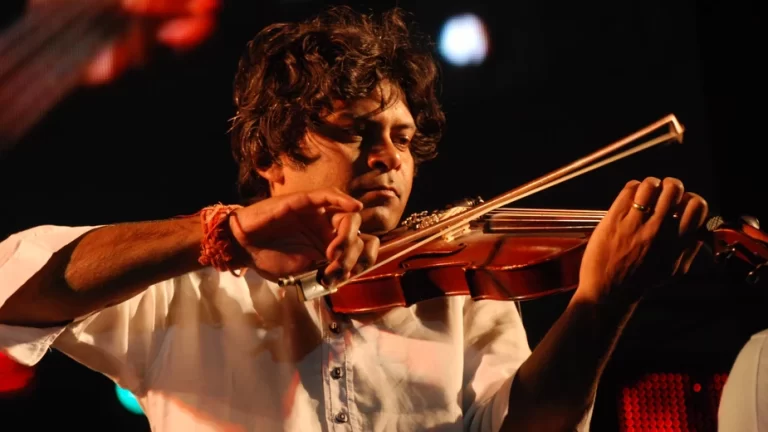
    My musical journey began at home when I started learning the violin at the age of seven from my grandfather, my guru, Pandit Joi Srivastava. He was a musician class apart and is one of my greatest inspirations. I always had a musical environment at home and some of my oldest memories are of watching my grandfather teach other students. Hence, learning the violin came very naturally. The roots of this legacy come from Allahabad, where my grandfather was born.

    My grandfather became my mentor and guru. The guru-shishya parampara is the only way to learn Indian classical music in India. The violin being a string instrument, I followed the legacy of living in the guru’s house and learning the art form directly. It requires authenticity on the part of the guru and respect, dedication, commitment and obedience by the shishya to gain knowledge in the best possible way.

    My training in Hindustani music went along side by side with my school education. In 1986, I had the opportunity to play in the UNICEF orchestra curated by Ustad Amjad Ali Khan. 1992 was a special year when I joined India’s premier rock band Parikrama. Indian classical violin playing in a rock outfit gave the band a touch of fusion music, which was very successful. The nineties saw huge changes in the Indian music scene, when albums were beginning to be made solely for pop musicians, along with music videos. Punjabi pop and independent musicians also made a mark. New music channels as well as cable television gave further momentum to these developments in Indian music. Being a part of Parikrama at this time was a great learning experience for me and helped me create my own fusion band. In 1999, I formed my fusion / world music band Mrigya. This gave me the freedom to experiment with different genres of music, and I experimented with our own beautiful Indian Raagas with different genres of music. Our unique sound of Raag-based fusion was hugely popular. Immediately after our first concert we received an offer to perform at the prestigious Edinburgh Fringe festival in 2001. The band had a successful tour and we got a 5-star rating and won several awards. Our unique sound gave us many international tours.

    Read the full article here in our April 2021 issue.

  • To Canada or Not to Canada, That Is the Question, Eh?

    To Canada or Not to Canada, That Is the Question, Eh?

    “The canadian government has set up an ambitious target of 1.2 million new immigrants in the next three years, despite the global pandemic. 60% of the newcomers are going to be from India, followed by China and the Philippines”

    The Canadian government has set up an ambitious target of 1.2 million new immigrants in the next three years, despite the global pandemic. 60% of the newcomers are going to be from India, followed by China and the Philippines. This is a unique opportunity for those dreaming of experiencing a new country with clean air, the largest freshwater lakes in the world, decreasing carbon footprint, lots of nature and wildlife to explore and plenty of job opportunities. Here, I will be discussing a few of the common misconceptions that people may have regarding immigrating to Canada.

    Myth 1: It is impossible for students to get a job in their career of choice once they graduate.

    Not true. The ‘Wisenup! Canada’ Podcast co-host arrived as a student, as did many of the attendees of the show’s live Q&A sessions. Just as in any other part of the world, there is a clear distinction between those who make it and those who don’t; and it boils down to two key differentiators: 1) work ethics, and 2) growth mindset. 

    One of my mentees, Sourabh, who is quite shy and an introvert, has been working for a multi-million dollar commercial real estate firm after his accounting program at George Brown. He is quite soft spoken, has a non- Canadian accent and built his work experience and client management skills working at Subway, the fast-food franchise. He used his job profile working in the underground pathway of the financial district of Toronto to network with all the decision makers in the city. He had great grades and knew his subject matter very well. So, the question we need to ask ourselves is, if he was able to make it, why aren’t the others?

    Fundamentally, we need to understand that the average North American has five years of additional work experience over any newcomer from Asia or Africa. In South Asia, students start working after their undergraduate degree, however in North America they start when they are 16. So, if you are planning to join a course as a student in an undergrad or master’s program, keep in mind your peers have two to five years of real-world work experience over you. This means that they are simply better at customer service, sales conversations, client escalations, interviews and other skills they were exposed to even before they graduated from high school. Most importantly, they have established a network. Some started even earlier as baby-sitters or helping out with their family business or at mom and pop stores. 

    Myth 2: There are only tech jobs available in Canada.

    Not true. This also depends on what your definition of a tech job is. For the sake of this article, I am referring to jobs that need a specific software skillset as tech jobs. Yes, Canada is enjoying a tech boom. 

    The Toronto-Waterloo Tech corridor, which I refer to the silicon valley of Canada, has added more jobs than any other major North American city. However, all those companies also require employees in their HR departments, Accounts departments, in Sales and Marketing, Social media community management, and most importantly in Customer Service and Client Management.

    Case in point, take a look at the jobs available right now at ApplyBoard, one of the many billion-dollar companies from Canada. They have hundreds of positions across the globe and less than 10% of them are tech positions.

    Myth 3: It is impossible for someone in their 30s to establish their career in Canada. 

    This is not true. My podcast guests Sam, Saugata and Jacqueline moved into Canada well into their 30s with their children in tow. It is more challenging for certain individuals than others, certain specializations than others. 

    Check out their unique stories, lessons learnt and experience at WisenUp website.

    Canada is ranked one of the best countries in the world. However just like anything worthwhile in life, it doesn’t come easy and it requires newcomers to raise their skill level. People who work hard with the right information at the right time are the ones who move ahead of the pack and settle down faster.

    The article was originally published in Career Ahead April 2021 issue.

  • The Power of Mentorship to the Success of Business

    The Power of Mentorship to the Success of Business

    “For young adults stepping into the career world, their choice of mentors plays a significant role in the degree of achievement they set for themselves, the goals they aspire to, and the confidence with which they step forward into this exciting new era of their lives”

    Every moment of our lives from our first breath to our last, we are influenced by mentors, either directly or indirectly. The actions, words, successes, failures, inspirations and motivations that shape our personalities, goals and dreams are influenced by mentors. When we are children, we generally don’t have a lot of say in who our mentors are…family, friends, teachers, school playmates – these are the people who will shape our ideas of teamwork, our ability to make decisions, our morals, and our tendencies to be leaders or followers. The people who teach us fundamental life lessons as children influence our ability to problem solve, make decisions and choose the right (or wrong) mentors when we get older. As adults, we take these attributes shaped by the mentors of our youth, and we use these models to shape the character of our future, and how we influence ourselves, others and humanity.

    For young adults stepping into the career world, their choice of mentors plays a significant role in the degree of achievement they set for themselves, the goals they aspire to, and the confidence with which they step forward into this exciting new era of their lives. The big, bad, scary future is much less daunting when you have a trusted advisor/mentor to listen, learn from, brainstorm with, and model. Mentors can be older siblings, parents, professors, friends, but a mentor can also be a boss, colleague or even a peer. There is no universal formula for a mentor – we are all mentors and we are all mentees, regardless of age or professional experience.

    “There is no universal formula for a mentor – we are all mentors and we are all mentees, regardless of age or professional experience”

    “Companies that embrace a culture of mentorship are shown to outperform competitors, having greater levels of efficiency, more cohesive team structures, and lower turnover rates. Mentoring builds unity, and a company unified from within will be a true vanguard of the future”

    Seasoned professionals, business leaders – those individuals who have been running in the rat race for a period of time – have a responsibility to inspire the younger generations so that they can aspire to reach their full potential, learning from our successes while avoiding the pitfalls that can usually only be sidestepped through experience. Companies that embrace a culture of mentorship are shown to outperform competitors, having greater levels of efficiency, more cohesive team structures, and lower turnover rates. Mentoring builds unity, and a company unified from within will be a true vanguard of the future.

    One of the most underappreciated forms of mentorship is reverse mentorship. Reverse mentoring pairs younger employees with executive-level team members, usually focused around technology and innovation. Companies that encourage their employees to be open to both mentorship and reverse mentorship, have a greater sense of inclusion, cooperation and productive knowledge-sharing. When senior executives or members of the leadership team challenge their younger employees with the responsibility of hacking apart problems and conceiving new and innovative solutions, teaching and guiding their colleagues, the company is positioned to be both disruptive and transformational. We have much to learn from one another. When you ask someone for their assistance, ideas or opinions, you are showing them that you value their input and trust their perspective. While they are contributing to the solution of your challenge, you are contributing reciprocal value to them, helping to build their self-confidence, further inspire the courage of their creativity, and ensure that they feel valued as an employee.

    “When senior executives or members of the leadership team challenge their younger employees with the responsibility of hacking apart problems and conceiving new and innovative solutions, teaching and guiding their colleagues, the company is positioned to be both disruptive and transformational”

    Our ability to professionally mentor does not come only from our education or professional experience, it comes from each and every engagement we have with others, the places we have traveled, the challenges we have faced, the times when we have been uplifted and the times when we have been let down. Sometimes, as we mentor others in a business capacity, we endeavor to keep it very linear and focused only on the topic, leaving the ‘personal’ out of it. But the ‘personal’ is what makes us human. The ‘personal’ is what makes us relatable. The ‘personal’ is what shapes the value of our perspective. And the ‘personal’ is what makes our content as a mentor, much more valuable. The personal side of us encompasses our emotions – the love, loyalty, sense of family. A mentor who counsels strictly from the rigid space of business will be missing a phenomenal opportunity to shape a well-rounded thought process infused with empathy, understanding, and balance – the balance we all need to successfully manage both our business and personal lives. We are sometimes afraid to show emotion or vulnerability in the workplace, but emotion and vulnerability is what truly makes us creative and forward-thinking. We see problems and challenges from a myriad of perspectives when we bring emotion to the table. If we hide behind a façade, attempting to be what we assume to be appropriate for the workplace, we are denying the workplace of the value of well-rounded perspective from our lessons learned. A mentor who espouses this as a role model is helping to shape visionary, tolerant and courageous mentees – who will pass this on as they assume their role as a mentor.

    “A mentor who counsels strictly from the rigid space of business will be missing a phenomenal opportunity to shape a well-rounded thought process infused with empathy, understanding, and balance – the balance we all need to successfully manage both our business and personal lives”

    “Have the courage to do things differently than others, and not only will you have opportunities that others don’t have, but you will inspire those who see you as a mentor to be brave enough to also do it differently”

    A work environment built around a nucleus of mentorship is the most important way to ensure your company dominates your sector. We are stronger together. As business leaders, entrepreneurs, innovators…and global citizens, we have a responsibility to elevate one another – not only for our personal gain or our business growth, but simply because it is the right thing to do. When we lead by example, we are passively mentoring. Have the courage to do things differently than others, and not only will you have opportunities that others don’t have, but you will inspire those who see you as a mentor to be brave enough to also do it differently. Every single day, we are mentoring and being mentored by others. Mentoring is not always sharing the good…we also learn from the bad examples we see. Be the good example. Be the mentor who inspires, empowers and uplifts. When we uplift one another, we uplift humanity.

  • Women in STEM

    Women in STEM

    I attended a Girls’ Grammar School and studied all three sciences – Physics, Chemistry and Biology – but, when I was 16, the new ‘comprehensive System’ in England affected my education, and I found myself in a huge mixed-gender school, the merger of three separate local schools, and the only girl in an Advanced Level Physics class. My first experience of STEM (Science, technology, Engineering, and Mathematics) just being for the boys!

    Having said that, I think as I chose Biomedical Sciences as a profession, I was not particularly affected throughout my career by stereotypes, especially as Hematology my specialist discipline, had many females. The Biochemistry departments seemed to have more male staff, who I assume were attracted by the huge complex autoanalyzers. I had to work across multiple pathology disciplines for the out-of-hours emergency service though, so did get to operate those as well.

    Along with established laboratory posts, I undertook a number of ‘locum’ positions, e.g., in Brussels – for SmithKline Beecham (now GSK) on a global clinical trial; the Orkney Islands; and hospitals in and around London.

    When I returned to university in my 30s, to study to become a Science Teacher, I deliberately took all the Physics modules available, because I knew that I would always be employed if I could offer Physics. I taught all three Sciences from 11 to 16 years, and to Sixth Form – Biology ‘A’ Level, Health and Social Care, and Advanced Vocational Certificate in Education Mechanics – and relished this, as much of it is Math, which I enjoy.

    The British Council state that a STEM workforce is crucial to India’s economic development and social welfare, but that women are underrepresented in STEM careers. “Although women constitute 40 percent of science undergraduates in India, only a fraction move into successful academic careers and even fewer reach top positions in research and administration. This results in a loss of talented workforce.’’ Having said this, only 24 percent of the STEM workforce in the UK consists of women, though this is predicted to rise to 29 percent by 2030.

    “The British Council state that a STEM workforce is crucial to India’s economic development and social welfare, but that women are underrepresented in STEM careers”

    “Science graduates have been – and will continue to be – at the forefront of tackling many of the world’s greatest challenges, from the coronavirus pandemic to climate change”

    According to the National Science Foundation, it is predicted that 80 percent of the jobs created in the next decade will require some form of Maths and Science skills, and females will need to take up these opportunities.

    Science graduates have been – and will continue to be – at the forefront of tackling many of the world’s greatest challenges, from the coronavirus pandemic to climate change. Careers are varied, and those in current demand globally include Audiologist, Biochemical Engineer, Climatologist, Computer Systems Analyst, Cybersecurity Specialist, Data Scientist, Dental Hygienist, Doctor (Medical), Endocrinologist, Forensic Science Technician, Genetic Counsellor, Hematologist, Information Security Analyst, Math Teacher, Nanosystems Engineer, Occupational Therapist, Patent Lawyer, Robotics Technician, Statistician, Surgeon, Veterinarian, Virtual World Creator, Wind Energy Engineer, and many more.

    Certainly, I have no regrets about the choices I have made. I have always received a good salary, been respected in an interesting job role of value to society, which has also sometimes allowed me to travel.