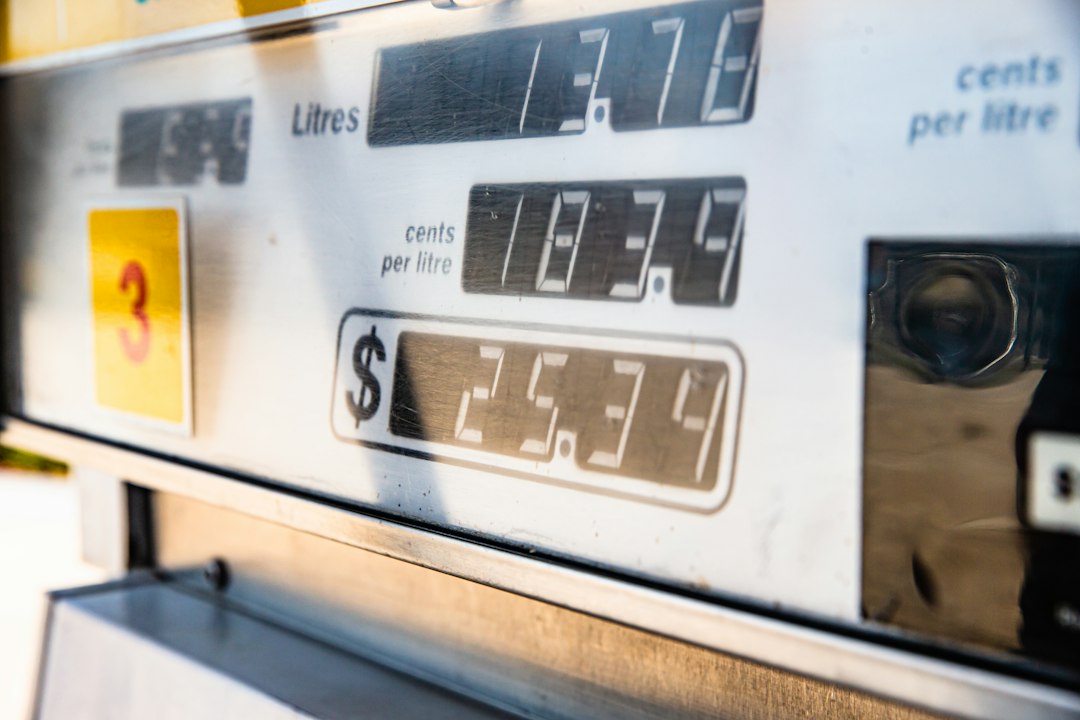
Oil prices surged after renewed hostilities between Iran and Israel. On June 7, 2026, the conflict escalated with military strikes from both nations. This raised concerns about oil supply stability in the region. Brent crude, the global oil benchmark, jumped nearly 5% to about $98 a barrel. West Texas Intermediate crude rose to approximately $95 a barrel.
This latest wave of violence has raised doubts about a fragile cease-fire that had lasted two months. The situation intensified when Israel targeted military positions in Iran. Iran responded with a missile barrage. This exchange marks a significant escalation in a long-standing conflict, with potential impacts on global oil markets.
Impact on Oil Prices Amid Geopolitical Tensions
Career Ahead’s analysis shows that geopolitical tensions directly affect oil prices. The recent strikes between Iran and Israel heightened fears of supply disruptions, especially in the Strait of Hormuz. This waterway is crucial for global oil transport. Conflicts in this region have historically led to spikes in oil prices due to shipping safety concerns.
The Strait of Hormuz transports about one-fifth of the world’s oil supply. The threat of military action disrupting shipping routes can cause panic among investors, leading to soaring oil prices. Brent crude’s price increase shows how sensitive the market is to geopolitical events. The New York Times reported that recent military exchanges have raised doubts about the cease-fire, worsening market anxieties.
Moreover, the stock market reacted sharply to these developments. Asian markets, especially in South Korea and Japan, saw significant declines as investors pulled back from energy stocks. The South Korean KOSPI index fell by 8% at one point, indicating broader concerns about energy price stability. The Sydney Morning Herald noted that the escalation of hostilities led to a significant sell-off in Asian markets, reflecting fears of prolonged instability in the Middle East.
As oil prices rise, the implications extend beyond immediate market reactions. Higher oil prices can increase inflation globally, affecting everything from gasoline prices to heating costs. This creates a ripple effect, influencing consumer behavior and potentially slowing economic growth in oil-importing countries. The interconnectedness of global economies means fluctuations in oil prices can have far-reaching consequences, as seen in past crises.
Market Reactions and Future Investment Strategies
The recent volatility in oil prices has prompted energy market analysts to reassess their investment strategies. Career Ahead research finds that during geopolitical unrest, investors often shift toward more stable assets like gold or government bonds. This trend is especially relevant as the current conflict between Iran and Israel unfolds.
Investors now face a challenging environment where traditional energy stocks may become more volatile. The recent surge in oil prices, along with falling stock prices in Asia, suggests that energy market analysts must consider both immediate impacts and long-term implications for energy investments. The New York Times reported that the current situation has led to a cautious approach among investors, weighing risks against potential returns from energy stocks.
Furthermore, analysts must closely watch the response of major oil producers. If tensions escalate, OPEC’s decisions on production cuts or increases will be crucial in shaping future oil prices. The dynamics of supply and demand will be vital as countries navigate the potential fallout from this conflict. The PolSci Institute highlighted that ongoing hostilities could prompt a reevaluation of OPEC’s strategies, impacting global oil supply and pricing.
In light of these developments, energy investors should monitor geopolitical news and reassess their portfolios. The potential for further escalation in the Iran-Israel conflict could lead to sustained volatility in oil markets. Investors must adopt adaptive strategies to account for rapid changes in the geopolitical landscape. The interplay between geopolitical tensions and oil prices will likely continue to shape investment strategies in the energy sector, with heightened risks and opportunities emerging in the coming months.
As the situation evolves, analysts must remain vigilant. The escalation of hostilities between Iran and Israel impacts oil prices and has broader economic implications. Rising oil prices may lead to inflation concerns for many economies, especially those reliant on oil imports. Increased transportation and production costs can raise prices for goods and services, affecting consumer spending and overall economic growth.
Moreover, as energy prices rise, central banks may feel pressure to adjust monetary policies. If inflation continues to rise due to high oil prices, central banks might need to increase interest rates, which could further slow economic growth. This scenario creates a challenging environment for policymakers who must balance inflation control with economic recovery efforts. Countries in the Asia-Pacific region, which import significant oil amounts, will feel the effects of rising prices more acutely. Recent market reactions show that the stock market downturn in Asia reflects concerns about the economic impact of sustained high oil prices. Investors are likely to remain cautious as they navigate these uncertain waters.
In summary, the ongoing conflict between Iran and Israel is a critical factor influencing oil prices and the global economy. Energy market analysts and investors must prepare for potential disruptions and adjust their strategies. The near future will reveal whether tensions will escalate further or if a new cease-fire can be established. The outcome will significantly impact oil prices and the broader economic landscape, making it essential for stakeholders in the energy sector to stay informed and agile.
Frequently Asked Questions
How should oil and gas investors adjust their portfolios in response to geopolitical tensions?
Career Ahead analysis suggests that oil and gas investors should diversify their portfolios to include more stable assets during geopolitical tension. This strategy can help mitigate risks from sudden price fluctuations in the energy sector.
What are the implications of rising oil prices for energy market analysts?
Energy market analysts must reassess their forecasts and investment strategies. Rising oil prices may indicate increased volatility and uncertainty in the market. Analysts should focus on geopolitical developments to anticipate potential market shifts.
What should energy market analysts consider when forecasting market trends amid conflict?
Analysts should consider the potential for supply disruptions, changes in OPEC production strategies, and the broader economic implications of rising oil prices. These factors will be crucial in shaping accurate market forecasts.
NCERT has decided to rationalize syllabus and lighten school textbooks of all classes for the session 2022-23. The new textbooks based on the NCF 2022 are expected to be out by the academic session 2023-24.
National Council of educationalresearch & Training, NCERT has decided to lighten school textbooks of all classes for the academic session 2022-23. The decision on council has come due to the disruption of the learning process due to COVID 19 pandemic in the country. The cases have increased in the past few days leading to the closure of schools and the continuation of online classes.
The NCERT has decided to reduce the syllabus and textbooks for the next year for all the classes as the new National Curriculum Framework, NCF may take time to come out. On December 15, 2021, the NCERT director in charge, Sridhar Srivastava, ordered the heads of departments to carry out a review by involving internal and external experts.
The heads of the departments have been asked to submit the report latest by December 28, 2021. As per reports, the director has also been instructed to send the textbooks for publication with revised proposed changes for the academic session 2022-23.
The decision to “lighten” school textbooks for the 2022-23 session has been taken considering the struggle faced by the students in learning through online and other modes. The other reasons for consideration are the Parliamentary Standing Committee and the National education Policy 2020.
The food industry in India is an ever-growing sector which sees a growth in demand every year. Many budding entrepreneurs are pulled into the idea of opening a restaurant. Opening a restaurant and, more importantly, running a successful one is not an easy task. It takes money, guts, and all kinds of careful consideration of risk factors involved in the process; but there’s been a new trend brewing behind the kitchen doors – the ghost kitchen, which has swooped in as a fascinating concept that has taken the food industry by storm. In simple terms, ghost kitchens, also known as cloud kitchens, are commercial cooking facilities, cooking warehouses with multiple small kitchens that produce dishes only for delivery at your doorsteps, by way of call-in orders and takeout, with no customer facing areas or Dine-in seats. They rely on online orders, usually placed through online food aggregators or directly through their own apps. This allows restaurants to cut costs. It’s cheaper, thanks to negligible overhead operational costs unlike a proper restaurant, and much faster. Digital ordering delivery has grown three times faster than dine-in traffic since 2014, boosting food delivery apps such as Swiggy, Zomato, Uber Eats, Food Panda, and Faaso’s, among others, in turn leading to accelerated growth of ghost kitchens. It’s never been easier to order takeout, thanks to this alluring business model which is only going to grow in the post-pandemic world. To date, there are 1,500 ghost kitchens in the U.S., at least 7,500 in China, 3,500 in India, and 750 in the UK, according to Euromonitor, a research company. Euromonitor also estimates that cloud kitchens could create a USD 1 trillion global opportunity by 2030. Slowly but surely, cloud kitchens have become a staple of the delivery industry and a standard business model for future restaurants.
Euromonitor also estimates that cloud kitchens could create a USD 1 trillion global opportunity by 2030.
Ghost Kitchens in the Post-Pandemic World
Covid-19 resulted in millions of workers in the food industry losing their jobs as many restaurants closed for good. But like a silver lining, ghost kitchens, which have been around for some time, skyrocketed in popularity. For the past couple of years, meals are increasingly eaten at home, and the numbers are expected to grow, thanks to the pandemic and people adopting new lifestyles that primarily include work from home. Ghost kitchens have appeared as a lifeline for small businesses that continue to face varied traffic, increased costs, burden of expensive space and labor shortages. The market for online delivery is set to grow from USD 375 billion in 2020 to possibly USD 467 billion in 2025, according to research by Morgan Stanley. Startups as well as restaurants are turning to ghost kitchens to prepare meals or to run commercial kitchen for multiple brands. Experts believe that some restaurants may even totally switch to delivery-only models to cut down infrastructure costs.
Cloud kitchens are easier to launch and keep running, thanks to low entry cost, low capital expenditure, and lower rents. They have helped create a more democratic market space where a new start-up can potentially compete with the biggest players in the business. We can easily take examples of brands like Faaso’s, OvenStory, and Biryani by Kilo to prove it. So far, ghost kitchens have been successful in catering to consumer desire with transparency, efficiency, and flexibility. Customers appreciate convenience, being able to get brands and food they love delivered is a crucial driver for them. An additional advantage is the variety of new dishes and the creativity that comes when opportunities are provided to small-scale businesses. Emphasizing how these new kitchens provide all this will go a long way. The appreciation transforms into revenue, creating great long-term benefits for running a successful ghost kitchen.
“Cloud kitchens are easier to launch and keep running, thanks to low entry cost, low capital expenditure, and lower rents”
Some Examples of Successful Ghost Kitchens
1. Rebel Foods, India
One of the key players in the Indian cloud kitchen market, Rebel Foods recently became a Unicorn company.Rebel Foods is an Indian online restaurant company which operates more than 45 brands, from Behrouz Biryani to OvenStory Pizza and Faaso’s wraps, across 10 countries including India, Indonesia, the United Arab Emirates and Malaysia. It is the largest cloud kitchen restaurant chain in India, operating more than 320 cloud kitchens in India and over 500 in overseas markets, as of July 2021. It delivers butter chicken and paneer/cottage cheese-topped pizzas to millions of Indians daily. Among the company’s investors are Sequoia Capital, Coatue Management, Goldman Sachs, Gojek and Travis Kalanick. After Series F round of funding in 2021, the company’s valuation was reported at USD 1.4 billion.
It has become the third Indian startup to achieve a billion-dollar valuation in recent times after securing USD 175 million in a funding round led by the sovereign wealth fund Qatar Investment Authority. It said it’s growing at 100% annually and moving towards profitability with an annual run rate of over USD 150 million. Rebel was founded in 2011 by former McKinsey & Co alumnus Jaydeep Barman and his friend Kallol Banerjee. Last year, it struck a deal with American quick service chain Wendy’s to open 250 cloud kitchens. The company is also said to be investing in other brands from its portfolio, such as Slay Coffee and Biryani Blues.
Being #1 in its niche, it gets 10,000 requests per day across India and has recorded a development pace of 20-25%, month-on-month. The organization has scaled up activities to 22 urban areas, with more than 125 fulfillment centers in three years. Ankur Sharma, chief business officer at Rebel Foods, told ET in July that 25 brands were part of its launcher’s program through which it invests, acquires, and helps them scale up via its supply chain. Sharma said the company was planning to add 25 more brands to its program by the end of the year.
2. JustKitchen, Taiwan.
Launched last year, JustKitchen currently offers 14 brands in Taiwan, including Smith & Wollensky and TGI Fridays. Ingredients are first prepped in a ‘hub’ kitchen, before being sent to smaller ‘spokes’ for final assembly and pickup by delivery partners, including Uber Eats and Foodpanda.
One of the main ways JustKitchen differentiates is by focusing on operations and content in addition to kitchen infrastructure. Before partnering with restaurants and other brands, JustKitchen meets with them to design a menu specifically for takeout and delivery. Once a menu is launched, it is produced by JustKitchen instead of the brands, which are paid royalties. For restaurants that operate only one brick-and-mortar location, this gives them an opportunity to expand into multiple neighborhoods and cities.
In addition to partnerships, JustKitchen also develops its own food brands, using data analytics from several sources to predict demand. The first source is its own platform, since customers can order directly from JustKitchen. It also gets high-level data from delivery partners that lets them see food preferences and cart sizes in different regions and uses general demographic data from governments and third-party providers with information about population density, age groups, average income, and spending. This allows it to plan what brands to launch in different locations and during different times of the day, since JustKitchen offers breakfast, lunch, and dinner.
“Restaurants have much less control over the presentation of their meals as meals have to be tailored for delivery”
A Few Drawbacks to Consider
Ghost kitchens emerged as a great solution; however, they don’t offer the friendliness or artistry of your favorite dine-in restaurant. But for restaurants in the midst of a pandemic, they’re proving to be a cost-effective, efficient work-around. It’s no secret that food delivery app services are rapidly becoming a preferred means of dining for consumers. In 2018 alone, consumers spent over $10.2 billion on these types of services. This number represents a 42% increase over 2017. As a result, companies like Uber Eats, Grubhub, Door Dash, and others have become increasingly popular and restaurateurs have been forced to adapt in the process. For restaurants who could afford delivery commission fees, getting into the delivery app business has been strongly incentivized. Consumer appetite for delivery, especially for restaurant-quality food, has been fueled by ghost kitchens and eateries that are delivery-only locations. But are these food service models sustainable? As with any business pivot, the notion that it will work isn’t necessarily a sweeping one. Along with a list of pros, there are drawbacks to consider:
One major downside for many restaurant owners is that the ghost-kitchen model makes them unable to control the customer experience once an order leaves the kitchen. There’s less connection with customers. If a restaurant owner’s dream is to open a restaurant and build a community there, ghost kitchens won’t fulfill that dream. There are no regulars to share meals with, or even restaurant staff to nurture. Online reviews are a critical component of a business’s reputation, and without control over the level of customer service given by third-party delivery employees, giving away that power is a risky move.
Third-party delivery services can be expensive. Even with Covid-19-related caps on fees, restaurants can pay delivery partners between 20–40% of a restaurant’s revenue. Meals must be tailored for delivery. Restaurants have much less control over the presentation of their meals as meals have to be tailored for delivery. Sauces must be on the side, garnishes get misplaced, and the food may arrive in less-than-desirable condition.
CNBC reports that the proliferation of ghost kitchens and virtual brands – seen as ways for restaurants to cope with indoor seating restrictions – might have created an oversaturated market. Many of these virtual restaurants rely on third-party delivery apps to connect with customers. In December, third-party delivery sales surged 138%, according to Second Measure data. “You can’t keep just throwing up virtual brands – at some point, there’s saturation,” said Dan Fleischmann, vice president of Kitchen Fund. “From what I’m hearing, the demand for those (ghost kitchens) is skyrocketing, and so are the prices,” said Peter Saleh, BTIG analyst. Fleischmann expressed skepticism that many restaurants would be able to make ghost kitchens work in the long run. “It’s still such a low-margin business to begin with, the owner taking 30% out and then having to go through an aggregator like DoorDash or UberEats is really difficult,” he said.
Benefits of Ghost Kitchens
All things considered, however, the pros are proving to outweigh the cons. They allow for menu flexibility and greater experimentation with the menu, which makes many people opt for this model. And since more and more customers prefer delivery over dine-in, removing overhead costs while still being able to grow a business (complete with trial and error) is a major upside. They appeal to earth-conscious consumers as there are several potential benefits related to cost savings in terms of ghost kitchens and virtual restaurants. Both require a much smaller space for food preparation services. This situation allows less to be spent on both rent and utilities while also being more environmentally friendly. Likewise, the front-of-the-house staff is altogether eliminated from the picture with ghost kitchens; and both ghost kitchens and virtual restaurants experience less food wastage. Removing front-of-house operations increases sustainability, and earth-friendliness is a key buying factor with a majority of today’s consumers, especially Generation Z.
Ghost kitchens meet modern customer expectations. Customers demand pickup and delivery, and studies show that even after stay-at-home orders lift, that behavior tends to continue. According to a recent survey by Raydiant, “28% of surveyed restaurants expect to close their dine-in spaces to become exclusively delivery and pick-up locations.” They’re cost-effective. Opening a traditional brick-and-mortar restaurant requires a whole slew of permits, inspections, licenses, equipment, and more. Ghost kitchens have none of the overheads associated with customer-facing operations – and many aren’t even owned by the restaurant themselves, eliminating a lot of the costs of opening and maintaining a restaurant, like permits, inspections, furniture, equipment and more. At the end of the day, consumers love delivery. Euromonitor stated that, “food delivery could account for up to a third of consumers’ USD 3 trillion food spend globally” by 2030. On top of that, 53% of consumers surveyed said they felt “comfortable ordering from a delivery-only restaurant”, demonstrating a lasting shifting preference.
Another segment that has benefitted from the rise of ghost kitchens is that of home chefs, as consumers have become more familiar with the idea of ordering from delivery-only restaurants, home chefs have also seen an increase in business and customers.
“Consumer appetite for delivery, especially for restaurant-quality food, has been fueled by ghost kitchens and eateries that are delivery-only locations”
“Ghost kitchens will continue to play a role, particularly for a generation of consumers that enjoys the flexibility of consuming food anytime and anywhere”
The Future of Ghost Kitchens: From Pandemic Necessity to Future of Food and Hospitality Industry?
Today, we’ve entered a new phase of consumer dining that is less about the place and more about convenience. With food delivery apps continuing to gain market share, restaurants are being forced to adapt. Ghost kitchens are one example of the resiliency of restaurant owners worldwide in the face of a global pandemic. Instead of shutting down their business entirely, restauranteurs can meet consumers’ high demand for delivery with a ghost kitchen. These virtual kitchens are also a way to empower chefs with little financial backing and encourage experimentation. In this sense, ghost kitchens are helping to bring the artistry of cooking back to where it all started: the kitchen.
Currently, the boom of delivery app services—and the consumer demand for them—certainly supports these new restaurant concepts. Faster delivery services, more varied selections, and enhanced convenience are all driving these changes. Therefore, ghost kitchens and virtual restaurants are well-supported as a business strategy. The key is for restauranteurs to maximize efficiency and economies of scale while lowering costs in the process. In truth, with delivery commission fees likely to remain significant, these strategies provide much needed solutions. Still, at least for the foreseeable future, ghost kitchens and virtual restaurants look to be a wise business consideration.
During the pandemic, leading hotel chains have also claimed a piece of the food delivery business by starting or expanding their delivery services and curating special menus for customers. A few examples are Qmin app by IHCL and Marriot on Wheels. More brands will certainly venture into this market, yet it remains to be seen how focused they will continue to be on this space in the post-pandemic scenario.
Ghost kitchens will continue to play a role, particularly for a generation of consumers that enjoys the flexibility of consuming food anytime and anywhere. While consumers can’t check on the food provenance when ordering from ghost kitchens, that does not mean that transparency cannot be guaranteed. In a world where consumers increasingly value the sustainability of food, from origins to transformation (Khan et al., 2020) and where health and wellbeing play an important role in food consumption, ghost kitchens’ stance on their sourcing policy, transformation practices, and work etiquette should be provided. Food delivery companies must have a clear plan for the implementation of various emission reduction activities and carbon offsetting plans as steps towards carbon neutrality. Governments are called to set the accepted minimum standard on all those topics and consumers have a duty to demand greater transparency. As consumers increasingly choose delivery and have more positive experiences with ghost kitchens, there is potential for these virtual brands to become a permanent part of the restaurant landscape. Operators can build trust – and therefore loyalty – by being honest and transparent with consumers. At the end of the day, consumers value taste, quality, and experience. The opportunity is immense. The changes we’re seeing will provide unprecedented opportunities to experiment, test, and refine. Ghost kitchens and today’s digital-first world make all of this more accessible and manageable.
This Netflix series has taken the world by storm, and it is not only Netflix viewers who are infatuated with this series. It is fast becoming a marketing juggernaut.
Let’s assume we’re the VIPs inside the squid games. Consuming the performance of life and death as a spectacle. What do we bet on? Let’s figure out the strategy and intentions that went to work.
The immense popularity of this non-English language dystopian show has taught us one thing – you can never play by the rulebook or rely on one strategy alone, there are no certain rules. This Netflix series has taken the world by storm, and it is not only Netflix viewers who are infatuated with this series.
It is fast becoming a marketing juggernaut. Since its September 17 premiere, the show’s magenta guard costumes, minimalist business cards, and life-or-death Dalgona game have become ingrained in pop culture.
Following the popularity of Squid Game, companies rushed to incorporate the show into ad campaigns, weaving brand logos into Dalgona treats and the game’s symbols, brands hopped on the bandwagon of show’s success to get free exposure, by making their brands the part of a conversation that is so pervasive that the algorithms can’t suppress it. With no promotion whatsoever in other countries and the US, this show still topped the chart in 23 countries and it all happened due to various factors combined, which we will be discovered below.
1. The Game of STORYTELLING
‘Know your audience’ is the first rule of marketing, and it has proven to be a key reason for the incredible success of Squid Game. The show has all the ingredients of a successful recipe. A high-quality show, an unbeatable story that appeals to a wide audience. A unique eye-catching premise with a deep focus on character development. Suppose you’ve just signed up and have no idea what’s coming next. It leaves us pondering what strategies even we, the audience, the consumers can come up with. It gives us space to think about what we want and then gives us what we want the very next second. It touches on a lot of topical themes such as social and economic inequality. High watch time and good engagement become the foundation for any show to take off.
This goes to prove that we can’t always follow conventional norms and depend on historic data to tell us what’s next – innovative businesses should always consider taking calculated risks with their marketing strategy. Squid Game redefined the boundaries of a TV show, revolutionized the way we view and interact with content. Regular content can give your business mediocre attention, but a strong concept that is intriguing and fresh can make you go viral, resulting in a lot of free marketing.
2. The Game of Relatability – BASIC HUMAN EMOTIONS
This show is gripping. Right from the start, we’re invited to lurk in the misery of the desperate, poor people, as they’re asked to compete in a children’s themed game that is given a deathly twist. Even if you’re not familiar with the culture you simply cannot ignore the dark universal themes of suffering, need, desire, pain, and desperation. The easy-to-understand rules in the visually enriched universe of Squid Game and the flickering friendship move us as we start rooting for the characters and start wanting more, right along with them. The series catches the viewers on a basic human emotional level so that everyone can relate to the characters’ dilemmas and build a connection with them. And when that’s the case, cultural discrepancies don’t matter. So, brands are not selling products, they are selling emotions you relate with the product, and human emotions are generic, unaffected by ethnic backgrounds.
3. THE GATEKEEPERS
For any show, there are some early audiences, who have been rooting for it. In this case, it was Korean drama and K-pop fans, along with fans of dark thrillers, etc.; the people who’ve already been swept by the Hallyu wave. They become the show’s initial cheerleaders, the gatekeepers. They got the ball rolling as the show’s popularity snowballed then hit number 1. Netflix’s extremely powerful platform with more than 209 million users acted as a catalyst by giving it homepage placement and visibility.
4. The Game of Conformity: WORD OF MOUTH
A movie series accompanied by trends and memes results in one thing for certain: you’re almost forced to watch it so that you can relate to the community around you, understand the sub-cultural jokes being told, and enjoy the memes being created and shared.
WOM is very hard to predict or synthetically create for marketers, as a combination of luck and perfect timing needs to come along with it. Word of mouth is a classic marketing strategy, a minimal, organic yet powerful factor, it has stayed with us from the beginning. Squid Game proved it can be a major marketing strategy in advertising. Social media is now so accessible to brands and businesses that it can trigger a wave of buzz to get things going.
Suppose you aren’t interested in the show at all. You hear how good the series was from your friend. You register the name. There are a lot of people discussing it as well. Now it’s not something you can ignore. Suddenly social media is flooded with memes and trends based on the show and you feel left out, at the same time it provokes your curiosity. A movie series accompanied by trends and memes results in one thing for certain: you’re almost forced to watch it so that you can relate to the community around you, understand the sub-cultural jokes being told, and enjoy the memes being created and shared. The violence and the gore of the show in a colorful setting get the buzz going and give us the pleasure of being the conversation starter.
5. DESIGN MATTERS
Familiarity is a powerful way to appeal to audiences. It creates a sense of comfort and belonging, which are key to building trust and boosting affinity.
One of the impressive aspects of the series is its visual design, which pops out and sticks with you as an indelible part of the show’s character and identity. The show creators incorporated many elements that reference familiar art, like the Escherian stairwell and the red suits from Money Heist. This is important to note because familiarity is a powerful way to appeal to audiences. It creates a sense of comfort and belonging, which are key to building trust and boosting affinity. The series uses colors smartly, as if from a set palette. The backgrounds are pastels, which effectively counteract with the vivid red of the staff uniforms and the players’ green. The colors reinforce the underlying sense of the story – innocent childlike settings in light pastel tones, nasty devil colors for the staff, and the hope and renewal of green for the players whose lives we are rooting for! Marketers know that color drives different emotions and the use of different colors can have a huge impact on a campaign. Squid Game just makes it all the more clear.
When it comes to creating brand logos, simplicity is essential. It provides the viewer with a somewhat blank slate on which to project their feelings and perceptions, which is a large part of building a relationship with a brand.
Another element of design that deserves a mention is the simple, clean symbols representing the games and those on the masks of the guards. When it comes to creating brand logos, simplicity is essential. It provides the viewer with a somewhat blank slate on which to project their feelings and perceptions, which is a large part of building a relationship with a brand. Plus, it’s a good lesson to remind marketers to simplify their message, making it easier for customers to assimilate.
6. The Game of MEMES – Viral Fever of Trends
TikTok not only reinvented the way brands reach their audiences, but it also set a new standard for how companies should approach their consumers.
Going viral is not necessarily something you can plan for or predict. But the Squid Game references have jumped from community to community. For example, a Squid Game meme can be contextualized into a finance meme or a tech meme which allows to spread it to new audiences who might not have heard of it otherwise from their direct social circles. Even if you have no interest in it, the sheer volume of discussion and buzz will bring you into its vicinity and drive you to probably check it out. Even Netflix may have been taken by surprise with the viral success of Squid Game. As one senior strategy analyst in the streaming industry put it, “I’m assuming that the [Netflix] executives knew because of the talent they used, because of the region they released it in, that this was going to be a hit in South Korea. I would put good money that the executives had no idea this was going to be a global hit.”
Make your campaign so unique and specific that you turn your audiences into advocates for the story.
Squid Game has proven to be the quintessential example of contemporary ‘virality’. The iconic scenes and props continue to have a ripple effect on pop culture. It’s now a familiar reference and mainstay in popular culture. Since the show’s release, there has been a tsunami of TikTokers posting videos of themselves playing the games. And new challenges around it are being formed and catered to. Memes are erupting and proliferating in new ways every day. Mentions of Squid Game have exploded on social media networks and feeds such as Google Discover. Check out the steady and continual increase in YouTube views of the show’s trailer: TikTok not only reinvented the way brands reach their audiences, but it also set a new standard for how companies should approach their consumers.
Squid Game is almost forming an army of viewers that advocate and share the inside jokes. The great advantage for Squid Game is that the only way to understand the jokes going viral is to watch the show because of how specific they are. This is great for a marketing strategy. Make your campaign so unique and specific that you turn your audiences into advocates for the story.
7. The Game of Inspiring – MOMENT MARKETING
With all things that go viral, it’s always hard to point out exactly what makes things tick and grow. But we do know that Squid Game’s success story is an uncommon one and, deservingly, demands our attention.
Unlike mainstream TV, Netflix doesn’t offer brands the opportunity to run commercials, so marketers must look elsewhere and get creative to tap into the show’s hit status. Brands and independent creators alike have been having fun with Squid Game memes that utilize some of the show’s most iconic scenes. Today, it’s acceptable for a large brand to comment on a post without having to be professional; in fact, serious brands that take an informal approach on the platform get a lot more praise and attention, resulting in higher free impressions. The dating app Tinder, for example, gets a ton of impressions by simply commenting funny phrases on any content related to relationships.
Imitation is the sincerest form of flattery, and in marketing, if you’re ‘copied’, then you know you’ve succeeded. The success of Squid Game has spawned a host of marketing campaigns, inspired by the popularity of the series (this blog post included!). Brands rushed to engage their target audiences with social media posts, ads, and images that draw on themes and visuals from the show. The key element here is timing: brands had to move fast to join the Squid Game bandwagon while it was at its peak. Luckily, the show’s symbols and visuals are so distinctive and simple, many brands could easily put together a quick-win campaign at low cost, designed to attract instant attention from audiences with notoriously low attention spans. Some brands decided to go heavier than just social media posts. RHB, the fourth largest financial services group in Malaysia, even issued a limited-edition visa card featuring the Squid Game design.
With all things that go viral, it’s always hard to point out exactly what makes things tick and grow. But we do know that Squid Game’s success story is an uncommon one and, deservingly, demands our attention.
“An interviewer decides on whether to hire a candidate depending on how much trust that person can garner”
I was once assigned to hunt talent for a critical regional role to manage a substantial part of our business. I sought out a few candidates and sent them across to the hiring manager for a video interview round to take a final call. I was optimistic about a candidate and almost sure that person would make it to the final. Sadly, he failed.
I was surprised to hear the reason. I got a straight answer from the interviewer, the candidate never looked him directly in the eyes! Simply put, looking away raises doubts that the person is not confident and might shroud facts. This incident brought home the fact that one may miss the opportunity to crack an interview only because their straying eyes failed to garner the trust of the interviewer.
An interviewer decides on whether to hire a candidate depending on how much trust that person can garner. Interviews are like watching a movie trailer, which are intended to intensify your craving to watch the entire movie.
The selection process goes through multiple validations before the best candidate is chosen. Sometimes the choice is not easy, especially when contenders put up a neck-to-neck fight. Here, trust plays a pivotal role. That is the deciding factor in the final decision. Years of research could not determine how trust is built. Many psychologists and NLP experts have conducted trials to map strategies to earn trust. The most recent book named ‘Trust Game’ somewhat deciphered the anatomy of trust.
They involved two sets of players. One set was given $10 each and asked to invest whatever they feel best to the other set of individuals, who played the role of businessmen. Here the promise of maximum return on capital and the ability of the businessman to raise confidence was the key. The borrower happened to convince the lender in an almost similar manner as how interviews take place. Imagine you are the businessman, and the interviewer is deciding whether to invest in you! The key is how you will ensure the interviewer is convinced of your ability to deliver on the job, to do justice to their investment in you.
I will share five strategic interventions that one needs to deal with consciously to build a level of trust. I have tried these with my community while practicing mock interviews and have seen the results. Here I will discuss everything from the perspective of virtual interview rounds.
1. Welcoming Facial Expression
Your first look, beheld for the initial 6 seconds, decides the impression you create on the interviewer. Many people maintain an emotionally neutral face or put up a fake smile. You must have met people who you connect instantaneously with a welcoming gesture. Keep your camera on at the start of the meeting and begin with a welcoming smile. Thank the interviewer for inviting you and finding you worthy of a discussion. Wearing your smile all through helps to instill familiarity.
2. Positive Eye Contact
You must have understood the importance of maintaining eye contact. There is an obvious video-conferencing faux pas – the tendency of looking down is natural and no amount of strategic laptop positioning can resolve this. We are prone to look at people on the screen rather than focus on the webcam, thereby missing that all-important opportunity to make eye contact! You may achieve this by fixing the camera at eye level by raising the base of the laptop. If you connect via phone, use a tripod. Practice looking at the lens and not at the screen, this will help you maintain the right eye contact.
“You have one opportunity to strike a chord with the interviewer while being one of the many contenders that appear before them”
3. Confident Hand Gestures
You must have felt clumsy with your hands in crucial meetings. There are many views about how aptly our hands could be used and rested. Hand gestures certainly build impact while you try to make a point. Using hands effectively in a face-to-face interaction is easier, but making it work for a video round seems difficult. People usually see up to your bust while your hands remain out of the frame. One needs to practice using hand gestures within the frame effectively. It makes the conversation more engaging, helps stress upon your views, and builds trust as people find you expressing genuinely.
4. Convincing Answering Strategy
This trick is effective even when you have the answer, pause before you respond. Decipher the connotation of the interviewer’s question well to coin the apt reply. Remember sometimes interview questions come like multiheaded spears! You need to decode the real purpose behind the question. Make sure you satisfy the query of the interviewer. Your poise, aplomb, and rational mind must reflect in every response you give. You have one opportunity to create an impression and to move towards building the trust of the interviewer.
5 Curating a Professional Ambiance
While preparing for a virtual interview, there are a few mandatory practical hacks that may play spoilsports if ignored. Start with what you wear. Imagine how you would have dressed if you were going for an in-person interview. Wear a look that you carry well.
A professional background goes a long way in creating a professional look for yourself. The best backgrounds are either single colored or an office interior. You may simply choose a background from free stock photos. There are hundreds of images available for you to use. If you are in haste, remember to blur the background before you start the meeting! Never ignore the lighting and efficiency of your internet connection. These two may cause you enough embarrassment if not dealt with beforehand. Building trust does not depend only on how you deal with an array of questions, the ambiance you create as well as your conduct play critical roles.
You have one opportunity to strike a chord with the interviewer while being one of the many contenders that appear before them. If you consider with these five strategies consciously and ensure you play it right, I am confident you will be in control of the conversation and successfully build the trust of the interviewer. Trust is the only element that steers the apex decision when the interview scores of top candidates are close. Interviews are like performing in a stage show – you cannot repeat your performance. Prepare well to make it a pleasant experience at first go and score your best!
“The ability to pivot and adapt is key and this not just confined to the new finance start-ups”
As we have all seen, heard, and experienced – FinTech has had meteoric growth over the past ten years. This shows no sign of slowing because as traditional barriers to entry have lowered, consumer behaviour shifts, access to financing improves, and advancements in technology drive through an ever-increasing demand to access and manage our money online.
Consequently, company valuations increase, which further attracts investors and new start-ups, and then the cycle repeats.
Will it end? Yes… but only for those companies that do not adapt fast enough.
“No company is too big to adapt, the word itself is relative and not an outcome – the key is to start and relentlessly improve”
The ability to pivot and adapt is key and this not just confined to the new finance start-ups. Almost all of these new companies rely on large financial services providers and institutions, and more traditional ‘western’ economies have been slower to react. This is good news for many Asian economies, such as China and India, where the potential to dominate innovation in this sector is very real. For example, in China mobile payments already outnumber cash payments. Dominated by a duopoly of AliPay and Wechat Pay, they account for almost 95% of all mobile payments. It is not surprising, therefore, that Alibaba maintains its spot as the largest ever IPO with a whopping $21.8 bn. The next two? Both Chinese and both banks.
However, with this rise comes increasing regulatory pressure. The importance of adapting to new regulations couldn’t be more critical as more and more individuals (and countries!) seek to exploit weaknesses for personal gain. Financial regulators have responded accordingly, with three of the five largest-ever fines being imposed on financial institutions, predominately for failing to adequately manage their risk and regulatory exposure. With over $350 bn fines issued since 2009, is it no surprise that a rapidly expanding new sector of ‘RegTech’ has emerged, fuelled by the complexity, cost of compliance and rapidly altering regulatory change, as more and more companies look to outsource this minefield.
“product development, whilst is typically dominated by ‘agile iterative delivery’ to get features to our customers quicker, is still plagued by cultural hurdles that impede its effectiveness”
Company culture must also adapt to the new challenges they face. Product development, whilst is typically dominated by ‘agile iterative delivery’ to get features to our customers quicker, is still plagued by cultural hurdles that impede its effectiveness. New ideas and ‘experiments’ are expected to succeed, and when they don’t – it is seen as a failure rather than a learning. This negativity creates a fear response in the employee that further impedes innovation and new ideas. No company is too big to adapt, the word itself is relative and not an outcome – the key is to start and relentlessly improve.
Adaption is in our DNA; yet it is often stifled, as uncertainty can be daunting in a culture where it is not celebrated. Covid-19 has caused many of us to change the way we interact, in just one year the global video conferencing market doubled to $7.9 bn in 2020 from $3.9 bn in 2019. Just as we adapt, so does Covid-19 as new, and often more severe variants of the virus circulate.
Want a career in FinTech? The good news is that being one of the fastest growing sectors, there are plenty of jobs around – but as the typical wage is high, so is demand – especially in IT. Coding skills are still a core requirement, but companies increasingly value employees who can contribute to design, so an understanding of the business domain and user journeys is also a must. These ‘Analyst Developers’ are in high demand. Do not spread yourself too thin, specialize on a specific narrow field – this could be (but not exclusively!) API Engineering, Risk Management, RPA/Automation, Data Science or Blockchain. If you partner this with a spirit of innovation and openness, doors will open and your career will thrive.
“Want a career in FinTech? The good news is that being one of the fastest growing sectors, there are plenty of jobs around – but as the typical wage is high, so is demand – especially in IT”
I am fortunate. I work for a payments company that values and encourages change, recognizing this is its greatest asset. We are not perfect, but realizing that gives us our greatest strength – the need to adapt.
“Being in sports made me realize that merely providing athlete-support is not a sustainable solution, and that there is a need for creative sports ecosystems”
It was a hot and humid summer in Delhi in 2013 when I got a call from a new friend – Naman, a 10-year-old boy then. He excitedly asked, “Uncle, can we go to play tennis now as my parents have gone for a wedding?” It was 2 in the afternoon. I felt that childlike rush of freedom, play, and excitement again. I hurriedly agreed to pick him up in half an hour to play on the red-hot clay court in the sweltering Delhi heat. With the temperature on court feeling like 50 degrees Celsius, we survived (not really played) for an hour somehow. I enjoyed being crazy, although heat-stroked, and loved every bit of it. That one incident got me seriously thinking about the ‘power of play’, especially for our younger generation.
This thought lingered in my mind for many days. There was an overhaul taking place in my mind. I had an exceptional professional career, having seen seven promotions within four years. My good work ethic, commitment, and teamwork coupled with a good organization culture had all contributed to my professional success. While these ingredients were all there, I realized that I was missing out on two crucial elements – ‘passion’ and ‘purpose’. While I loved the thrills, accolades and recognition that my corporate job offered, I missed the internal peace, a sense of having contributed back to society. I wondered what I could achieve if I only added passion to the hard work that I was already putting in. So, I took a leap of faith and one fine morning, I resigned from my job. Although all I heard from people around me was that I was taking a big risk, I did not consider it a risk, as for the first time in my life I had clarity, purpose and internal happiness by-products.
I may not have played sports at a professional level, yet I had always enjoyed playing sports, watching sports and had internalized the power of sports. Nothing gave me greater joy than seeing people, kids, professionals playing sports; seeing a display of sportsman spirit at all levels – be it a gully game or a professional sport – seeing the way sports connected people in a way nothing else could.
With no background, understanding, experience or connections, I started from ground zero. I persevered every single day. And as any sportsman would say – focus on one point at a time, I focussed on one day at a time. Rather than looking out for a job in sports, I invested hugely in myself to first become job-worthy in this new sector. I read a lot of literature about sports, made at least one new connection every day, visited countless sports academies, interacted with all key stakeholders (athletes, parents, coaches, scientists, administrators) in the sports ecosystem; learnt and unlearnt every single day. Within roughly two years of starting my foray into sports, I felt more educated than ever on this self-learning journey.
“…as any sportsman would say – focus on one point at a time, I focused on one day at a time”
“Having an opportunity to work with people who want to excel on a daily basis has immensely helped me to be a better version of myself every day. I have realized the power of effort, perseverance, detailing, execution, intention, passion, and above all – a purpose”
With the right intentions and learning from the ground up, I could see one opportunity after another to serve sports. I had opportunities to serve a lot of sports participants (athletes, coaches, community people, children). Many were top Indian athletes from various sports. The turning point in this journey was the chance to support and work with Indian Paralympians. When I saw such specially abled people excelling in sports, breaking their physical barriers, it broke my own mental barriers too. It gave me the most important lesson of my life.
Being in sports made me realize that merely providing athlete-support is not a sustainable solution, and that there is a need for creative sports ecosystems. I was fascinated with the system built by Pullela Gopichand, Chief National Badminton Coach. Through help from a close friend, I was introduced to Pullela Gopichand. Having always been a great fan of his, and with a bigger intent to contribute to Indian sports development, I presented my ideas and understood his thoughts on building sustainable eco-systems. Within a month of that meeting, I came to Gopichand Academy in Hyderabad and thereafter made a permanent home in the city. I was able to contribute to his next dream/vision of ‘Physical Literacy for every Indian Child’. This initiative could reach over 30,000 government schools all over India.
Through Gopichand Foundation, we initiated the creation of a sustainable system for athletics development under the leadership of Coach Nagapuri Ramesh. The project has athletes from very humble backgrounds; and gave me the biggest opportunity to ‘impact human lives through sports’. This project and the ‘physical literacy’ initiative made me reflect and realize that a focus on sports development was not enough to earn medals, a focus on society and nation development through sports for all was even more important.
“We are on a mission to promote Olympism Values – Excellence | Friendship | Respect – through sports to our younger population”
From 2017 onwards, I was fortunate to work with another one of my idols, Abhinav Bindra, India’s only individual Olympic Gold Medallist. Under his leadership, we are on a mission to promote Olympism Values – Excellence | Friendship | Respect – through sports to our younger population.
Having an opportunity to work with people who want to excel on a daily basis has immensely helped me to be a better version of myself every day. I have realized the power of effort, perseverance, detailing, execution, intention, passion, and above all – a purpose. To summarize, I found a purpose that resonated with my passion and I put my heart and sweat into it, and I am flourishing through this journey.
“As much as starting a business is not an easy choice, we should do more to fight the stereotype that entrepreneurship is not a female career. We need to show more examples of successful businesswomen and female-led businesses to inspire younger generations”
As part of Investing in Women Code we collect data to better understand the reasons behind the underrepresentation of female founders. Although it is still a work in progress, we can confidently say that more male-led than female-led start-ups approach investors. As a result, the chances are that male-led start-ups receive funding more often. This might be because, in our culture and mentality, entrepreneurship is not seen as a career for women, as a consequence of which young women are not encouraged to take this direction.
As much as starting a business is not an easy choice, we should do more to fight the stereotype that entrepreneurship is not a female career. We need to show more examples of successful businesswomen and female-led businesses to inspire younger generations. They need to see that entrepreneurship is an option they can prepare for.
Over-Incubated And Over-Advised, Just Invest
With that in mind, there are many laudable programs out there that are designed to give women advice and support on seeking funding, all of which do have a role to play. However, we have to ask the question of whether we need all of them, and whether they are having the desired effect? In fact, recent research has shown that in some cases accelerators actually exacerbate the equity funding gap between male- and female-founded businesses.
Instead, investors need to commit to actually investing into female-founded businesses. Women are perfectly capable of identifying a problem on their own, creating a solution, and drafting a pitch deck. This is not knowledge that is kept secret from them. Rather than burying female founders under mountains of advice, we just need to ensure that they are being encouraged to start businesses in the first place, give them a fair chance, and back them.
“Women are perfectly capable of identifying a problem on their own, creating a solution, and drafting a pitch deck”
“…mantra should always be, if you are a good company, with a strong team, and strong proposition, and have realistic expectations, there is a high chance you will secure investment”
For example, at SFC Capital in 2020 we took the conscious decision to ignore often ineffective programs, office hours, and accelerators, and instead made a public pledge to invest at least 50% of latest fund into female-founded companies. This has resulted in us investing in some truly ground breaking companies such as ETIQ, Esther, Jack & Bry, and many more.
We haven’t lowered our quality bar, and we haven’t passed on other deals. The mantra should always be, if you are a good company, with a strong team, and strong proposition, and have realistic expectations, there is a high chance you will secure investment.
The First Step is the Hardest
Although an industry-wide problem, we believe that setting ourselves high targets at the seed stage, even if we fall slightly short, starts to make a difference in the wider industry. Securing early-stage investment provides companies with the capital and tools necessary to go on to secure further funding and expand their businesses. By working hard to achieve better gender balance at the earliest stage, we can change the long-term fortunes of many female-founded companies. For example, without seed investors we would not have many of the successful companies like Onfido, or Transcend Packaging that we see today. By investing in women now we can see global companies founded by women in the future, and ensure the successes of future Whitney Wolfe Herds aren’t as exceptional as the recent Bumble IPO was held up to be.
“By investing in women now we can see global companies founded by women in the future, and ensure the successes of future Whitney Wolfe Herds aren’t as exceptional as the recent Bumble IPO was held up to be”
“Female founders do not need any more ‘how to’ sessions. They need action, and proactive investors willing to look at the opportunity their business represents, rather than their gender”
Unfortunately, we did not quite hit our 50% target for this fund. However, simply through being proactive and issuing the public statement, we saw significantly more female-founded companies proactively approach us for funding – evidence that there are plenty out there who deserve it. This has meant we have invested in significantly more female businesses than the market average, and we hope this number will only increase as word continues to spread.
It is clear that if the investor community keeps doing what it has been doing for the last few years, nothing much is going to change. Female founders do not need any more ‘how to’ sessions. They need action, and proactive investors willing to look at the opportunity their business represents, rather than their gender. By taking these first steps, we can make the start-up ecosystem more representative of our society, and also create some incredible companies along the way.
“Entrepreneurship is a lifestyle. It transforms you as an individual, completely”
So, you want to be an Entrepreneur? This is indeed a great thought. And like many other great thoughts, this could be a flight to fancy, or an actual, strenuous yet rewarding journey. It all depends on you what you make out of the spark in you.
How to become an entrepreneur cannot be taught in a classroom. It requires ground-level execution, as in a real-life lab. To give you an analogy, it is like being on a war front. You really cannot have many choices, you have to take decisions, you have to live by your decisions, and you have to be confident, resilient and be ready to play every possible role there and then to win the battle. And to your next battle, you cannot afford to carry the baggage of failure, you can carry only the learnings from there.
Let’s engage in a little self-introspection. But before that, let me tell you that no two entrepreneurs are exactly the same. Hence, do not compare yourself, and do not make the decision of becoming the entrepreneur, or not becoming one, by comparing yourself with others. Every entrepreneurial success or failure has its own set of footprints, its own journey over the years, its own DNA, and reasons of the state of the venture.
Coming back to self-introspection – understand yourself very well, your circumstances, your abilities, your responsibilities and your gut and determination to create an impact. If you have that fire in you which can push you to extreme levels and can make you challenge the status-quo and do something innovative to solve the problem you have observed, you could be relatively better placed to take the plunge as an entrepreneur. Having a huge bank balance to back you up does not guarantee your success as an entrepreneur, just as not having money cannot stop you from becoming an entrepreneur. Investors put their money on people and in the execution of ideas, not just on the idea.
Being an entrepreneur is a journey that might be taken up as a lone ranger, but it is actually enabled through great teamwork. So, learn to share, to let go, to set expectations, and to meet expectations. On top of this, one must learn to celebrate success together, and also to share the pain of failure together. Remember, if a venture has failed, it is not the failure of ‘you’, or your team. Do not play the blame game to pin the failure on someone. It was an idea that failed, hence, move on with what you have learnt for the future. Earn respect, earn die-hard loyalty – you will become a successful entrepreneur if you have a team you trust, and if the team trusts you, completely.
“Trust people, build processes, put in place checks and balances, and manage your emotions”
Every venture faces huge pressure during the scaling up phase, which includes the pinch points of ‘let go’. As an entrepreneur, you have conceived the idea, nurtured it, gradually scaled it up to a level that it now needs large teams, maybe multi-locational presence as well, and you start feeling the pain of losing power. You assume that once you let go of control, your business will be snatched away from you. You do not find the same degree of passion in the professional managers appointed by you. You do not find the same alignment of thinking and vision. Well, it will never be. Your business is a job for them. Yet, you still need to ‘let go’ of the single-handed control, else your business will not grow beyond certain limits. Trust people, build processes, put in place checks and balances, and manage your emotions.
Even though there are degrees and diplomas in entrepreneurship available in every part of this world, it is only your hands-on experience as an entrepreneur that will get you the right wisdom. Yes, it is true that a good education can increase the probability of success and will give you opportunity to build and leverage networks. Do not compromise on basic build-up and education.
There is no ‘right’ age – we have seen examples of successful ventures with founders having started them in their 40s and 50s. Yet, the sooner you begin, it could enable you to be better placed because of your energy levels, a comparatively less binding set of responsibilities at the personal front.
By the way, entrepreneurship is not a career option at all. It is not a job. You cannot run a venture with the mindset of an employee. It has to be a complete change in your thinking and perspective. You have to wear the hat of a business owner. You cannot have a 9 to 5 work clock as an entrepreneur. You have to constantly think, innovate, find ways and means to grow your venture, to find solutions to your challenges. Entrepreneurship is a lifestyle. It transforms you as an individual, completely.
“For those entrepreneurs or business leaders who want their businesses to not only recover in the wake of Covid-19, but who also desire to be the industry shapers, they must be brave enough to rewrite their business roadmap”
What is one of the most important business lessons learned in 2020? The answer is easy…crumple up that legacy business model and throw it in the trash.
You may be asking, “Why would I want to throw away a model that worked for 10, 20, 30 years – or even for multiple familial generations?” Because what we knew to be normal in the past era of business has been disrupted and replaced. We cannot go back to normal because normal was our problem. This past year – a year held hostage by Covid-19 – has allowed us to see the fractures in our environment, society, economy and business. Most all businesses – and governments for that matter, have really only been prepared for a mild, short-term disruption (if they were prepared at all). Businesses lacked basic contingency plans for their business and operational models, and for sure, they were nowhere near prepared for the large-scale systemic shut-down that blanketed the world like a hard rain of volcanic ash. No one could have prognosticated the disruption to our global supply chains, markets, off-take and operations. But now, as industry looks ahead to a period of recovery, businesses and investors are beginning to see, once again, that while these are the times when fortunes are both made and lost, there is an opportunity and ability to ensure that we move forward as business vanguards through the willingness to disrupt current business model, finding gaps that no one else yet sees, innovating solutions to fill these gaps. While it sounds difficult, with a slight readjustment of our thought processes, we can begin to dissect the challenges, and pioneer extraordinary solutions.
For those entrepreneurs or business leaders who want their businesses to not only recover in the wake of Covid-19, but who also desire to be the industry shapers, they must be brave enough to rewrite their business roadmap. These founders or leaders recognize that it is only by doing business in a way no one else is that they will have opportunities no one else has. Focusing on a few key areas – the integration of sustainability strategies, introducing compelling storytelling, and prioritizing corporate social responsibly, we can trigger creative shifts that will help to position businesses to run the race into the future out in front of competitors.
Sustainability
The most overused and least understood buzzword in the English language is ‘sustainability’. Sustainability goes well beyond simply hugging bears, bunnies and trees. It means the complete viability of our future – environmentally, socially and economically. In short, sustainability means survival.
“A framework of sustainability provides strong value to stakeholders, investors and customers, allowing them to make an ancillary impact on the planet and on society, giving investors a compelling reason to choose your company over your competitors.”
As we are all stakeholders of the future, we have a responsibility to play a role in the triple bottom line of tomorrow – people, planet and profit. A company that adopts a platform of sustainability is proven to outperform competitors when they infuse metrics of environmental, social and governance (ESG) into their business models. Making a short-term investment in the long-term viability of their businesses through a policy of sustainable impact will help a company have a distinctive competitive edge and plays a significant role in determining business success. A framework of sustainability provides strong value to stakeholders, investors and customers, allowing them to make an ancillary impact on the planet and on society, giving investors a compelling reason to choose your company over your competitors.
How we tackle something as massive as our global sustainability can be overwhelming for a business. Many assume their impact will be token, so they tend to put off adopting these measures of responsibility. The United Nations has given us a remarkable roadmap to success in the Sustainable Development Goals (SGDs). For a business to genuinely and quantifiably make an impact on sustainability, they only need to select and adopt one or two of the 17 goals, for which they can generate the strongest measures of influence. Encourage employees to volunteer collectively on behalf of your company; integrate policies of efficiency into your operations (recycling, energy conservation, etc.); implement platforms of fair and equitable opportunity for employees into your business culture – these are but a few of the ways a company can make an impact. Sometimes, the biggest impact can stem from the smallest gesture.
Storytelling
Once you commit to a sustainable transformation of your business model, you must create the story. While you are measuring the cost savings of raising your office temperature a degree or two; prioritizing gender equity in your workplace; creating equal opportunities for influence, leadership and promotion amongst your employees; embracing a responsible and accountable supply chain; and other measures unique to your company’s commitment, the value of these measures won’t be recognized outside your company culture unless you share the value of your impact. To do that, you must have a well-crafted story. It is not disingenuous to share your impact with the world, you are simply allowing the value of your measures to pass forward to your customers.
“Admittedly, one of the hardest things to do is to is to talk about ourselves and tell our business ‘story’. But telling this story is one of the most critical elements of business visibility and promotion”
Admittedly, one of the hardest things to do is to is to talk about ourselves and tell our business ‘story’. But telling this story is one of the most critical elements of business visibility and promotion. Highlighting your products, the backstory of your founding, or many other topics that can articulate your essence, will go a long way towards helping customers, stakeholders and investors make an informed and conscious decision to choose your products or services. One way to tell a persuasive story is to study, understand and share the quality and value of your supply chain. If you are a company that makes chocolate, where does your dairy come from? This is an opportunity to share your support of the family farms. Are you sourcing supplies from a company owned by a woman? Spotlight that woman and use this as a demonstration of the importance of encouraging opportunities for women-led enterprises. Let the value of others in your supply chain lend their value – their story – to you, which you in turn pass on to your stakeholders and customers.
You can also paint a very compelling picture by highlighting your goals for the future. Promote the fact that you are committed to reducing your carbon footprint by ‘x’ percentage within a prescribed amount of time. Is 40% of your executive board made up of women and/or minorities? This shows the world that you recognize that importance of an inclusive and unified workplace and that you respect the diverse perspective of your team. Are you using data to understand and anticipate the needs of your customers? Use this to truly and genuinely enhance the customer experience – showing that you value their time and want them to have an optimized user experience when they engage with your brand. You, as a business, have a blank page on which to write your future. What you write on that page is up to you. Tell your story in a way that showcases your commitment to the SDGs, your value to your community, and your recognition that together, we are stronger. Your story is the heart of your business…make each word count.
Corporate Social Responsibility
A business is only as strong as the community it supports. Giving back must be an integral component of the business model of today. Whether you are a micro-enterprise or a multinational, there must be outward impact to go along with your internal profitability and growth. Even if you are a small business without significant revenue, remember, there is no measure too small, no gesture too ‘token’, and no act of altruism that is insignificant. Sponsor a community project, reward your employees for volunteering or mentoring, start a non-profit arm of your company and use this to lend a portion of your business model to making a difference.
“Whether you are a micro-enterprise or a multinational, there must be outward impact to go along with your internal profitability and growth”
For large companies, create a ‘year of giving’ in your workplace. Select several non-profits and give your employees the opportunity to automatically allocate a small amount from their paycheck each month to the non-profit of their choice. This allows you to share the value, the feeling, and the personal reward of giving back with your employees. Creating a culture of giving within your workplace will accelerate your corporate culture on all levels, creating a happier, more cohesive work environment, while reducing turn-over rates.
We are the architects of the future. We are the authors of our way-forward. Our business model is malleable and can evolve with our experience, societal stressors and needs, and the gaps we see in society which can be filled by our brands. Disruptive innovation rarely comes from within an industry or sector. The concept for Airbnb did not come from within the hotel industry. The concept for Uber did not come from the taxi industry. By reimagining the future, filling the fractures in new and innovative ways, we can be the true leaders and changemakers of a healthier, more tolerant, unified and sustainable future. Worry less about competition and concern yourself more with being a progressive leader. Don’t waste your time looking at a shift in the operations of your competitor, and instead, spend your time exploring new technologies, strategies or solutions which will allow you to do business in ways that others have yet to recognize or embrace. Don’t be afraid to say, “why not” when someone says, “that won’t work” or “why are you making that change”.
Never get comfortable with your success. Embrace your responsibility to the future viability of our planet. Don’t be afraid to tell your story, and do it in a way that is honest, compelling and impactful. And always remember, a small change can yield big results.
“Don’t waste your time looking at a shift in the operations of your competitor, and instead, spend your time exploring new technologies, strategies or solutions which will allow you to do business in ways that others have yet to recognize or embrace”