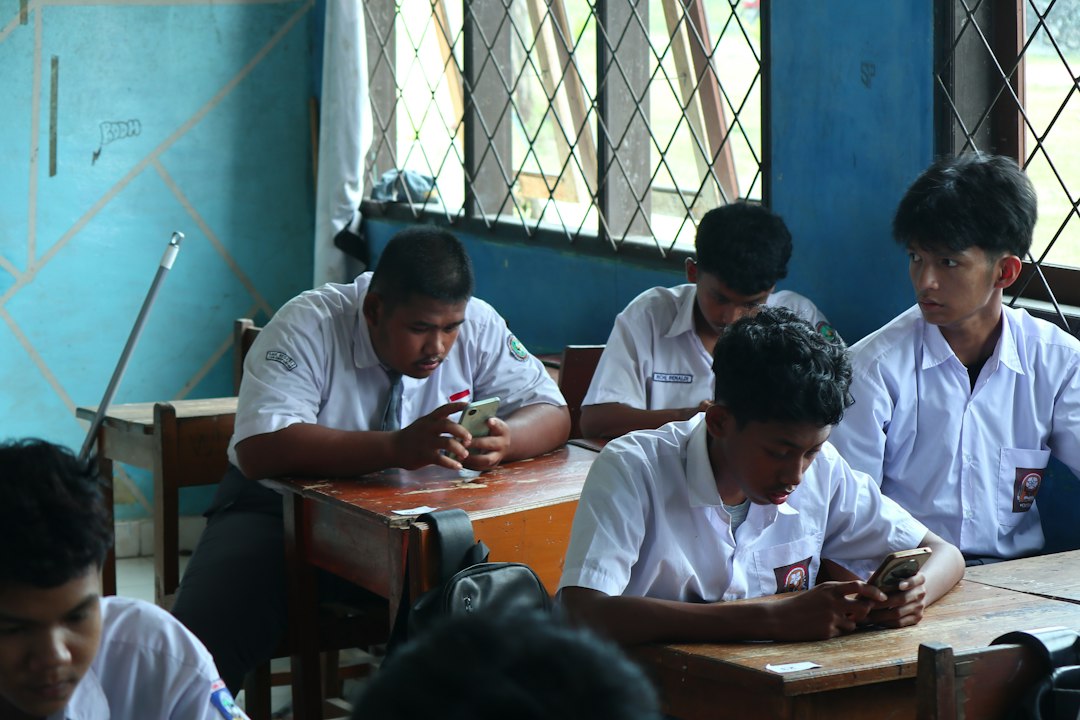
Category: Education & University Insights

  • Why Internships?

    Why Internships?

    “This means new hires today have an even greater need for hands-on training and soft skills than ever before, for example, teamwork, communication, and problem-solving skills”

    “My advice for young people is, study what you love and intern in what you want to do. And I think it’s okay to pivot as many times as you need to.”

    – Eva Chen, director of fashion, Instagram.

    “The only way to do great work is to love what you do. If you haven’t found it yet, keep looking. Don’t settle. As with all matters of the heart, you’ll know when you find it.”

    – Steve Jobs, founder, Apple.

    An internship chosen with care is a learning experience that empowers you with the skills that are needed to perform tasks which are specific to your career and can further enhances one’s performance while giving a big push to your career. Very specific and practical training is ideal for new age working professionals.

    Individuals need to know their strengths and weaknesses and most importantly decide where their real interests lie. This step is important, because for the rest of your life you will either be enjoying what you do or be straddled with work that you detest. In the long run, a career should help you grow professionally as well as personally.

    These days, rather than crunching numbers or preparing reports behind the scenes, many entry-level workers and interns are meeting with clients, identifying and resolving issues on real-time basis, and serving on cross-functional teams and processes. This means new hires today have an even greater need for hands-on training and soft skills than ever before, for example, teamwork, communication, and problem-solving skills. From a larger perspective, you may say that an internship is the new entry-level job. Employers want to hire college graduates who not only have the required education and training for the job but relevant experience as well.

    “Individuals need to know their strengths and weaknesses and most importantly decide where their real interests lie”

    Image Credit: Lagos Techie

    Through internships, you can:

    · Keep up with Emerging Trends – With the way businesses are constantly changing, one needs to continuously learn to keep up with these changes and internships help with this.

    · Network – One of the most effective ways of creating strong networks in the industry is by joining professional internships. They help you interact with peers in the industry and there is great scope to create business contacts and connections.

    · Take a career test drive – You can gain deeper insight into who you are and the type of work environments and tasks you enjoy most.

    · Understand the practical aspect of work – Internships sharpen your skills and improve how you handle your work as they are practical and teach professionalism.

    · Transition from “College to Career” – Lots of things change after college, starting with the time your alarm goes off in the morning! By building good work habits during your internship, the big adjustment from campus life to work life will go more smoothly.

    · Earn more college credits – Your college may offer academic credits for internships. In fact, growing numbers of schools require you to complete one in order to graduate.

    · Level up your CV – Internships are offered by professional institutions that are the setters of industry standards. Employers are generally interested in what professional courses and internships you have taken to improve your capabilities and your power to negotiate for a better salary or job.

  • To Canada or Not to Canada, That Is the Question, Eh?

    To Canada or Not to Canada, That Is the Question, Eh?

    “The canadian government has set up an ambitious target of 1.2 million new immigrants in the next three years, despite the global pandemic. 60% of the newcomers are going to be from India, followed by China and the Philippines”

    The Canadian government has set up an ambitious target of 1.2 million new immigrants in the next three years, despite the global pandemic. 60% of the newcomers are going to be from India, followed by China and the Philippines. This is a unique opportunity for those dreaming of experiencing a new country with clean air, the largest freshwater lakes in the world, decreasing carbon footprint, lots of nature and wildlife to explore and plenty of job opportunities. Here, I will be discussing a few of the common misconceptions that people may have regarding immigrating to Canada.

    Myth 1: It is impossible for students to get a job in their career of choice once they graduate.

    Not true. The ‘Wisenup! Canada’ Podcast co-host arrived as a student, as did many of the attendees of the show’s live Q&A sessions. Just as in any other part of the world, there is a clear distinction between those who make it and those who don’t; and it boils down to two key differentiators: 1) work ethics, and 2) growth mindset. 

    One of my mentees, Sourabh, who is quite shy and an introvert, has been working for a multi-million dollar commercial real estate firm after his accounting program at George Brown. He is quite soft spoken, has a non- Canadian accent and built his work experience and client management skills working at Subway, the fast-food franchise. He used his job profile working in the underground pathway of the financial district of Toronto to network with all the decision makers in the city. He had great grades and knew his subject matter very well. So, the question we need to ask ourselves is, if he was able to make it, why aren’t the others?

    Fundamentally, we need to understand that the average North American has five years of additional work experience over any newcomer from Asia or Africa. In South Asia, students start working after their undergraduate degree, however in North America they start when they are 16. So, if you are planning to join a course as a student in an undergrad or master’s program, keep in mind your peers have two to five years of real-world work experience over you. This means that they are simply better at customer service, sales conversations, client escalations, interviews and other skills they were exposed to even before they graduated from high school. Most importantly, they have established a network. Some started even earlier as baby-sitters or helping out with their family business or at mom and pop stores. 

    Myth 2: There are only tech jobs available in Canada.

    Not true. This also depends on what your definition of a tech job is. For the sake of this article, I am referring to jobs that need a specific software skillset as tech jobs. Yes, Canada is enjoying a tech boom. 

    The Toronto-Waterloo Tech corridor, which I refer to the silicon valley of Canada, has added more jobs than any other major North American city. However, all those companies also require employees in their HR departments, Accounts departments, in Sales and Marketing, Social media community management, and most importantly in Customer Service and Client Management.

    Case in point, take a look at the jobs available right now at ApplyBoard, one of the many billion-dollar companies from Canada. They have hundreds of positions across the globe and less than 10% of them are tech positions.

    Myth 3: It is impossible for someone in their 30s to establish their career in Canada. 

    This is not true. My podcast guests Sam, Saugata and Jacqueline moved into Canada well into their 30s with their children in tow. It is more challenging for certain individuals than others, certain specializations than others. 

    Check out their unique stories, lessons learnt and experience at WisenUp website.

    Canada is ranked one of the best countries in the world. However just like anything worthwhile in life, it doesn’t come easy and it requires newcomers to raise their skill level. People who work hard with the right information at the right time are the ones who move ahead of the pack and settle down faster.

    The article was originally published in Career Ahead April 2021 issue.

  • Rules for Professional E-Mail Etiquette

    Rules for Professional E-Mail Etiquette

    “The bottom line is, good communication skills equate to good relationships, a better career path, better mental health, and a better chance for overall success in your career and personal life”

    Employers often list communication skills as their highest priority, above even the qualifications for the job in question. Communication is essential in business to convey ideas, to have good relationships with colleagues and staff, to handle interviews, to create an impact with your presence, to network, the list is endless.

    The bottom line is, good communication skills equate to good relationships, a better career path, better mental health, and a better chance for overall success in your career and personal life.

    Forms of professional communication include written, verbal and non-verbal formal and informal communication. Not surprisingly, e-mail the most frequently used form of written formal communication today.

    Here are a few simple points we need to keep in mind while writing a professional e-mail:

    1. Pay attention to the subject line – Try to keep it concise and clear, and make sure it reflects the actual content of the e-mail. Avoid using ‘Hello’ or ‘FYI’, or other general greetings as subjects.

    2. Always use a proper salutation or greeting – ‘Good morning’, ‘Good day’, ‘Greetings’ or ‘Hello’ are acceptable ways to begin your e-mail; while ‘Hey’ and ‘Hi’ are not appropriate for formal e-mails.

    3. Write a proper introduction – Especially when writing to someone for the first time, it is best to include your full name along with some background information in the first few lines. For example, “Dear Ms. Mathews: My name is Anjala Singh, Editor of Literature Today magazine; I am writing to you regarding…”

    However, in certain cultures (such as Japanese), it is not considered appropriate to introduce yourself directly to a potential contact, such introductions are customarily made by mutually respected third parties. So, it is always best to research the customs of a country you are unfamiliar with, before writing an e-mail or starting any kind of communication.

    “Millions of e-mails are sent across the globe on a daily basis. Yet, a single poorly written e-mail can damage your professional image”

    4. Avoid humour and sarcasm – It is easy to misinterpret e-mail messages if the context is not clear. Humour is culture-specific and can oftentimes confuse or worse, offend the recipient.

    5. Do not use the ‘Reply All’ option unless it is actually needed – Avoid using ‘Reply-to-All’ unless everyone needs to know. For example, when a C-level executive (Chief Operating Officer, Chief Executive Office, and so forth) or their assistant sends an e-mail to ten staff members requesting volunteers for a project, reply to the sender of the e-mail, not to all the other recipients of the mail. Reply-to-All is a function for ongoing deliberations on a particular subject.

    6. Break up your e-mail into concise points – Use bullet points when possible and stick to the basic information. Do not write an essay when three sentences can do the job.

    7. Before hitting the ‘send’ button, ask yourself, “Does the receiver need all this information,” or, “Could this be better as a conversation over the phone instead?”

    8. Reply promptly – On working days, formal e-mails should ideally be replied to within 24 hours.

    9. Use proper language – Do not use short forms or acronyms, or slang in your e-mail.

    10. Proofread – Check your grammar and spelling before hitting ‘send’.

    Millions of e-mails are sent across the globe on a daily basis. Yet, a single poorly written e-mail can damage your professional image. It would be helpful to remember here that every successful person has superior communication skills. In fact, the most admired and best leaders are the most clear communicators. You can take the first step by improving your e-mail writing skills!

    The article was originally published in Career Ahead April 2021 issue.

  • Learning to Live, Living to Learn

    Learning to Live, Living to Learn

    “I genuinely love being a student: getting to explore entire worlds of knowledge fuels my imagination, and it also serves as a constant reminder of the sheer wonder and complexity of humanity’s project on earth”

    I’ve been a student all my life. Back in 1999, at the wee age of four, I was enrolled into Panchshilla Montessori school in New Delhi by my parents. Most of my 25-year-old life since then has been spent hopping from one school to another, the lectures becoming longer and longer, the coursework more and more specialized.

    I genuinely love being a student: getting to explore entire worlds of knowledge fuels my imagination, and it also serves as a constant reminder of the sheer wonder and complexity of humanity’s project on earth. One could spend multiple lifetimes studying and mastering just one subfield of an academic discipline.

    My own fascination with knowledge building aside, being a constant learner is a vital quality in the workplace too. I’ve been fortunate enough to have worked at newspapers, communications firms, art galleries, and universities. Regardless of the professional setting, all the successful professionals I had the chance to work for shared one trait: they brought a student mentality to their craft. They knew how to get the job done, and were confident in their abilities, but they were also completely open to new information and knowledge. They brought an endless curiosity to the table. Although I was an intern, they were more than willing to listen to my perspective, and even willing to change their opinion on something if my reasoning was strong. Their perpetual desire to learn expressed itself as a constant openness to new ideas.

    I’m in the final semester of my Public Relations/Corporate Communications Master’s program in Georgetown University. As a young communications professional, I’ve noticed the central role that learning new skills and tools plays in the communications industry. Finding innovative ways to quantify the impact of effective messaging is the fastest growing segment of the communications field, and the science of public relations measurement has transformed the way the industry operates. This is really the case in every field: innovation is a necessity, and the innovators are the learners, the constantly curious.

    The iterative process of studying, learning, and bettering yourself transcends classrooms, Zoom lectures, or even the workplace. Learning is how we understand ourselves, and the world around us. The act of learning is deeply personal, the sum total of all your experiences and ideas about the world interacting with new information.

    “Learning is how we understand ourselves, and the world around us”

    This deeply personal aspect of learning was discussed at great length by Siddhartha Gautama (the Buddha) too. The goal of Buddhism is eliminating human suffering (dukkha) through deeper understanding of oneself. For the Buddha, learning was the endless quest of one’s life. He told his disciples to never be satisfied by the teachings of one master, to keep striving to gain deeper knowledge (Clarici). It was through his own learning and observation that he arrived at a deep understanding of the human condition. The teachings and practices he passed on to humanity have gone on to help generations of people come closer to peace and contentment. The Dhammapada, a collection of Buddha’s sayings in Pali, opens with “Manopubbangama dhamma manosettha manomaya,” which translates to, “All experience is preceded by mind,
    led by mind, made by mind” (Bodhipaksa, 2016). The student mentality is a mindset: a mind that’s always open to learning is a flourishing one.

    If you’re more persuaded by science than spirituality, there’s still ample evidence to support this point. Recent neurological research has found that learning actively promotes brain health, limiting age-related cognitive decline and memory loss (Learning Helps Keep Brain Healthy, 2015). Other studies have even found that adult education helps promote happiness and emotional well-being (Vitelli, 2012). When it comes to learning how to live, living to learn really is the way to go.

    “The student mentality is a mindset: a mind that’s always open to learning is a flourishing one”

  • STEM vs. STEAM: Preparing Our Youth for a Well-Rounded Future

    STEM vs. STEAM: Preparing Our Youth for a Well-Rounded Future

    “Play has become measured, creativity is stifled by regiment, and cooperation has been replaced with competition. Statistics say that 20% of youth will experience clinical depression before they reach adulthood”

    Ask a 50-year-old how they recall spending their childhood days and they will likely recount stories of mud puddles, hopscotch, climbing trees, paper dolls and bicycles. Ask a 20-year-old how they recall their childhood, and their answer will almost assuredly be decidedly different. Most likely, if you ask a Gen Z for a ‘day in the life’ they will recount structured practices… piano, ballet, baseball, karate, even coding (or all of the above), over abundant homework, standardized test prep, and measures to demonstrate high achievement to attract admission to top prep schools or universities. Play has become measured, creativity is stifled by regiment, and cooperation has been replaced with competition. Statistics say that 20% of youth will experience clinical depression before they reach adulthood. Are we accelerating our future by hyper-preparing our youth to be critical and analytical thinkers? Or, are we killing the right-brained creative thinking, essential to out-of-the-box strategies which drive business growth and differentiation?

    With the push towards STEM-based education (science, technology, engineering and mathematics), and recognizing that STEM is more critical than ever in this digital age, we are also rapidly diminishing our non-digital creativity. Exposure to art and music in school is shown to improve motivation, concentration, creative thinking, problem solving and teamwork. Students who are exposed to regular physical activity perform better in school, have better grades and enhanced critical thinking processes, are better behaved in the classroom, and are better equipped to stay ‘on task’. Art connects youth with the community, their ethnicity, and the wider world, accelerating their capability for empathy and tolerance. All these results attained from exposure to the arts will enhance, not diminish, our STEM-based education system.

    “Exposure to art and music in school is shown to improve motivation, concentration, creative thinking, problem solving and teamwork”

    Rather than STEM, our global focus must shift slightly to STEAM. The ‘A’ in STEAM represents liberal arts, language arts, social studies, physical arts, fine arts, and music; all of which help to prepare students for a lifetime of performance, allowing them to have the emotional intelligence, skills and perspective provided by the arts. Learning to paint, play a musical instrument or mindlessly mold a lump of clay helps to alleviate the symptoms associated with anxiety and depression, improving memory and reasoning. It allows our brains to be quietly awake, rather than running at full capacity throughout our awake hours. Scientists are now studying what effects our constant exposure to digital technology and the Internet have on the brains of youth, understanding that the brain is not fully developed until roughly the age of 25. We are seeing critical areas of concern in the mental behavior of youth in terms of concentration, memory processes and social cognition, leading the WHO (World Health Organization) to recommend that we limit screen-time for children under the age of five to one hour per day. A study by Medical News Today reports that when researchers looked at digital multitasking, the evidence showed that doing multiple things online did not improve people’s ability to multitask elsewhere. In fact, it could make them more likely to pay attention to new distractions.

    “[T]he limitless stream of prompts and notifications from the internet encourages us towards constantly holding a divided attention ⁠— which then, in turn, may decrease our capacity for maintaining concentration on a single task,” explains Joseph Firth, senior research fellow at Western Sydney University’s NICM health research Institute.

    Further, studies show that our memory is greatly affected by exposure to the internet. Previous generations had to store facts mentally, and today, what we once had to remember, is now available at our fingertips with a quick Google search. The antidote to these stressors on our memories is the integration of the arts into the daily routines of children, providing critical food for our brains, enhancing and refining our cognitive memory abilities. When we step away from a device and spend even a small amount of time feeding our brains through creative activities such as sketching, we enhance critical thinking and decision making, thereby increasing a person’s intelligence.

    “Art connects youth with the community, their ethnicity, and the wider world, accelerating their capability for empathy and tolerance. All these results attained from exposure to the arts will enhance, not diminish, our STEM-based education system”

    “The critical and analytical thinking of STEM, combined with the creative thinking of STEAM, would ensure that we are developing a generation of well-rounded, empathetic, out-of-the-box thinkers, capable of blending humanity with technology”

    Art allows us to use creativity and imagination to increase the development of STEM’s essential skills, enhancing flexibility, adaptability, productivity, responsibility and innovation – all required skills for a successful career in any field of study. The critical and analytical thinking of STEM, combined with the creative thinking of STEAM, would ensure that we are developing a generation of well-rounded, empathetic, out-of-the-box thinkers, capable of blending humanity with technology. STEAM education is about applying creative thinking to STEM projects, igniting and inspiring students to use their imagination and creativity through the arts, and applying these skills to STEM subjects. Studying art subjects contributes to the development of those essential skills for collaboration, communication and problem-solving. It also enhances a student’s flexibility, adaptability, productivity, responsibility, and innovation. All these skills are required for a successful career in any field of study. If we can find a way to balance the arts and the sciences, mankind, for generations to come, will be full STEAM ahead.

  • Women in STEM

    Women in STEM

    I attended a Girls’ Grammar School and studied all three sciences – Physics, Chemistry and Biology – but, when I was 16, the new ‘comprehensive System’ in England affected my education, and I found myself in a huge mixed-gender school, the merger of three separate local schools, and the only girl in an Advanced Level Physics class. My first experience of STEM (Science, technology, Engineering, and Mathematics) just being for the boys!

    Having said that, I think as I chose Biomedical Sciences as a profession, I was not particularly affected throughout my career by stereotypes, especially as Hematology my specialist discipline, had many females. The Biochemistry departments seemed to have more male staff, who I assume were attracted by the huge complex autoanalyzers. I had to work across multiple pathology disciplines for the out-of-hours emergency service though, so did get to operate those as well.

    Along with established laboratory posts, I undertook a number of ‘locum’ positions, e.g., in Brussels – for SmithKline Beecham (now GSK) on a global clinical trial; the Orkney Islands; and hospitals in and around London.

    When I returned to university in my 30s, to study to become a Science Teacher, I deliberately took all the Physics modules available, because I knew that I would always be employed if I could offer Physics. I taught all three Sciences from 11 to 16 years, and to Sixth Form – Biology ‘A’ Level, Health and Social Care, and Advanced Vocational Certificate in Education Mechanics – and relished this, as much of it is Math, which I enjoy.

    The British Council state that a STEM workforce is crucial to India’s economic development and social welfare, but that women are underrepresented in STEM careers. “Although women constitute 40 percent of science undergraduates in India, only a fraction move into successful academic careers and even fewer reach top positions in research and administration. This results in a loss of talented workforce.’’ Having said this, only 24 percent of the STEM workforce in the UK consists of women, though this is predicted to rise to 29 percent by 2030.

    “The British Council state that a STEM workforce is crucial to India’s economic development and social welfare, but that women are underrepresented in STEM careers”

    “Science graduates have been – and will continue to be – at the forefront of tackling many of the world’s greatest challenges, from the coronavirus pandemic to climate change”

    According to the National Science Foundation, it is predicted that 80 percent of the jobs created in the next decade will require some form of Maths and Science skills, and females will need to take up these opportunities.

    Science graduates have been – and will continue to be – at the forefront of tackling many of the world’s greatest challenges, from the coronavirus pandemic to climate change. Careers are varied, and those in current demand globally include Audiologist, Biochemical Engineer, Climatologist, Computer Systems Analyst, Cybersecurity Specialist, Data Scientist, Dental Hygienist, Doctor (Medical), Endocrinologist, Forensic Science Technician, Genetic Counsellor, Hematologist, Information Security Analyst, Math Teacher, Nanosystems Engineer, Occupational Therapist, Patent Lawyer, Robotics Technician, Statistician, Surgeon, Veterinarian, Virtual World Creator, Wind Energy Engineer, and many more.

    Certainly, I have no regrets about the choices I have made. I have always received a good salary, been respected in an interesting job role of value to society, which has also sometimes allowed me to travel.

  • Making the Most of Online Learning

    Making the Most of Online Learning

    In a relatively short time-span, the Covid-19 pandemic has changed education in ways that we could not have imagined possible in such a time frame. From preschoolers to undergraduates, students of all ages have had to get used to seeing their teachers on a screen – attending virtual classrooms, submitting projects online and even taking tests online.

    Online classes have been a part of our reality for roughly three decades now, making learning accessible to a greater number of people than ever before. With improvements in technology and connectivity, the market for online learning has grown phenomenally in the last few years. No longer limited only to higher education, it was gradually being incorporated into curriculum universally. As advances in online learning techniques made online feedback and assessments a reality, online learning became a two-way dialogue rather than a static, didactic method of teaching; and when the pandemic struck, it became a necessity almost instantly. 

    Teachers and students have had to adapt and quickly learn to take online classes effectively and efficiently. The learning curve has been steep for everyone involved, but the upside is too great to ignore – education would be at a standstill if technology had not progressed enough to enable online classes.

    There are some challenging aspects of learning online; and here we have compiled is a list of things to help improve your experience.

    • Maintain a routine, as you would for regular classes – wake up on time, have breakfast and shower before you settle down to attend your classes. Treat your online class as any regular in-person class, as far as possible.
    • Be on time, or preferably early – Plan ahead and familiarize yourself with the software tools that will be used for your online classes beforehand. Learn how to mute your audio and control your camera, how to raise your hand or signal to indicate you wish to speak, how to send a private message; these are part of basic etiquette for online sessions of any kind.
    • Be mindful of what others can see and hear – ensure that the background is appropriate in case your camera is switched on during the class. Make sure that others in the vicinity are aware that you are attending a live class.
    • Create a dedicated study area – This can help you focus on your studies when it’s time for class and help disconnect when it’s not. Try to choose a quiet spot with minimum external distractions. Make sure it’s not too comfortable (like a bed or cushy sofa). Keep your books and stationary at hand; stay organized to avoid wasting time while the class is on.
    • Take notes – You may think that all the information is available online and you can skip this; however, the purpose of taking notes is not merely to record the class, but to put the material in your own words, thereby boosting retention and comprehension.
    • Avoid multi-tasking – distractions and switching between tasks can cause mistakes, it tires you out and hampers proper retention.    It can be tempting to get some other work done while listening to your lecture, but that’s likely to backfire. Research shows that focusing on one activity at a time increases productivity.
    • Make a note of deadlines and test dates; check your email regularly to stay aware of any possible changes in the schedule for classes, projects or tests. It’s easy to miss things when you are at home if you do not have a daily reminder to check your messages.
    • Be prepared for connectivity issues – Try to optimize your internet connection; hard wiring to your router is the best option. If you are on WiFi, sit as close to the router as possible. Do not panic if you lose your internet connection. You can also keep your smartphone as a backup.
    • Have realistic expectations – With everyone thrust into this situation with no advance notice, teachers and students alike have had to learn on the job. Remember that teaching this way is most likely a new experience for your instructors as well. Be patient, and don’t panic at minor setbacks.
    • Get to know your teachers – If possible, introduce yourself via email. It’s nice to have a personal connection with your instructors, and if there are no in-person classes, it may be difficult for them to see you as anything but a name on a screen. Making an effort to connect with them can only be an advantage. Ask questions and speak up in class when it is appropriate to do so. In case you fall behind or need help, ask for it. Asking for help shows a genuine interest in learning, rather than simply attending and passing a class.
    • Connect with your fellow classmates – Get to know the other students in your class. Exchanging notes can be helpful to let you know whether others are on the same track or facing similar issues as you. Creating an online study group with other interested classmates can be useful to resolve queries and keep track of deadlines. Being in sync with classmates can prevent you from slacking off. Connecting with others also helps break monotony and reduce stress.

    The world is waiting to go back to ‘normal’ and to see the end of this pandemic. But, in the meantime, there’s a lot to be thankful for in terms of technology and innovation that has allowed life and education to continue unabated.

    The article was originally published in Career Ahead January 2021 issue.

  • My University Experience

    My University Experience

    “If an experience has the ability to give you the bliss of belonging, it is an experience worth having. This is how I feel about my journey at the University of Toronto, where I completed a combined specialist degree in French and Italian”

    “Do I belong here?” is potentially the greatest question that one asks when finally deciding which university to go to, and one’s program of study. Though I personally had skipped this question and jumped ahead to the future, there was a moment in my university career when I realized that where I am is exactly where I am supposed to be. Like a bulb lighting up, showing me that everything is in place and putting on hold those pesky questions lurking in my mind about what is to come next. Those of us who have experienced university life can share that, at times, there can be a strong sense of alienation. Day-to-day uncertainty is simply a part of the process. But if an experience has the ability to give you the bliss of belonging, it is an experience worth having. This is how I feel about my journey at the University of Toronto, where I completed a combined specialist degree in French and Italian.

    A little ‘off-beat’ can be said about my choice of program, but thankfully U of T offered it; and that too with a variety of courses, never making me feel like the ‘odd one out’. For me, going to U of T was a rational decision, a prestigious university that was close to home and offered a program in the direction that I eagerly wanted to pursue; French. French was something I had been learning since grade four and I fell in love with the moment I first heard the sound of it. But to say I was nervous on the first day of university might be deemed an understatement, and walking into my very first French class in first year was an experience I will never forget. We had gone a long way from repeating the names of classroom objects and the recitations of the verbs “avoir” (to have) and “être” (to be) of the younger years. As if walking into a different world, French words, sentences, and unique expressions echoed through the walls of the lecture hall as the professor spoke.

    Walking into this new world was daunting and nerve-wracking, yet presented a deeply and inexplicably glorious feeling to be exploring the language in ways I had never heard of before. All the professors challenged us to transform our second or third languages into our first. The syllabi were crowded with verb tenses used commonly by the intellectuals, literature that scholars had been studying and unravelling since centuries and intricacies of the culture that were present in all their forms of art. But this was not even the entire picture of what my university career would look like! In a way, first year was designed like a map where I, as a student, belonged nowhere. Whilst fulfilling my university requirement of taking one humanities, one science and one social science course, along with other electives, and I explored courses such as Economics, Astronomy, Italian studies and even English Literature. Very different from the French degree I endeavored to attain, but this requirement and year of exploration allowed me to expand; teaching me a lot about myself. Moreover, I learned that it was not just French that I loved; it was a love of learning languages that occupied a space in my heart.

    “From all the ups and downs; feeling confused to feeling nervous to feeling like you’ve had an epiphany, this was an experience I’m so glad I had”

    When we finally had the opportunity to choose and apply towards our majors for the three years that were to be completed, I was at cross-roads. I had come in with somewhat of a ‘plan’, but the array of options in front of me left me lost. By chance I stumbled upon the perfect option that I was willing to risk, because I had loved my weekly three-hour Italian lectures; a combined specialist in French and Italian. This was the best decision for me, because from there onwards, I took courses in French literature from different centuries, Italian literature with a course entirely focused on Dante’s The Divine Comedy, cinema courses in both the languages, history of the languages, creative writing in Italian (which ended up being one of my more treasured courses) and the list goes on. The professors I worked with, the peers I met, the classes I attended, the exams I took all really pushed me to reach my highest potential. In four years, I accumulated knowledge worth centuries from lands entirely foreign to me.

    From all the ups and downs; feeling confused to feeling nervous to feeling like you’ve had an epiphany, this was an experience I’m so glad I had. My ‘eureka’ moment happened sometime during an Italian lecture in the later years, where I could not believe that I was sitting there listening to words that I had never understood before, opening portals for me that I could never have imagined for myself. From that moment on, my university experience was heightened and the map of my career had pin points to identify destinations. In the end it can be said that – although it may take some time, finding your space and claiming your sense of belonging makes the ride smooth and worthwhile!

    The interview was originally published in Career Ahead January 2021 issue.

  • Why Reading Sustains

    Why Reading Sustains

    “Is reading an activity restricted to those who embark on a career of higher education and teaching? No, not really. While it is true that today’s digital world provides irresistible audio-visual distractions, there continues to be an explosion in publishing”

    Teaching at the university for over three and a half decades, I can no longer remember a single day bereft of reading. As a graduate, I speculated about the unknown future but elected to do an MA in English Literature; to which my love for reading brought its own epiphanies and closure.  At the end of five years of a specialized course in literature, I was very clear that I did not want to study law or attempt the civil services. As a career choice, I opted to teach awhile because teaching allowed me to earn a little money; but, more importantly, it let me continue with the habit of accessing university libraries, which are extraordinary spaces in a poor country like ours. I could browse and read abundantly in college libraries as a student and subsequently as a teacher. I also haunted second hand book stores and pavement stalls in different parts of Delhi, on different days of the week. My access to a varied number of books allowed me to chase ideas and concepts and read endless books of fiction, biography, poetry, non-fiction, learned essays and theories every day of the week.

    I cannot say that I started off as an extraordinary teacher from my first day at the job since that did not happen. Initially, I was frozen with terror at the thought of speaking for over forty minutes. I wrote out lectures copiously and practiced them in front of mirrors for weeks before my fear could thaw out and I could lecture to a class full of young people. In the initial teaching year, it was a huge effort to stay one step ahead of my class. While I was stimulated and excited by the ideas and concepts that found their way in discussions, I remained apprehensive about not having read enough to further my arguments. I planned to continue to read and teach and learn along the way, till something more exciting turned up and presented itself as the true vocation.

    I discovered innumerable books that had been written which I had never heard of and the possibility that I might never finish reading most of them began to slowly dawn upon me. Despite a reasonable reading habit from early years at school and diligent supplementary readings thereafter, I realized that one lifetime is seldom enough to read all the books that exist in any language; and as more people accessed writing and publishing, the numbers of books outside prescribed syllabi grew in geometrical proportions on an everyday basis. I discovered eventually that reading was the only consistent skill set I had at my disposal. Therefore, my vocation was after all about absorbing, analyzing and discussing the books that I read and their contexts.

    Is reading an activity restricted to those who embark on a career of higher education and teaching? No, not really. While it is true that today’s digital world provides irresistible audio-visual distractions, there continues to be an explosion in publishing. The printed book continues to have its day, despite its e-competitors, although free access to books and libraries remains a hurdle.

    “Turning to the printed page, leafing through literature, poetry, and written narratives; people have been looking for answers, for understanding, for connections, and perhaps for solace and reassurance that they no longer find in the monotonous, fear-filled, socially distanced and sanitized worlds that they inhabit”

    It is first and foremost a privilege to be able to read. Languages and scripts are the most valuable tools that human civilizations have devised. Humans use language all the time, for a whole number of different activities. Language is needed to identify and classify and name things in the world for us to function at the most basic level. Languages have evolved around a huge range of references. Languages inform, disseminate, instruct and entertain; and at the optimum levels give us both literature and poetry, written in innumerable languages all over the world. Literature and poetry, vehicles of the human imagination also contain in portable form: stories, myths, chronicles, dramas and histories that have been handed down in different cultures for a very long time. The written word holds clues and secrets about the human past that are readily unlocked for every curious reader, keen to learn. Yet, despite the generous nature of the book, to take down a real book from a shelf and read it at an unhurried pace has become one of the less-chosen options for twenty-first century neophytes.

    At the peak of this technological age, when the world and its aunt were cruising along on mono-lingual global expressways, Covid-19 struck, and brought the entire world to a halt.  A humungous pandemic, unpredictable and uncontrollable, continues to keep the world as we knew it in abeyance. It has been a continuous dark night and devoid of all manner of quick fixes; with the result that everyone who can read has gone back to doing so. Turning to the printed page, leafing through literature, poetry, and written narratives; people have been looking for answers, for understanding, for connections, and perhaps for solace and reassurance that they no longer find in the monotonous, fear-filled, socially distanced and sanitized worlds that they inhabit.

    A few decades ago, in the last quarter of the previous century, most of us gleaned valuable inputs about the world we lived in and its varied cultures through the books we read. Without really planning any of it, we have been returned to the same space. It is time for us to listen and learn all over again, if we are to make sense of our lives and make our world humane again. What better way to do this than by listening quietly to the voices that confide in us in many languages, speaking of their deepest feelings and fears and sharing their secret hopes and dreams; voices of older human ancestors who lived through difficult times and wisely wrote them down, providing us with innumerable word repositories. It is this treasure trove – guarded by sentinels from an older time, providing glimpses into ancient history, wars, pandemics and mass destruction – that allows us to hope that there will be light at the end of the tunnel.

    The article was originally published in Career Ahead January 2021 issue.

  • Intrinsic Motivation in Career Choices

    Intrinsic Motivation in Career Choices

    Careers today are different from what they used to be a couple of decades ago. Family businesses are no longer the norm and venturing into novel fields is relatively common. Students can study whatever they are interested in and pursue their dream jobs. However, you will find that many professionals today are not keen on settling in their initial jobs, which is primarily due to the absence of inner motivation and a sense of purpose.

    A common occurrence seen in colleges and universities is that students show a preference for taking courses in science and engineering subjects. These subjects are presented to them as the ideal choice for career prospects. The reality, however, is that the scope of careers within these fields is limited to one’s interest in the defined subject-areas. This occurrence is not just limited to science, it applies to various fields that students are often pushed into because they either lack the grades to qualify for the course of their choice or lack the support to take on something that lies outside their social standard.

    When these students are faced with the daunting task of choosing a suitable career path, they experience mental health and stress issues before they even start giving job interviews. They feel confused because they concern themselves with finding the ideal career path for success instead of thinking about the ideal path for themselves. The answer, however, can be found by looking inside ourselves and understanding our personal motivation and interests.

    Mihaly Csikszentmihalyi, a psychologist and author of the book ‘Flow’, studied creative and accomplished people for over a decade. He concluded that genuinely creative people work for work’s own sake – that fame was just a bonus for them. What drives accomplished professionals, more than rewards, is the inner desire to contribute and create order where there was none before.

    Csikszentmihalyi states that when we are intrinsically motivated, we pursue every task with the highest degree of concentration and passion and often get lost in our work. Therefore, it is extremely important to find out where our interests lie because that is where we will discover our purpose and inner motivation, which will also help us strive for success and maintain our well-being.

    Read the full article here in our January2021 issue.