Category: Entrepreneurship & Business

  • Training and Education in the Services Sector – Time for an Overhaul

    Training and Education in the Services Sector – Time for an Overhaul

    “The future workforce has to, therefore, compete with smart machines and persevere to get smarter, which simply means they must develop superior skills, bandwidth, and knowledge.”

    Technology is literally and figuratively reshaping the world as we know it. The global economy is now, more than ever, dependent on innovation, disruption and reimagination to re-create the manufacturing, services and agricultural sectors. The challenges are not just limited to finding new sustainable and environment-friendly approaches, but extend to the why and how of “smarter ways of doing”, to remain relevant and ahead of the competition.

    Among the key three ‘M’ resources – namely, Men, Money, Materials – conventionally speaking, the services sector continues to depend on human resources (whereas manufacturing is now almost totally automated). However, there is a noticeable change in the way in which human resource is perceived, as compared to machines (with all its salient advantages in a set environment) to keep pace with the 24*7*365 business phenomenon. Constantly changing and unpredictable needs and demands of the millennial consumer, spoilt for choice, are driving manufacturing and services sectors to automate any and every aspect of the work sphere that are replaceable from man to machines for speed, agility, and low cost. The future workforce has to, therefore, compete with smart machines and persevere to get smarter, which simply means they must develop superior skills, bandwidth, and knowledge.

    I see the possibilities of super humans being groomed from the emerging tech savvy cerebral younger generation, who have acquired superior skills compared to the previous generations at corresponding ages. Thanks to immersion at a very early stage, say at toddler level, to state-of-the-art hardware and software, the gen-next may be able to learn and train only with a total upgrade of syllabus and curriculum of schools and colleges, which need to equip themselves with new multi-functional and expert (not trainee) skill sets. Talking about the hospitality industry, service techniques and management approach will have to undergo drastic changes to cope with the highly automated IOT and AI ecosystem in most manually replaceable tasks. The New Norm is all about smart learning, enlarged span to broaden the scope of capabilities and capacities of individuals.

    Smart Talent, powered by cutting edge tech skills, is emerging as the new smart work force that will drive services in a far more efficient and consistent manner, circumventing the very nature of the services business which by nature is unpredictable, high variance and very individual specific – calling for flexibility along with efficiency. Herein lies the significance of a future-oriented approach to education, training, and development to build a new generation of “Smart workers”, equipped with smart skills and adequate theoretical knowledge.

    No longer can organizations only rely on those who have risen from the ranks through the shop floor. Time has come for India, so heavily dependent on its services sector, to come up with a disruptive plan to alter the basic educational approach – right from primary school up to college levels. There is no choice. Livelihood skills now have to be brought into the mainstream of school syllabus, as job-oriented training is the need of the hour. Labour reforms and a culture of respectability – with dignity for every skilled job – will go a long way to attract high calibre school and pre-graduate college students to technical and skilled jobs.

    “Time has come for India, so heavily dependent on its services sector, to come up with a disruptive plan to alter the basic educational approach – right from primary school up to college levels”

    Let us delve into one of the most promising, high potential yet uncomplicated segments of the services sector – tourism, hospitality and travel. Millions of trained, skilled young men and women can be employed in the hospitality sector by bringing about intensive focus and adopting game-changing modern technology to educate and skill a huge number of young teenagers in technical subjects such as culinary arts and facilities management. Automation in operational management to drive efficiency while empowering individuals to acquire multi-skilling capabilities. India must experiment – at least in urbanized cities and towns, with tech-enabled education and skilling in professional employment – in industries like hospitality and tourism by targeting the dropouts or unschooled work force to go through practical, easy-to-learn classes with a high dose of practical sessions on the shopfloor.

    The future of hotel management colleges, services management programs, craft centres for certificate courses, will all be altered to accommodate inclusion of experiential, live shop floor learning simultaneously. With consumers gaining deep knowledge on every aspect with exposure through the internet, a new generation of guests will raise the bar in terms of situational management. Industry-academy interaction will take place almost on a daily basis as most techniques and established conventional methods will become redundant, forcing the pace of learning to almost real-time innovation. Future campus recruits have to be billable from day one to fill in the frontline guest-facing productive vacancies, as no hospitality (or for that matter any services or product-driven firm) can afford to carry unproductive trainees for months to settle down by trial and error. Attrition rates are bound to be high with incumbent executives or associates feeling the urge to move on, switch jobs and roles in search of new skills/learnings in a new environment. It is inevitable, more so because most of the next generation workforce will aspire to work for themselves as entrepreneurs at some stage.

    Fundamentally, training and coaching a smart new generation calls for a paradigm shift in the infrastructure of educational institutions, as well as an overhaul of syllabus and faculty. Career planning will be replaced with entrepreneurial planning, development and deployment within the organization to retain key players.

  • A Conversation With My Younger Self

    A Conversation With My Younger Self

    “Make the decision to be courageous, knowing that courage is the antivenom to regret”

    If I could turn back the hands of the clock twenty-five years, what would I tell myself, as I set out to begin what would undoubtedly become one of the most unexpected career journeys? What lessons would be the most important? What experiences would be the most transformational? Which people would have biggest impact? I’m not entirely sure a conversation with my twenty-four-year self would have been well received, as that is the age when I thought I had all the answers. I thought my pathway was resolute and inflexible. I thought that success came from climbing a predesigned, institutionally accepted career ladder was the goal to business promotion, success and, ultimately, happiness.

    How wrong I was.

    As I reflect on the many years since my inauguration into business – and government, since that’s where my career journey began – there are some key points that my far-too-confident self might well have embraced, or at least filed away for future guidance, assurance, and perspective. No one wants to hear “I told you so”, and I certainly would not mentor my younger self in that way. Rather, I respect the fact that many of the most valuable lessons I learned, making me who I am today, came from those formidable years when I was just starting to figure things out.

    Courage

    Make the decision to be courageous, knowing that courage is the antivenom to regret. Every action you take in life, every juncture you face, from baby steps to giant leaps, will require you to make a decision, and making decisions requires courage. Too often, people lack the confidence to make resolute choices. We ask others for their opinions, approvals, or consensus, and all this does is muddy the water of thought, and force you to second guess yourself, or even worse… make no decision at all.

    Be strong in your convictions, even if those convictions are contrary to popular opinion. Do not be afraid to swim against the current. Make your decision, believe in that decision, and follow it through to the end – regardless of the outcome. Do not doubt yourself. YOU are the one person with whom you can have complete trust. Have the courage to make mistakes. Mistakes are as much a part of life as successes, and they often teach you the largest, most important lessons. Do not be afraid to fail. Failure is one of the necessary stepping-stones of life. Follow your endeavors through to the end – sometimes the end is bitter, and sometimes sweet, but each conclusion you reach will leave you stronger than you were at inception. There will always be people who tell you, “It can’t be done”. Remember, the ones who can’t are afraid you WILL. But you will never know if you can be the one to “get it done” unless you have the courage to begin.

    Take risks. To quote William Shedd, “A ship is safe in the harbor, but that’s not what a ship was built for”. Greatness doesn’t come from comfort zones. Dream big, work hard, and don’t give up. You may have to try 1,000 keys before you can find the one that opens the door, but if you quit, that door will stay shut forever.

    “Mistakes are as much a part of life as successes, and they often teach you the largest, most important lessons.”

    “..you grow and mature, so will your hopes, goals, and aspirations. Life is unpredictable, and ever changing. Be brave enough to change with it”

    Flexibility

    Follow your dreams, but do not be afraid to change those dreams. As you grow and mature, so will your hopes, goals, and aspirations. Life is unpredictable, and ever changing. Be brave enough to change with it. As Darwin said, “It is not the strongest of the species that survives, nor the most intelligent; it is the one most adaptable to change”. Do not be afraid to embrace change. The ones who are crazy enough to believe they can change the world, are the ones who do.

    To be truly flexible, you must also remember that life never stops teaching so you should never stop learning. If you are firmly rooted in one contrived pathway, you will miss the most incredible, life-changing experiences and people that appear when you least expect them. To cast away old dreams and goals, and to allow grander visions to take their place requires both courage and a willingness to pivot, but in doing so, you will open imaginable doorways to opportunity.

    Pay Attention

    We often get so bogged down in ourselves – our technology and devices, our thoughts, or beliefs, our responsibilities, that we fail to pay attention to what – and who, is around us. Put down your phone. Look up. SEE that world. Destiny will walk right by those who are too busy taking selfies.

    Take the time to strike up conversation. Get to know the strangers who are around you as you sit at a coffee bar, ride the metro, or wait in line at the supermarket. These meaningful interactions can often lead to the most impactful new friendships, business relationships, opportunities and can take you down extraordinary pathways. Always try to find a way to be valuable to the people you meet, making it more about what you can do for them than what they can do for you. This is how you build a substantial network – this is how you can come together to truly BE the change that the world so desperately needs.

    Travel

    Travel. See the world. Prioritize your spending on experiences, rather than material possessions. Appreciate cultures, foods, and landmarks. Recognize that people are people, despite differences in race, gender, language, tradition, or religion. There are good and bad people – good and bad behaviors – in all countries and cultures. Be respectful. You are the stewards of our planet, and you have the power to heal the turmoil that the past generations have created. We have no “Planet B”, and it can no longer be us against each other… it must be us together for a solution.

    When you travel and embrace the differences and divergent perspectives of others, you grow, mature, and develop your own emotional intelligence and tolerance – making you an effective leader and compassionate human being.

    “Always try to find a way to be valuable to the people you meet, making it more about what you can do for them than what they can do for you. This is how you build a substantial network – this is how you can come together to truly BE the change that the world so desperately needs”

    “To be a true leader, you do not have to have all the answers. Value your team, respect divergent opinions, be open to innovation. Be an achiever, doer, shaper, impactor, creator, and most importantly, be a collaborator”

    Leadership

    Everyone is born with the capacity to be a leader, but few ever recognize, develop, and nurture the skills necessary to truly lead – courage, integrity, tolerance, and commitment to purpose. Leaders create leaders, but to be a great leader, you must learn from those in the past who have exhibited bravery under duress, kindness in place of cruelty, courage during crisis and strength when the tribe was weak.

    We have all worked for bad leaders at some point. Be the leader you wished you had in that situation. To be a true leader, you do not have to have all the answers. Value your team, respect divergent opinions, be open to innovation. Be an achiever, doer, shaper, impactor, creator, and most importantly, be a collaborator.

    In Summary

    In this very disruptive future we are facing, remember that the biggest impact sometimes comes from the smallest gesture. The future demands a regrowth of our human development capabilities. Do not be afraid of adversity, as adversity is one of the steppingstones of greatness. Never seek comfort from those who have decided to be comfortable, because greatness does not come from being comfortable.

    Be kind to yourself, while being kind to others. If you make a mistake, forgive yourself and start fresh with the sunrise. Make ‘being happy’ a priority and know that you can’t wait until life isn’t hard anymore to be happy. Set aside the things that you knew about the past and CREATE the things that will be true about the future. You are in competition with no one. Don’t worry about playing the ‘game’ better than others, simply, each day try to be a better leader, teammate, friend, parent, spouse… human being, than you were yesterday. If you can do this, then you will have achieved your ultimate success.

  • A Little Less Conversation, a Little More Action Please

    A Little Less Conversation, a Little More Action Please

    “As much as starting a business is not an easy choice, we should do more to fight the stereotype that entrepreneurship is not a female career. We need to show more examples of successful businesswomen and female-led businesses to inspire younger generations”

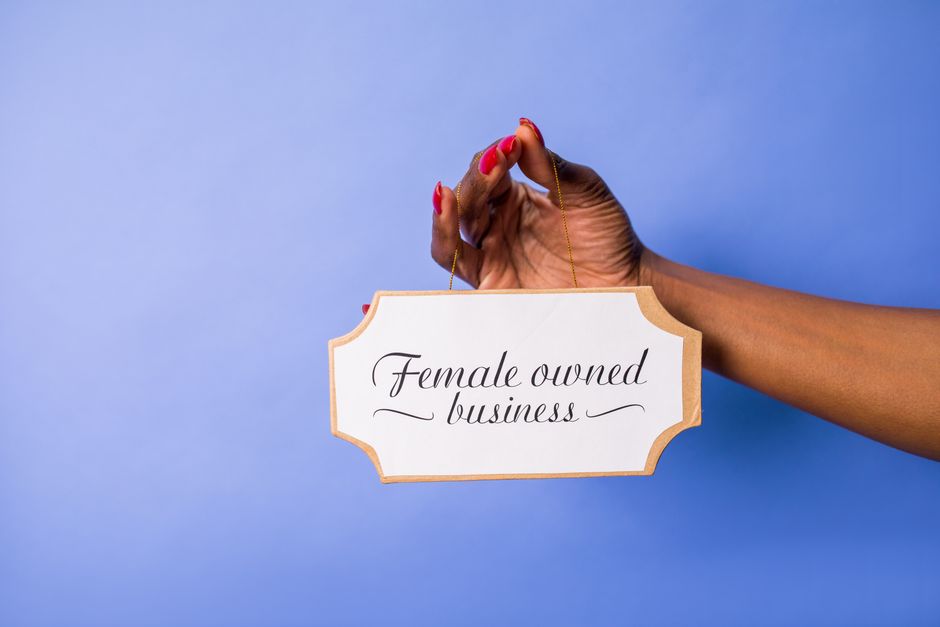
    Investors must show more than just good intentions if we’re to realize the full potential of female-founded startups. It is well known that, in the UK, for every £1 of VC funding, female-founded businesses receive just 1p. Worse than that, for the last 20 years only 10% of venture funding has gone towards businesses that even include a woman anywhere in the founding or leadership team. This is a terrible statistic, especially when it’s also been shown that female-founded businesses generate around 78% return on investment compared with 31% for start-ups founded by men. The industry has launched countless initiatives in recent years to encourage more funding into female-founded businesses, from dedicated accelerator programs to office hours aimed at expanding investors’ and founders’ networks and allowing women to get a foot in the door. Yet nothing seems to be working. In fact, in Q3 of 2020 funding into female-founded businesses dropped to its lowest level in three years.

    Fighting Stereotypes

    As part of Investing in Women Code we collect data to better understand the reasons behind the underrepresentation of female founders. Although it is still a work in progress, we can confidently say that more male-led than female-led start-ups approach investors. As a result, the chances are that male-led start-ups receive funding more often. This might be because, in our culture and mentality, entrepreneurship is not seen as a career for women, as a consequence of which young women are not encouraged to take this direction.

    As much as starting a business is not an easy choice, we should do more to fight the stereotype that entrepreneurship is not a female career. We need to show more examples of successful businesswomen and female-led businesses to inspire younger generations. They need to see that entrepreneurship is an option they can prepare for.

    Over-Incubated And Over-Advised, Just Invest

    With that in mind, there are many laudable programs out there that are designed to give women advice and support on seeking funding, all of which do have a role to play. However, we have to ask the question of whether we need all of them, and whether they are having the desired effect? In fact, recent research has shown that in some cases accelerators actually exacerbate the equity funding gap between male- and female-founded businesses.

    Instead, investors need to commit to actually investing into female-founded businesses. Women are perfectly capable of identifying a problem on their own, creating a solution, and drafting a pitch deck. This is not knowledge that is kept secret from them. Rather than burying female founders under mountains of advice, we just need to ensure that they are being encouraged to start businesses in the first place, give them a fair chance, and back them.

    “Women are perfectly capable of identifying a problem on their own, creating a solution, and drafting a pitch deck”

    “…mantra should always be, if you are a good company, with a strong team, and strong proposition, and have realistic expectations, there is a high chance you will secure investment”

    For example, at SFC Capital in 2020 we took the conscious decision to ignore often ineffective programs, office hours, and accelerators, and instead made a public pledge to invest at least 50% of latest fund into female-founded companies. This has resulted in us investing in some truly ground breaking companies such as ETIQ, Esther, Jack & Bry, and many more.

    We haven’t lowered our quality bar, and we haven’t passed on other deals. The mantra should always be, if you are a good company, with a strong team, and strong proposition, and have realistic expectations, there is a high chance you will secure investment.

    The First Step is the Hardest

    Although an industry-wide problem, we believe that setting ourselves high targets at the seed stage, even if we fall slightly short, starts to make a difference in the wider industry. Securing early-stage investment provides companies with the capital and tools necessary to go on to secure further funding and expand their businesses. By working hard to achieve better gender balance at the earliest stage, we can change the long-term fortunes of many female-founded companies. For example, without seed investors we would not have many of the successful companies like Onfido, or Transcend Packaging that we see today. By investing in women now we can see global companies founded by women in the future, and ensure the successes of future Whitney Wolfe Herds aren’t as exceptional as the recent Bumble IPO was held up to be.

    “By investing in women now we can see global companies founded by women in the future, and ensure the successes of future Whitney Wolfe Herds aren’t as exceptional as the recent Bumble IPO was held up to be”

    “Female founders do not need any more ‘how to’ sessions. They need action, and proactive investors willing to look at the opportunity their business represents, rather than their gender”

    Unfortunately, we did not quite hit our 50% target for this fund. However, simply through being proactive and issuing the public statement, we saw significantly more female-founded companies proactively approach us for funding – evidence that there are plenty out there who deserve it. This has meant we have invested in significantly more female businesses than the market average, and we hope this number will only increase as word continues to spread.

    It is clear that if the investor community keeps doing what it has been doing for the last few years, nothing much is going to change. Female founders do not need any more ‘how to’ sessions. They need action, and proactive investors willing to look at the opportunity their business represents, rather than their gender. By taking these first steps, we can make the start-up ecosystem more representative of our society, and also create some incredible companies along the way.

  • The ‘Business’ of Giving Back

    The ‘Business’ of Giving Back

    “..in a world that is ever conscious of our global footprint both environmentally and socially, companies are being forced to re-evaluate their contribution to the sustainability of our communities and the planet as a whole”

    A community is only as strong as the businesses that support it. In this post-COVID business world, we are recognizing that our businesses can no longer be islands of isolation, fiercely guarding our IP, operating in the cattle chutes of customer retention, competition and profit-making. While these elements are important to the strength and success of a business, corporate social responsibility and ‘giving back’ is becoming more and more essential to a strong, forward-thinking business model.

    Once upon a time, a business would make a charitable donation, accept the tax write-off, and continue with their operations, focusing mainly on profits and the bottom line. Now however, in a world that is ever conscious of our global footprint both environmentally and socially, companies are being forced to re-evaluate their contribution to the sustainability of our communities and the planet as a whole. Companies are standing up non-profit foundations, supporting social enterprises, and choosing to support organizations that can yield an ROI (return of impact) that they can pass on to their employees, customers, and stakeholders.

    The United Nations’ Sustainable Development Goals (SDGs) have given us a powerful framework for collective responsibility. As businesses must now have a conscience in order to truly make a sustainable impact, and by incorporating the SDGs into their business models, companies are choosing to support non-profit causes that prioritize the SDGs, helping these businesses to improve their environmental footprint and contribute positively to the unity of our societies, thus giving their customers and stakeholders a compelling reason to choose them over competitors. But to achieve the full measure of effect from corporate social responsibility, ‘giving back’ needs to be embraced in a systemic fashion, with companies of all sizes – from the large multi-national to the microenterprise – taking measurable action.

    The ‘give back’ economy will be integral to the future of business. Giving back does not merely mean contributing to charity, it means that we give back to our planet by ensuring that we have a responsible supply chain, reduce our carbon footprint, and help to contribute positively to our diverse society. It means that we recognize the role we play as business owners in our collective community economy, ensuring that we thrive, rather than decay. It is no secret that together we are stronger. But we must now consider how we can collaborate with one another to support and improve our communities.

    “It is not disingenuous to promote your commitment to social good, rather, it is important to share your value with the public, as this allows customers to make an informed and responsible choice when considering your product or service”

    “Together, we have the power to heal our global fractures. Together, we can reach new heights of innovation and achievement”

    The most obvious form of giving back is through charitable, tax-deductive contributions. While this is an easy and valuable choice, it is essential that we clearly understand the mission, vision, strategy, and fiscal management of the charities we choose. How much of our contribution is going to administration and how much is actually going to impact? Out of the amount of time and money that a business prioritizes to impact, can the value of this impact be quantified? If it can, and a business is satisfied with measurement, they must make sure that they share this contribution and measure of impact in their annual report, on social media, and weave it into the ‘story’ of their model of operations. It is not disingenuous to promote your commitment to social good, rather, it is important to share your value with the public, as this allows customers to make an informed and responsible choice when considering your product or service.

    Through the formation of a company-aligned foundation, a company can make a direct impact in line with the mission, vision, industry/sector in which they operate. Tying business operations to a vehicle for environmental and/or social impact can be a powerful mechanism for impact, easily allowing customers, partners, employees, and stakeholders to not only have a clear line of sight into the social responsibility of the company, but to actively participate in this impact. When a company has an associated foundation, they can closely manage the mission, the administration and fiscal responsibility, and they can better align the purpose of the foundation with the operations of the company.

    “..a company, one of your greatest assets, aside from the quality of your employees, is your reputation. You can’t have one without the other”

    Companies who make their employees, customers, and stakeholders a part of their mission of ‘giving’, realize a measurable uptick in the attitudes, performance, and happiness of their business environment, which further translates into enhanced productivity, less turnover, an environment conducive to innovative thinking and greater profitability. Encouraging and rewarding employees for volunteering in the company foundation, for other non-profits or in the community shows the employee that the company respects and understands their responsibility to be a good steward to both people and planet. Creating a workplace environment where employees are given the means to contribute to the company foundation or to a non-profit of their choice through payroll deductions, allows them to participate in a company culture based on unity, philanthropy, and accountability. This gives the company a distinctive edge over competitors, and brands them as a ‘company with a conscience’, which translates itself into reputational acceleration. For a company, one of your greatest assets, aside from the quality of your employees, is your reputation. You can’t have one without the other.

    In this new era, where we all recognize how fragile we are as a global society, we must work together to be a part of the solution. Genuine and quantifiable impact will require all businesses, from Fortune 1000s to microenterprises, to embrace a platform of collective responsibility and a prioritization of the ‘give back’. We owe it to humanity – the future generations who will be responsible for healing the damage that they themselves did nothing to create – to adopt a cooperative mandate of social responsibility. As business leaders, we must take deliberate steps to embrace the SDGs, minimizing our footprint and the damage we cause to the environment, while uplifting, inspiring, and empowering societies. Together, we have the power to heal our global fractures. Together, we can reach new heights of innovation and achievement. Together, we have the power to ‘give’ the future to the hopeful generations who will be charged with carrying our world forward, ensuring that we will continue to thrive, environmentally, socially, and economically.

  • Steering Your Entrepreneurial Ambition

    Steering Your Entrepreneurial Ambition

    “Entrepreneurship is a lifestyle. It transforms you as an individual, completely”

    So, you want to be an Entrepreneur? This is indeed a great thought. And like many other great thoughts, this could be a flight to fancy, or an actual, strenuous yet rewarding journey. It all depends on you what you make out of the spark in you.

    How to become an entrepreneur cannot be taught in a classroom. It requires ground-level execution, as in a real-life lab. To give you an analogy, it is like being on a war front. You really cannot have many choices, you have to take decisions, you have to live by your decisions, and you have to be confident, resilient and be ready to play every possible role there and then to win the battle. And to your next battle, you cannot afford to carry the baggage of failure, you can carry only the learnings from there.

    Let’s engage in a little self-introspection. But before that, let me tell you that no two entrepreneurs are exactly the same. Hence, do not compare yourself, and do not make the decision of becoming the entrepreneur, or not becoming one, by comparing yourself with others. Every entrepreneurial success or failure has its own set of footprints, its own journey over the years, its own DNA, and reasons of the state of the venture.

    Coming back to self-introspection – understand yourself very well, your circumstances, your abilities, your responsibilities and your gut and determination to create an impact. If you have that fire in you which can push you to extreme levels and can make you challenge the status-quo and do something innovative to solve the problem you have observed, you could be relatively better placed to take the plunge as an entrepreneur.   Having a huge bank balance to back you up does not guarantee your success as an entrepreneur, just as not having money cannot stop you from becoming an entrepreneur. Investors put their money on people and in the execution of ideas, not just on the idea.

    Being an entrepreneur is a journey that might be taken up as a lone ranger, but it is actually enabled through great teamwork. So, learn to share, to let go, to set expectations, and to meet expectations. On top of this, one must learn to celebrate success together, and also to share the pain of failure together. Remember, if a venture has failed, it is not the failure of ‘you’, or your team. Do not play the blame game to pin the failure on someone. It was an idea that failed, hence, move on with what you have learnt for the future. Earn respect, earn die-hard loyalty – you will become a successful entrepreneur if you have a team you trust, and if the team trusts you, completely.

    “Trust people, build processes, put in place checks and balances, and manage your emotions”

    Every venture faces huge pressure during the scaling up phase, which includes the pinch points of ‘let go’. As an entrepreneur, you have conceived the idea, nurtured it, gradually scaled it up to a level that it now needs large teams, maybe multi-locational presence as well, and you start feeling the pain of losing power. You assume that once you let go of control, your business will be snatched away from you. You do not find the same degree of passion in the professional managers appointed by you. You do not find the same alignment of thinking and vision. Well, it will never be. Your business is a job for them. Yet, you still need to ‘let go’ of the single-handed control, else your business will not grow beyond certain limits. Trust people, build processes, put in place checks and balances, and manage your emotions.

    Even though there are degrees and diplomas in entrepreneurship available in every part of this world, it is only your hands-on experience as an entrepreneur that will get you the right wisdom. Yes, it is true that a good education can increase the probability of success and will give you opportunity to build and leverage networks. Do not compromise on basic build-up and education.

    There is no ‘right’ age – we have seen examples of successful ventures with founders having started them in their 40s and 50s.  Yet, the sooner you begin, it could enable you to be better placed because of your energy levels, a comparatively less binding set of responsibilities at the personal front.

    By the way, entrepreneurship is not a career option at all. It is not a job. You cannot run a venture with the mindset of an employee. It has to be a complete change in your thinking and perspective. You have to wear the hat of a business owner.  You cannot have a 9 to 5 work clock as an entrepreneur.  You have to constantly think, innovate, find ways and means to grow your venture, to find solutions to your challenges. Entrepreneurship is a lifestyle. It transforms you as an individual, completely.

  • Q&A with Chef Manjunath Mural

    Q&A with Chef Manjunath Mural

    Chef Manjunath Mural’s lifelong dream is to be able to present Indian cuisine in a manner that is relevant to diners from across the globe – to make ‘haute Indian cuisine’ as accepted as haute French dining. He resents the “niche”, “family restaurant” image of Indian cuisine that is so common in big cities around the world, and wishes to showcase the depths of history, tradition, ingredients and techniques that are profoundly ingrained in Indian cuisine.

    As the Executive Chef of Song of India in Singapore, Chef Mural was the first Indian Executive Chef to earn a Michelin star for an Indian restaurant in Southeast Asia. Song of India went on to earn a Michelin star four times in a row with him at the helm. For Chef Mural, earning the Michelin star was just one way of working towards his dream of presenting Indian cuisine at its pinnacle on an international stage. Those who have worked with him are impressed by his passion and his everlasting desire to learn. His dedication to his craft, eye for detail and strong work ethic are qualities that lend to his success in the international arena.

    Born into a family of doctors, Chef Manjunath carved his own path and followed his dreams to reach great heights of success. He recently opened ADDA, a neo-Indian restaurant that presents Indian cuisine in an innovative and approachable manner. We have much to learn from such inspiring individuals, and we were fortunate to have the opportunity to ask him a few questions!

    Q1. When did you first realize that being a chef was your calling? What or who inspired you the most?

    A1. It was during my training at the Taj President where, while training in the Thai restaurant, I met two Thai lady chefs who really inspired me with the feeling that being a chef is a respectful career which requires a great deal of passion. Apart from this, my mother and father both supported my dreams of becoming a chef, even though they were both doctors.

    Q2. What are the character traits that you think are essential in this line of work?

    A2. Humility, passion, hard work, dedication are some traits that are important for a chef. You should try to show your personality through your cuisine. At the same time, there should be a constant desire to learn more, these are some of the things that make a successful chef.

     Q3. How important is it for an aspiring chef to undertake a professional program in culinary arts?

    A3. A professional program helps to learn the basics, the technique of cooking. It proves one’s interest in being a good chef and provides the advantage of adding skills, which are needed to survive in the tough hospitality industry.

    Q4. How was your journey towards achieving your first Michelin star? Were there any hurdles?

    A4. I have always been extremely oriented towards quality and consistency as a chef, without compromise. I also consider myself a good team leader, and I try to keep my team motivated to achieve greater heights. In the end, they are the actual winners. I believe these traits helped me on my journey towards the Michelin star, and I never experienced any hurdles or pressure.

    Q5. How do you cope with the day-to-day pressures of work, especially in the kitchen?

    A5. So much experience, spanning over many years has made me a very patient chef. I hardly ever take on any pressure, rather I enjoy teaching my chefs to make consistency and quality a habit, as I believe these two things make cooking an enjoyable and happy experience.

    Q6. Over the past year, how have things changed in the kitchen on account of Covid?  

    A6. Things have certainly changed over the past year; chefs have given greater importance to delivery platform food, created affordable menus, worked on cost control in terms of kitchen operations. The focus has shifted more to easy, casual dining. The target clients’ budgets have reduced, which has also made chefs turn to sustainable ingredients to help keep costs lower.

    Q7. Apart from culinary training, what skills would you consider important for a budding chef?

    A7. A positive attitude, humility, desire to learn and utmost respect for other chefs, whether they are young trainees or experienced chefs – these are all important in my opinion. Stay away from the trap of overconfidence.

    Q8. What advice would you give to students of the culinary arts who dream of becoming Michelin-star chefs some day?

    A8. Believe in yourself and in what you want to do. You must have the confidence to think differently, without caring about the opinion of others – this will always help to differentiate you from the crowd. Make sure that your basics are strong. 

  • The Professional Value of Your Network

    The Professional Value of Your Network

    “..recognizing the importance of a strong network and knowing how to build and nurture that network are often two very different elements”

    In business, it is not what you know, rather it is who you know. The value of building an expansive, intentional, trusting and accessible network can never be understated. Each and every introduction and engagement that presents itself is an opportunity for you to increase your worth to others and add their worth to your own personal Rolodex (for those individuals born after 1990, Google it). However, recognizing the importance of a strong network and knowing how to build and nurture that network are often two very different elements. Your business can expand and accelerate, you can find new employment, you can form dynamic business partnerships and build lasting friendships by having a well-developed and regarded network. It takes hard work to build a network, and even harder work to maintain it, but it is one of the most important assets in your portfolio.

    How do you turn an introduction and handshake into a friendship, partnership, business opportunity or collaboration? Knowledge is key. Learn, think, research. If you are attending an event, look at the bios of the keynote speakers ahead of time. Familiarize yourself with details or recent news about their company. Learn a bit about the country they come from, key points about their industry or sector, or conceptualize ways that you or your company could be of service to their them. Pay attention to key intersections that you share with a speaker – and if not with you specifically, think of ways in which you can add value to the speakers or special guests through meaningful introductions that you can make for them with someone else in your network. Be the conduit of significance. It is all about being prepared to add instant value to the person to whom you are being introduced – capturing the moment instead of letting it pass.

    “How do you turn an introduction and handshake into a friendship, partnership, business opportunity or collaboration?”

    “As Zero Deanin said in Being Awesome Doesn’t Mean Simply Existing, “If your presence doesn’t add value, your absence won’t make a difference”. Always strive to add value to those you meet so that they look forward to seeing you, speaking with you, and/or working with you again in the future.”

    Whether you connect with someone at a conference that you mutually attend, or if you are alone in an elevator with someone for 60 floors, or connect with someone significant through LinkedIn, all of these connections are only valuable or monetizable engagements if you find a way to extend this encounter beyond the circumstance of your immediate connection. Carry the introduction further, even if it is just a follow-up with an “it was a pleasure to talk with you” message. Perhaps you won’t have an immediate opportunity to cooperate, but one may emerge down the road, and the ability to dip into your network to be able to facilitate a connection for someone else or to enhance an opportunity when it presents itself is immeasurable. As Zero Deanin said in Being Awesome Doesn’t Mean Simply Existing, “If your presence doesn’t add value, your absence won’t make a difference”. Always strive to add value to those you meet so that they look forward to seeing you, speaking with you, and/or working with you again in the future.

    Some of the most extraordinary people and prospects come when we least expect them, but only when we are paying attention. Put down your cell phones and look up, see the world and pay attention to the people around you. Strike up a conversation, pay someone a compliment, ask someone a question – acknowledge the people sharing your space. opportunities for business, employment, partnership, and friendship will walk right by those who are too busy taking selfies, surfing social media or texting.

    You can only realize true value from your network if you have one. Your network is like a garden. Your connections are the seeds. How well we nurture and care for those seeds (our connections) determines how large and fruitful our garden (network) will become. How many times have you met someone and forgot to get their business card or were too shy to introduce yourself? How many times were you introduced to someone and you wanted to share a thought, an idea or identify a mutual interest, but failed to capitalize on it? How many times have we reflected in hindsight, replaying moments in our minds, wishing we could go back and do things differently? When we meet new people, the goal should be to carry the conversation forward to a follow on, allowing us to water that seed of a connection turning it into a long-term business relationship or friendship. However, adding connections to our network is only the beginning. We must keep those contacts fresh. You can’t expect to let two years pass between engagements and then assume that that person will remember you, be compelled to take your call, or want to listen to what you have to say. As you build your address book, take time each week to reach out to a few of your older contacts…send them an email to say hello, reminding them where you met (if necessary), ask after their business and summarize what you are working on. This will keep you fresh in their minds and allow that professional relationship to grow and be available when and if the opportunity to cooperate presents itself.

    “Be the conduit of significance. It is all about being prepared to add instant value to the person to whom you are being introduced – capturing the moment instead of letting it pass”

    “Your network is an asset having a monetizable value. The time to build your network is before you need your network…the time to build your network is now”

    No one is responsible for the strength and size of your professional network except for you. How you are regarded, remembered, and respected comes from how well you care for the people with whom you interact. Naturally, there are many people with whom you have the regular occasion to interact, but some of the most important connections are the people who lie quietly dormant in your address books until the right opportunity for collaboration or partnership presents itself. You MUST nurture, prioritize, and add value to your network regularly throughout your career – even if you change jobs, industries, or sectors. There will be many unexpected situations or intersections that you can benefit, enhance or repair by dipping into your carefully watered garden of connections. An opportunity lost is, well, an opportunity lost. A connection that is not nurtured and cared for like a seed in that garden will wilt and fade away, and it is almost impossible to reconnect when time has removed the necessary familiarity needed for maintaining a trusting engagement.

    Your network is an asset having a monetizable value. The time to build your network is before you need your network…the time to build your network is now.

  • Reimagining the Business Model of the Future

    Reimagining the Business Model of the Future

    “For those entrepreneurs or business leaders who want their businesses to not only recover in the wake of Covid-19, but who also desire to be the industry shapers, they must be brave enough to rewrite their business roadmap”

    What is one of the most important business lessons learned in 2020? The answer is easy…crumple up that legacy business model and throw it in the trash.

    You may be asking, “Why would I want to throw away a model that worked for 10, 20, 30 years – or even for multiple familial generations?” Because what we knew to be normal in the past era of business has been disrupted and replaced. We cannot go back to normal because normal was our problem. This past year – a year held hostage by Covid-19 – has allowed us to see the fractures in our environment, society, economy and business. Most all businesses – and governments for that matter, have really only been prepared for a mild, short-term disruption (if they were prepared at all). Businesses lacked basic contingency plans for their business and operational models, and for sure, they were nowhere near prepared for the large-scale systemic shut-down that blanketed the world like a hard rain of volcanic ash. No one could have prognosticated the disruption to our global supply chains, markets, off-take and operations. But now, as industry looks ahead to a period of recovery, businesses and investors are beginning to see, once again, that while these are the times when fortunes are both made and lost, there is an opportunity and ability to ensure that we move forward as business vanguards through the willingness to disrupt current business model, finding gaps that no one else yet sees, innovating solutions to fill these gaps. While it sounds difficult, with a slight readjustment of our thought processes, we can begin to dissect the challenges, and pioneer extraordinary solutions.

    For those entrepreneurs or business leaders who want their businesses to not only recover in the wake of Covid-19, but who also desire to be the industry shapers, they must be brave enough to rewrite their business roadmap. These founders or leaders recognize that it is only by doing business in a way no one else is that they will have opportunities no one else has. Focusing on a few key areas – the integration of sustainability strategies, introducing compelling storytelling, and prioritizing corporate social responsibly, we can trigger creative shifts that will help to position businesses to run the race into the future out in front of competitors.

    Sustainability

    The most overused and least understood buzzword in the English language is ‘sustainability’. Sustainability goes well beyond simply hugging bears, bunnies and trees. It means the complete viability of our future – environmentally, socially and economically. In short, sustainability means survival.

    “A framework of sustainability provides strong value to stakeholders, investors and customers, allowing them to make an ancillary impact on the planet and on society, giving investors a compelling reason to choose your company over your competitors.”

    As we are all stakeholders of the future, we have a responsibility to play a role in the triple bottom line of tomorrow – people, planet and profit. A company that adopts a platform of sustainability is proven to outperform competitors when they infuse metrics of environmental, social and governance (ESG) into their business models. Making a short-term investment in the long-term viability of their businesses through a policy of sustainable impact will help a company have a distinctive competitive edge and plays a significant role in determining business success. A framework of sustainability provides strong value to stakeholders, investors and customers, allowing them to make an ancillary impact on the planet and on society, giving investors a compelling reason to choose your company over your competitors.

    How we tackle something as massive as our global sustainability can be overwhelming for a business. Many assume their impact will be token, so they tend to put off adopting these measures of responsibility. The United Nations has given us a remarkable roadmap to success in the Sustainable Development Goals (SGDs). For a business to genuinely and quantifiably make an impact on sustainability, they only need to select and adopt one or two of the 17 goals, for which they can generate the strongest measures of influence. Encourage employees to volunteer collectively on behalf of your company; integrate policies of efficiency into your operations (recycling, energy conservation, etc.); implement platforms of fair and equitable opportunity for employees into your business culture – these are but a few of the ways a company can make an impact. Sometimes, the biggest impact can stem from the smallest gesture.

    Storytelling

    Once you commit to a sustainable transformation of your business model, you must create the story. While you are measuring the cost savings of raising your office temperature a degree or two; prioritizing gender equity in your workplace; creating equal opportunities for influence, leadership and promotion amongst your employees; embracing a responsible and accountable supply chain; and other measures unique to your company’s commitment, the value of these measures won’t be recognized outside your company culture unless you share the value of your impact. To do that, you must have a well-crafted story. It is not disingenuous to share your impact with the world, you are simply allowing the value of your measures to pass forward to your customers.

    “Admittedly, one of the hardest things to do is to is to talk about ourselves and tell our business ‘story’. But telling this story is one of the most critical elements of business visibility and promotion”

    Admittedly, one of the hardest things to do is to is to talk about ourselves and tell our business ‘story’. But telling this story is one of the most critical elements of business visibility and promotion. Highlighting your products, the backstory of your founding, or many other topics that can articulate your essence, will go a long way towards helping customers, stakeholders and investors make an informed and conscious decision to choose your products or services. One way to tell a persuasive story is to study, understand and share the quality and value of your supply chain. If you are a company that makes chocolate, where does your dairy come from? This is an opportunity to share your support of the family farms. Are you sourcing supplies from a company owned by a woman? Spotlight that woman and use this as a demonstration of the importance of encouraging opportunities for women-led enterprises. Let the value of others in your supply chain lend their value – their story – to you, which you in turn pass on to your stakeholders and customers.

    You can also paint a very compelling picture by highlighting your goals for the future. Promote the fact that you are committed to reducing your carbon footprint by ‘x’ percentage within a prescribed amount of time. Is 40% of your executive board made up of women and/or minorities? This shows the world that you recognize that importance of an inclusive and unified workplace and that you respect the diverse perspective of your team. Are you using data to understand and anticipate the needs of your customers? Use this to truly and genuinely enhance the customer experience – showing that you value their time and want them to have an optimized user experience when they engage with your brand. You, as a business, have a blank page on which to write your future. What you write on that page is up to you. Tell your story in a way that showcases your commitment to the SDGs, your value to your community, and your recognition that together, we are stronger. Your story is the heart of your business…make each word count.

    Corporate Social Responsibility

    A business is only as strong as the community it supports. Giving back must be an integral component of the business model of today. Whether you are a micro-enterprise or a multinational, there must be outward impact to go along with your internal profitability and growth. Even if you are a small business without significant revenue, remember, there is no measure too small, no gesture too ‘token’, and no act of altruism that is insignificant. Sponsor a community project, reward your employees for volunteering or mentoring, start a non-profit arm of your company and use this to lend a portion of your business model to making a difference.

    “Whether you are a micro-enterprise or a multinational, there must be outward impact to go along with your internal profitability and growth”

    For large companies, create a ‘year of giving’ in your workplace. Select several non-profits and give your employees the opportunity to automatically allocate a small amount from their paycheck each month to the non-profit of their choice. This allows you to share the value, the feeling, and the personal reward of giving back with your employees. Creating a culture of giving within your workplace will accelerate your corporate culture on all levels, creating a happier, more cohesive work environment, while reducing turn-over rates.

    We are the architects of the future. We are the authors of our way-forward. Our business model is malleable and can evolve with our experience, societal stressors and needs, and the gaps we see in society which can be filled by our brands. Disruptive innovation rarely comes from within an industry or sector. The concept for Airbnb did not come from within the hotel industry. The concept for Uber did not come from the taxi industry. By reimagining the future, filling the fractures in new and innovative ways, we can be the true leaders and changemakers of a healthier, more tolerant, unified and sustainable future. Worry less about competition and concern yourself more with being a progressive leader. Don’t waste your time looking at a shift in the operations of your competitor, and instead, spend your time exploring new technologies, strategies or solutions which will allow you to do business in ways that others have yet to recognize or embrace. Don’t be afraid to say, “why not” when someone says, “that won’t work” or “why are you making that change”.

    Never get comfortable with your success. Embrace your responsibility to the future viability of our planet. Don’t be afraid to tell your story, and do it in a way that is honest, compelling and impactful. And always remember, a small change can yield big results.

    “Don’t waste your time looking at a shift in the operations of your competitor, and instead, spend your time exploring new technologies, strategies or solutions which will allow you to do business in ways that others have yet to recognize or embrace”

  • FAQs on NFTs

    FAQs on NFTs

    “NFTs are digital collectibles, just as people collect physical objects of value such as coins, art, baseball cards. An NFT is a certificate of authenticity for digital assets – which can include art, music, video clips such as sports highlights, or even tweets – validated by blockchain”

    What is NFT?

    NFT is an acronym for Non-Fungible Token. A Non-Fungible Token or NFT is a digital item which can be created, bought, and sold in an open market. NFTs are owned and controlled by individuals and do not require the support or permission of any centralized authority or organization. The key characteristic of an NFT is that it is a distinct proprietary asset and cannot be exchanged for any other NFT, unlike Bitcoin, Ethereum or other cryptocurrency. Each NFT is a token that is encrypted on the blockchain network.

    NFTs are digital collectibles, just as people collect physical objects of value such as coins, art, baseball cards. An NFT is a certificate of authenticity for digital assets – which can include art, music, video clips such as sports highlights, or even tweets – validated by blockchain.

    What is the difference between NFTs and cryptocurrency?

    Cryptocurrency, such as Bitcoin, is ‘fungible’ or ‘exchangeable’ – meaning that one Bitcoin can be exchanged with another, without making any difference to the owner. This is not the case with NFTs, as each one is unique and irreplaceable. While blockchain was initially developed to support assets such as Bitcoin and other cryptocurrency, it is has now evolved to enable users to create unique non-fungible assets.

    How do NFTs work?

    Blockchain allows users to create unique crypto assets which are non-fungible, that is, which cannot be replaced. Creators of unique digital artifacts can capture information of relevance to their digital creations and store them as tokens on the Ethereum blockchain, enabled by the ERC721 token standard. The ERC721 was built with the intention of setting the technical standard for non-fungible tokens on the Ethereum blockchain. It tracks ownership and movements of individual tokens in the block, thereby enabling the chain to recognize the non-fungible tokens. The famous CryptoKitties project was the first to use the ERC721 technical standard.

    What is the reason behind its current popularity?

    NFTs entered the mainstream in 2017 with a project called CryptoKitties, a virtual game based on blockchain in which players could adopt, raise, and trade virtual cats. 2018 and 2019 saw huge growth in the NFT ecosystem, with NFT marketplaces flourishing and trade volumes growing. Earlier this year, the sale of digital artwork “Everydays: The First 5,000 Days”, by digital artist Mike Winkelmann, also known as Beeple, at Christie’s Auction House for a record USD 69.3 million was the first ever sale of a digital artwork by a major auction house.

    One likely factor behind the rising popularity of NFTs may be the increase in recreational investing during the pandemic. As most such exchanges accept cryptocurrencies, this meets the demand of individual investors with stockpiles of cryptocurrency who are looking for entertaining avenues to spend it on, which also have the potential to help create money in the future.

    What are the benefits of NFT?

    The historic auction of Beeple’s digital artwork was not only a landmark moment for all digital artists, and those involved with NFTs, but also has huge implications for all kinds of artists who are creating today. Crypto art can finally resolve the problem of artists getting paid, as NFTs can be programmed to pay royalty to the creator every time the collectible is sold.

    Though it has come far from its early days, the NFT market is still growing and evolving. The next year is likely to see much innovation and further developments. NFT has immense potential to create value in the physical world as well, by setting clear and secure ownership standards. The removal of intermediaries makes the option of transacting with NFTs desirable, affordable, and fast.

    Where can someone create, buy, and sell NFTs?

    Firstly, a creator would have to decide which blockchain they would use to create their NFTs. Each blockchain has its distinct NFT token standard, compatible wallet services and marketplaces. To mint your own NFT artwork, videos or music on the Ethereum blockchain (which currently has the largest NFT ecosystem) you would need an Ethereum wallet that supports the ERC-721 token standard, and USD 50-100 in ether (ETH). Thereafter, one can choose from a number of platforms / marketplaces – such as OpenSea, Rarible, Mintable – which allow the user to connect their wallet and upload any image or file that is to be turned into to turn into an NFT. Some other popular NFT marketplaces are SuperRare, VIV3, BakerySwap, and NFT ShowRoom.

  • The Power of Mentorship to the Success of Business

    The Power of Mentorship to the Success of Business

    “For young adults stepping into the career world, their choice of mentors plays a significant role in the degree of achievement they set for themselves, the goals they aspire to, and the confidence with which they step forward into this exciting new era of their lives”

    Every moment of our lives from our first breath to our last, we are influenced by mentors, either directly or indirectly. The actions, words, successes, failures, inspirations and motivations that shape our personalities, goals and dreams are influenced by mentors. When we are children, we generally don’t have a lot of say in who our mentors are…family, friends, teachers, school playmates – these are the people who will shape our ideas of teamwork, our ability to make decisions, our morals, and our tendencies to be leaders or followers. The people who teach us fundamental life lessons as children influence our ability to problem solve, make decisions and choose the right (or wrong) mentors when we get older. As adults, we take these attributes shaped by the mentors of our youth, and we use these models to shape the character of our future, and how we influence ourselves, others and humanity.

    For young adults stepping into the career world, their choice of mentors plays a significant role in the degree of achievement they set for themselves, the goals they aspire to, and the confidence with which they step forward into this exciting new era of their lives. The big, bad, scary future is much less daunting when you have a trusted advisor/mentor to listen, learn from, brainstorm with, and model. Mentors can be older siblings, parents, professors, friends, but a mentor can also be a boss, colleague or even a peer. There is no universal formula for a mentor – we are all mentors and we are all mentees, regardless of age or professional experience.

    “There is no universal formula for a mentor – we are all mentors and we are all mentees, regardless of age or professional experience”

    “Companies that embrace a culture of mentorship are shown to outperform competitors, having greater levels of efficiency, more cohesive team structures, and lower turnover rates. Mentoring builds unity, and a company unified from within will be a true vanguard of the future”

    Seasoned professionals, business leaders – those individuals who have been running in the rat race for a period of time – have a responsibility to inspire the younger generations so that they can aspire to reach their full potential, learning from our successes while avoiding the pitfalls that can usually only be sidestepped through experience. Companies that embrace a culture of mentorship are shown to outperform competitors, having greater levels of efficiency, more cohesive team structures, and lower turnover rates. Mentoring builds unity, and a company unified from within will be a true vanguard of the future.

    One of the most underappreciated forms of mentorship is reverse mentorship. Reverse mentoring pairs younger employees with executive-level team members, usually focused around technology and innovation. Companies that encourage their employees to be open to both mentorship and reverse mentorship, have a greater sense of inclusion, cooperation and productive knowledge-sharing. When senior executives or members of the leadership team challenge their younger employees with the responsibility of hacking apart problems and conceiving new and innovative solutions, teaching and guiding their colleagues, the company is positioned to be both disruptive and transformational. We have much to learn from one another. When you ask someone for their assistance, ideas or opinions, you are showing them that you value their input and trust their perspective. While they are contributing to the solution of your challenge, you are contributing reciprocal value to them, helping to build their self-confidence, further inspire the courage of their creativity, and ensure that they feel valued as an employee.

    “When senior executives or members of the leadership team challenge their younger employees with the responsibility of hacking apart problems and conceiving new and innovative solutions, teaching and guiding their colleagues, the company is positioned to be both disruptive and transformational”

    Our ability to professionally mentor does not come only from our education or professional experience, it comes from each and every engagement we have with others, the places we have traveled, the challenges we have faced, the times when we have been uplifted and the times when we have been let down. Sometimes, as we mentor others in a business capacity, we endeavor to keep it very linear and focused only on the topic, leaving the ‘personal’ out of it. But the ‘personal’ is what makes us human. The ‘personal’ is what makes us relatable. The ‘personal’ is what shapes the value of our perspective. And the ‘personal’ is what makes our content as a mentor, much more valuable. The personal side of us encompasses our emotions – the love, loyalty, sense of family. A mentor who counsels strictly from the rigid space of business will be missing a phenomenal opportunity to shape a well-rounded thought process infused with empathy, understanding, and balance – the balance we all need to successfully manage both our business and personal lives. We are sometimes afraid to show emotion or vulnerability in the workplace, but emotion and vulnerability is what truly makes us creative and forward-thinking. We see problems and challenges from a myriad of perspectives when we bring emotion to the table. If we hide behind a façade, attempting to be what we assume to be appropriate for the workplace, we are denying the workplace of the value of well-rounded perspective from our lessons learned. A mentor who espouses this as a role model is helping to shape visionary, tolerant and courageous mentees – who will pass this on as they assume their role as a mentor.

    “A mentor who counsels strictly from the rigid space of business will be missing a phenomenal opportunity to shape a well-rounded thought process infused with empathy, understanding, and balance – the balance we all need to successfully manage both our business and personal lives”

    “Have the courage to do things differently than others, and not only will you have opportunities that others don’t have, but you will inspire those who see you as a mentor to be brave enough to also do it differently”

    A work environment built around a nucleus of mentorship is the most important way to ensure your company dominates your sector. We are stronger together. As business leaders, entrepreneurs, innovators…and global citizens, we have a responsibility to elevate one another – not only for our personal gain or our business growth, but simply because it is the right thing to do. When we lead by example, we are passively mentoring. Have the courage to do things differently than others, and not only will you have opportunities that others don’t have, but you will inspire those who see you as a mentor to be brave enough to also do it differently. Every single day, we are mentoring and being mentored by others. Mentoring is not always sharing the good…we also learn from the bad examples we see. Be the good example. Be the mentor who inspires, empowers and uplifts. When we uplift one another, we uplift humanity.