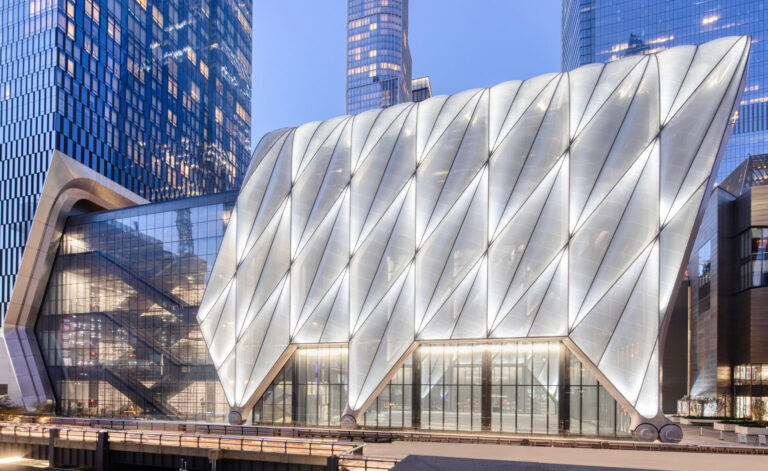
It was very heartening for art lovers across the globe to see the Art Frieze 2021 held at The Shed in Manhattan from 5 May to 9 May 2021, two years after the last edition. Though the majority of viewers preferred to view the displayed artworks via the Frieze Viewing Room, there were many who chose to visit the largest art fair in New York onsite.
The world as we knew it, now has undergone a complete readjustment post-pandemic. The art world is no exception to this rule. The good news is that in small pockets around the world, where the pandemic exists in a sort of subdued version, people are moving out of their homes and trying to revive life with all cautionary measures and safety protocols in place.
Here is a selection of ten artworks that were outstanding in terms of their craft, or the price they commanded or the sheer magnificence of the art pieces.
1. New York-based Sean Kelly Gallery sold an intricate work on paper by Shahzia Sikander, titled Mirrored (2019), for $125,000. The acclaimed Pakistani- American artist is celebrated for expanding and subverting pre-modern and classical, Central and South-Asian miniature painting traditions. She has formulated the genre of neo-miniatures by merging traditional and historical practice with contemporary international art practices.

Shahzia Sikander, Mirrored, 2019, Sean Kelly Gallery, Frieze New York, 2021
2. Jorg Grimm of the GRIMM gallery sold Daniel Richter’s 2021 creation Mainness (2021) for €200,000, amounting to over $240,000. The flamboyant German artist is best known for his large scale oil paintings, created with fluorescent shades and bold brushstrokes. The subjects of his art are usually seen as rebellious and completely in a state of mental disarray.

Daniel Richter, Mainness, 2021, GRIMM, Frieze New York, 2021
3. A six-panel painted folding screen by Hernan Bas commanded a price in the range of $350,000 to $400,000, and was taken by a European collector. Sold by Lehmann Maupin, this magnificent panel created in acrylic on linen mounted in a birch-wood frame with fabric backing is another of the artist’s tribute to literary works by Arthur Rimbaud, Oscar Wilde, and Joris-Karl Huysmans. Hernan Bas paints androgynous subjects in their path to sexual self-discovery amidst rich gothic landscapes and his works are evocative and emotional.

Hernan Bas, The Suspect, 2021, Lehmann Maupin Gallery, Frieze New York, 2021
4. Amongst one of the bestselling works, was William Kentridge’s spectacular Waiting for the Sibyl, (Comrade Tree, I report to you) (2020). Represented by Goodman Gallery, the artwork was sold for $700,000. The South African artist creates scenes from post-apartheid concerns plaguing his nation with finesse by drawing and then erasing charcoal, creating a very surreal effect. He also creates videos of the looped images thereby revealing the methodical manner in which he reworks the drawing step-by-step.

William Kentridge, Drawing for Waiting for the Sibyl (It’s too late now), 2019, Lia Rumma, Frieze New York, 2021
5. Hauser & Wirth sold Rashid Johnson’s painting, Bruise Painting ‘Blue Bird’ (2021), for $750,000. The American artist’s oeuvre covers critical analysis of racial and cultural identity, African-American history, and mythology. Evolving from conceptual photography, Johnson eventually moved on to create paintings, sculptural installations, as well as assemblage with unusual materials such as shea butter, books, records, and incense.

Rashid Johnson, Bruise Painting ‘Blue Bird; 2021, Hauser & Wirth, Frieze New York, 2021
6. David Zwirner’s solo booth featured paintings and sculptures by American artist Dana Schutz. Known for her vibrant canvases that ironically show violent comic figures, her body of work is both celebrated and analyzed by critics and connoisseurs alike.

Dana Schutz, The Ventriloquist, 2021, David Zwirner, Frieze New York, 2021

Dana Schutz, Sigh, 2021, David Zwirner, Frieze New York, 2021
7. The Stephen Friedman Gallery from London had created a pop-up booth in Chelsea featuring portrait paintings by the British artist Sarah Ball, best recognized for her figurative art.

Sarah Ball, Anthony, 2020, Stephen Friedman Gallery, Frieze New York, 2021
Photograph by Todd-White Art Photography
8. Georg Baselitz, represented by the Thaddaeus Ropac gallery, sold his painting titled Dienstag Schönwetter, 2020 for an astounding €1,200,000.

Georg Baselitz, Dienstag Schönwetter, 2020, Thaddaeus Ropac gallery, Frieze New York, 2021
9. Francis Picabia’s spectacular oil on canvas entitled ‘Edulis’, ca. 1932 went for over $5,000,000.

Francis Picabia, Edulis, 1932, Michael Werner Gallery, Frieze New York, 2021
10. Another distinguished voice in sculpture is artist Karon Davis. Her work, Jasmin 3 was presented by the Wilding Cran Gallery. Her work resonates with imagery of strong feminine characters, including both real and imaginary figures.

Karon Davis, Jasmin 3, 2021, Wilding Cran Gallery, Frieze New York, 2021
Image Courtesy: All the represented Artists and Galleries, and Todd-White Art Photography
Find more about Frieze New York, Artists, and Galleries:
https://www.frieze.com/fairs/frieze-viewing-room
https://www.shahziasikander.com/
https://www.instagram.com/jorggrimm/?hl=en
https://www.lehmannmaupin.com/artists/hernan-bas
https://www.mariangoodman.com/artists/49-william-kentridge/
https://www.hauserwirth.com/artists/2830-rashid-johnson
https://www.davidzwirner.com/artists/dana-schutz
https://www.stephenfriedman.com/artists/75-sarah-ball/
https://ropac.net/exhibitions/114-georg-baselitz-descente/
https://www.michaelwerner.com/artists/francis-picabia