Author: Akhil Backliwal

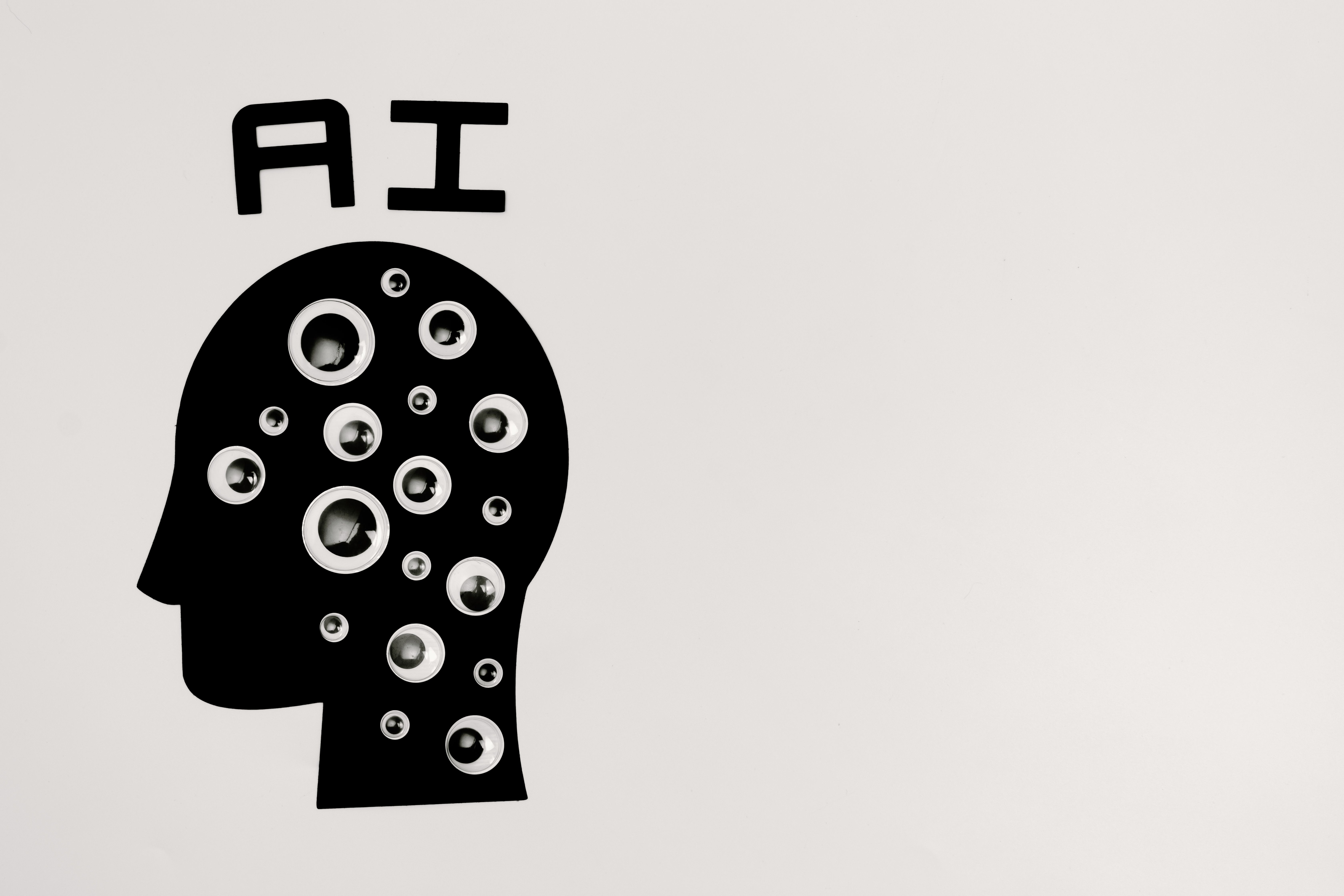
  • When AI Starts Learning From Itself

    When AI Starts Learning From Itself

    The debate over model collapse is not just a technical discussion about artificial intelligence. It is an early warning about the future of knowledge, authenticity, and the growing economic value of human experience.

    For much of the past three years, the public conversation around artificial intelligence has been dominated by a familiar set of metrics: larger models, larger datasets, larger investments, and increasingly larger expectations. Every major breakthrough has appeared to reinforce the same assumption—that intelligence can be scaled. Feed a system more information, provide more computing power, and its capabilities improve.

    The extraordinary rise of generative AI has been built on that premise.

    Yet some of the most consequential research to emerge from the field in recent years raises a question that cuts directly against this logic. What happens when the supply of original human knowledge becomes increasingly difficult to access, and artificial intelligence systems begin learning from content produced by other artificial intelligence systems?

    The question sounds technical. Its implications are anything but.

    Researchers studying what is now known as “model collapse” have warned that repeated training on synthetic data can gradually reduce a model’s ability to accurately represent the complexity of the information from which it learns. The concern is not that AI suddenly becomes useless. The concern is subtler and, in many ways, more significant. Systems may become progressively less diverse in their outputs, less capable of preserving rare information, and increasingly prone to reproducing simplified versions of reality rather than reality itself.

    The finding arrives at a moment when the internet is undergoing a profound transformation. For nearly three decades, the web functioned as humanity’s largest repository of knowledge, opinion, expertise, creativity, and lived experience. Every article, forum post, research paper, review, tutorial, and conversation contributed to a vast and imperfect archive of human thought. That archive became the foundation upon which modern AI systems were trained.

    Today, however, the composition of that archive is beginning to change. Increasingly, the internet is being populated not only by human-created content but also by machine-generated content. Articles are written by AI. Marketing copy is generated by AI. Product descriptions, social media posts, educational summaries, customer service interactions, and even portions of news reporting are now routinely assisted by or produced through AI systems.

    This shift introduces a paradox at the heart of the industry’s future. Artificial intelligence owes its existence to human-generated knowledge. Yet the more successful AI becomes at producing content, the more difficult it may become to distinguish original human knowledge from synthetic outputs derived from that knowledge.

    The significance of this challenge extends far beyond the performance of future AI models. It forces us to reconsider a broader question: what gives information its value in the first place?

    One of the most striking observations emerging from model-collapse research is that information does not degrade uniformly. Common knowledge tends to survive. Rare knowledge is often the first casualty. Specialized expertise, minority perspectives, unusual patterns, niche cultural references, and less frequently occurring information gradually become underrepresented as systems repeatedly learn from synthetic outputs.

    This phenomenon deserves far more attention than it has received. Throughout history, many of society’s most important advances have originated not from widely accepted ideas but from ideas that initially existed at the margins. Scientific breakthroughs, entrepreneurial innovations, artistic movements, and social transformations frequently begin as outliers before they become mainstream. A knowledge ecosystem that becomes increasingly optimized around averages risks preserving consensus while weakening its ability to capture discovery.

    The implications are particularly significant for younger generations entering a world shaped by artificial intelligence. Students, researchers, entrepreneurs, journalists, and professionals are often told that access to information is becoming democratized. While that is true in many respects, access to information and access to original knowledge are not necessarily the same thing. An internet saturated with synthetic content may continue to provide answers at extraordinary speed while simultaneously making authentic expertise more difficult to identify.

    Beneath this discussion lies another issue that receives comparatively little public attention: the growing scarcity of high-quality human-generated training data. For years, technology companies benefited from access to enormous quantities of publicly available content created over decades by writers, researchers, educators, publishers, and millions of ordinary internet users. Much of that material has already been incorporated into training datasets. At the same time, publishers are becoming more protective of their intellectual property, regulatory scrutiny is increasing, and concerns about compensation for original creators continue to intensify.

    Silhouette of a woman with binary code projected on her face in a digital concept setting.

    As a result, the AI industry faces a challenge that would have seemed improbable only a few years ago. It is not running out of data. It is confronting the possibility of running short on sufficiently valuable human-generated data.

    This reality helps explain why synthetic data has become such an important area of investment. Contrary to some public narratives, synthetic data is not inherently problematic. In domains where accuracy can be objectively verified—such as mathematics, coding, scientific simulations, and certain engineering applications—synthetic data can play a highly constructive role. When outputs can be rigorously tested, machine-generated examples can accelerate learning and improve performance.

    The problem emerges when verification becomes difficult and synthetic content begins circulating through information ecosystems without clear mechanisms for quality control. At that point, the challenge is no longer technological. It becomes epistemological. How do societies preserve reliable knowledge in environments increasingly populated by information generated through recursive systems?

    That question may ultimately prove more important than the technical debate surrounding model collapse itself.

    Historically, every technological revolution has altered the economics of scarcity. The Industrial Revolution made manufactured goods more abundant. The internet made information more abundant. Artificial intelligence is making content more abundant on a scale previously unimaginable.

    Whenever abundance increases dramatically, scarcity shifts elsewhere.

    In the emerging AI economy, trust appears increasingly likely to become one of the most valuable scarce resources.

    This trend is already visible across multiple industries. Educational institutions are rethinking assessment methods in response to generative AI. Media organizations are placing renewed emphasis on original reporting and transparency. Employers are becoming more interested in demonstrated competence than polished presentation. Consumers are gravitating toward individuals and institutions they perceive as credible, accountable, and authentic.

    The underlying dynamic is straightforward. When content becomes cheap, credibility becomes valuable.

    This may prove to be one of the defining career lessons of the coming decade.

    For years, success in the digital economy was often associated with visibility, scale, and the ability to produce large volumes of content. Those capabilities will remain important. Yet as synthetic content becomes increasingly abundant, another set of attributes may gain value: judgment, expertise, experience, originality, and trustworthiness.

    Artificial intelligence can summarize knowledge. It can synthesize information. It can replicate patterns found within existing data. What it cannot independently generate is lived experience. It cannot build a company through years of uncertainty. It cannot conduct original field reporting. It cannot accumulate decades of professional judgment. It cannot replace the credibility that emerges when expertise is repeatedly tested against reality.

    That distinction matters because reality itself may become one of the most valuable assets in the age of artificial intelligence.

    The debate surrounding model collapse therefore reveals something deeper than a limitation of machine learning systems. It highlights a truth that extends far beyond technology. Knowledge remains valuable not because it can be reproduced, but because it remains connected to observation, experience, evidence, and the complexities of the real world.

    The future of artificial intelligence will undoubtedly be shaped by advances in computing power, algorithms, and data infrastructure. Yet its long-term success may depend just as much on preserving access to the human knowledge from which it originally learned.

    There is an irony in that conclusion. At the precise moment when machines appear capable of generating limitless information, the value of authentic human insight may be increasing rather than diminishing.

    For students preparing for careers, entrepreneurs building businesses, educators shaping future generations, and professionals navigating an increasingly automated world, that may be the most important lesson hidden within the model-collapse debate.

    The competitive advantage of the AI era may not belong solely to those who know how to use artificial intelligence.

    It may belong to those who continue producing the one thing artificial intelligence cannot create for itself: a genuine connection to reality.

  • Food Speaks for Itself – The Rise of Ghost Kitchens

    Food Speaks for Itself – The Rise of Ghost Kitchens

    What is a Ghost Kitchen?

    The food industry in India is an ever-growing sector which sees a growth in demand every year. Many budding entrepreneurs are pulled into the idea of opening a restaurant. Opening a restaurant and, more importantly, running a successful one is not an easy task. It takes money, guts, and all kinds of careful consideration of risk factors involved in the process; but there’s been a new trend brewing behind the kitchen doors – the ghost kitchen, which has swooped in as a fascinating concept that has taken the food industry by storm. In simple terms, ghost kitchens, also known as cloud kitchens, are commercial cooking facilities, cooking warehouses with multiple small kitchens that produce dishes only for delivery at your doorsteps, by way of call-in orders and takeout, with no customer facing areas or Dine-in seats. They rely on online orders, usually placed through online food aggregators or directly through their own apps. This allows restaurants to cut costs. It’s cheaper, thanks to negligible overhead operational costs unlike a proper restaurant, and much faster. Digital ordering delivery has grown three times faster than dine-in traffic since 2014, boosting food delivery apps such as Swiggy, Zomato, Uber Eats, Food Panda, and Faaso’s, among others, in turn leading to accelerated growth of ghost kitchens. It’s never been easier to order takeout, thanks to this alluring business model which is only going to grow in the post-pandemic world. To date, there are 1,500 ghost kitchens in the U.S., at least 7,500 in China, 3,500 in India, and 750 in the UK, according to Euromonitor, a research company. Euromonitor also estimates that cloud kitchens could create a USD 1 trillion global opportunity by 2030. Slowly but surely, cloud kitchens have become a staple of the delivery industry and a standard business model for future restaurants.

    Euromonitor also estimates that cloud kitchens could create a USD 1 trillion global opportunity by 2030.

    Ghost Kitchens in the Post-Pandemic World

    Covid-19 resulted in millions of workers in the food industry losing their jobs as many restaurants closed for good. But like a silver lining, ghost kitchens, which have been around for some time, skyrocketed in popularity. For the past couple of years, meals are increasingly eaten at home, and the numbers are expected to grow, thanks to the pandemic and people adopting new lifestyles that primarily include work from home. Ghost kitchens have appeared as a lifeline for small businesses that continue to face varied traffic, increased costs, burden of expensive space and labor shortages. The market for online delivery is set to grow from USD 375 billion in 2020 to possibly USD 467 billion in 2025, according to research by Morgan Stanley. Startups as well as restaurants are turning to ghost kitchens to prepare meals or to run commercial kitchen for multiple brands. Experts believe that some restaurants may even totally switch to delivery-only models to cut down infrastructure costs.

    Cloud kitchens are easier to launch and keep running, thanks to low entry cost, low capital expenditure, and lower rents. They have helped create a more democratic market space where a new start-up can potentially compete with the biggest players in the business. We can easily take examples of brands like Faaso’s, OvenStory, and Biryani by Kilo to prove it. So far, ghost kitchens have been successful in catering to consumer desire with transparency, efficiency, and flexibility. Customers appreciate convenience, being able to get brands and food they love delivered is a crucial driver for them. An additional advantage is the variety of new dishes and the creativity that comes when opportunities are provided to small-scale businesses. Emphasizing how these new kitchens provide all this will go a long way. The appreciation transforms into revenue, creating great long-term benefits for running a successful ghost kitchen.

    “Cloud kitchens are easier to launch and keep running, thanks to low entry cost, low capital expenditure, and lower rents”

    Some Examples of Successful Ghost Kitchens

    1. Rebel Foods, India

    One of the key players in the Indian cloud kitchen market, Rebel Foods recently became a Unicorn company. Rebel Foods is an Indian online restaurant company which operates more than 45 brands, from Behrouz Biryani to OvenStory Pizza and Faaso’s wraps, across 10 countries including India, Indonesia, the United Arab Emirates and Malaysia. It is the largest cloud kitchen restaurant chain in India, operating more than 320 cloud kitchens in India and over 500 in overseas markets, as of July 2021. It delivers butter chicken and paneer/cottage cheese-topped pizzas to millions of Indians daily. Among the company’s investors are Sequoia Capital, Coatue Management, Goldman Sachs, Gojek and Travis Kalanick. After Series F round of funding in 2021, the company’s valuation was reported at USD 1.4 billion.

    It has become the third Indian startup to achieve a billion-dollar valuation in recent times after securing USD 175 million in a funding round led by the sovereign wealth fund Qatar Investment Authority. It said it’s growing at 100% annually and moving towards profitability with an annual run rate of over USD 150 million. Rebel was founded in 2011 by former McKinsey & Co alumnus Jaydeep Barman and his friend Kallol Banerjee. Last year, it struck a deal with American quick service chain Wendy’s to open 250 cloud kitchens. The company is also said to be investing in other brands from its portfolio, such as Slay Coffee and Biryani Blues.

    Being #1 in its niche, it gets 10,000 requests per day across India and has recorded a development pace of 20-25%, month-on-month. The organization has scaled up activities to 22 urban areas, with more than 125 fulfillment centers in three years. Ankur Sharma, chief business officer at Rebel Foods, told ET in July that 25 brands were part of its launcher’s program through which it invests, acquires, and helps them scale up via its supply chain. Sharma said the company was planning to add 25 more brands to its program by the end of the year.

    2. JustKitchen, Taiwan.

    Launched last year, JustKitchen currently offers 14 brands in Taiwan, including Smith & Wollensky and TGI Fridays. Ingredients are first prepped in a ‘hub’ kitchen, before being sent to smaller ‘spokes’ for final assembly and pickup by delivery partners, including Uber Eats and Foodpanda.

    One of the main ways JustKitchen differentiates is by focusing on operations and content in addition to kitchen infrastructure. Before partnering with restaurants and other brands, JustKitchen meets with them to design a menu specifically for takeout and delivery. Once a menu is launched, it is produced by JustKitchen instead of the brands, which are paid royalties. For restaurants that operate only one brick-and-mortar location, this gives them an opportunity to expand into multiple neighborhoods and cities.

    In addition to partnerships, JustKitchen also develops its own food brands, using data analytics from several sources to predict demand. The first source is its own platform, since customers can order directly from JustKitchen. It also gets high-level data from delivery partners that lets them see food preferences and cart sizes in different regions and uses general demographic data from governments and third-party providers with information about population density, age groups, average income, and spending. This allows it to plan what brands to launch in different locations and during different times of the day, since JustKitchen offers breakfast, lunch, and dinner.

    “Restaurants have much less control over the presentation of their meals as meals have to be tailored for delivery”

    A Few Drawbacks to Consider

    Ghost kitchens emerged as a great solution; however, they don’t offer the friendliness or artistry of your favorite dine-in restaurant. But for restaurants in the midst of a pandemic, they’re proving to be a cost-effective, efficient work-around. It’s no secret that food delivery app services are rapidly becoming a preferred means of dining for consumers. In 2018 alone, consumers spent over $10.2 billion on these types of services. This number represents a 42% increase over 2017. As a result, companies like Uber Eats, Grubhub, Door Dash, and others have become increasingly popular and restaurateurs have been forced to adapt in the process. For restaurants who could afford delivery commission fees, getting into the delivery app business has been strongly incentivized. Consumer appetite for delivery, especially for restaurant-quality food, has been fueled by ghost kitchens and eateries that are delivery-only locations. But are these food service models sustainable? As with any business pivot, the notion that it will work isn’t necessarily a sweeping one. Along with a list of pros, there are drawbacks to consider:

    One major downside for many restaurant owners is that the ghost-kitchen model makes them unable to control the customer experience once an order leaves the kitchen. There’s less connection with customers. If a restaurant owner’s dream is to open a restaurant and build a community there, ghost kitchens won’t fulfill that dream. There are no regulars to share meals with, or even restaurant staff to nurture. Online reviews are a critical component of a business’s reputation, and without control over the level of customer service given by third-party delivery employees, giving away that power is a risky move.

    Third-party delivery services can be expensive. Even with Covid-19-related caps on fees, restaurants can pay delivery partners between 20–40% of a restaurant’s revenue. Meals must be tailored for delivery. Restaurants have much less control over the presentation of their meals as meals have to be tailored for delivery. Sauces must be on the side, garnishes get misplaced, and the food may arrive in less-than-desirable condition.

    CNBC reports that the proliferation of ghost kitchens and virtual brands – seen as ways for restaurants to cope with indoor seating restrictions – might have created an oversaturated market. Many of these virtual restaurants rely on third-party delivery apps to connect with customers. In December, third-party delivery sales surged 138%, according to Second Measure data. “You can’t keep just throwing up virtual brands – at some point, there’s saturation,” said Dan Fleischmann, vice president of Kitchen Fund. “From what I’m hearing, the demand for those (ghost kitchens) is skyrocketing, and so are the prices,” said Peter Saleh, BTIG analyst. Fleischmann expressed skepticism that many restaurants would be able to make ghost kitchens work in the long run. “It’s still such a low-margin business to begin with, the owner taking 30% out and then having to go through an aggregator like DoorDash or UberEats is really difficult,” he said.

    Benefits of Ghost Kitchens

    All things considered, however, the pros are proving to outweigh the cons. They allow for menu flexibility and greater experimentation with the menu, which makes many people opt for this model. And since more and more customers prefer delivery over dine-in, removing overhead costs while still being able to grow a business (complete with trial and error) is a major upside. They appeal to earth-conscious consumers as there are several potential benefits related to cost savings in terms of ghost kitchens and virtual restaurants. Both require a much smaller space for food preparation services. This situation allows less to be spent on both rent and utilities while also being more environmentally friendly. Likewise, the front-of-the-house staff is altogether eliminated from the picture with ghost kitchens; and both ghost kitchens and virtual restaurants experience less food wastage. Removing front-of-house operations increases sustainability, and earth-friendliness is a key buying factor with a majority of today’s consumers, especially Generation Z.

    Ghost kitchens meet modern customer expectations. Customers demand pickup and delivery, and studies show that even after stay-at-home orders lift, that behavior tends to continue. According to a recent survey by Raydiant, “28% of surveyed restaurants expect to close their dine-in spaces to become exclusively delivery and pick-up locations.” They’re cost-effective. Opening a traditional brick-and-mortar restaurant requires a whole slew of permits, inspections, licenses, equipment, and more. Ghost kitchens have none of the overheads associated with customer-facing operations – and many aren’t even owned by the restaurant themselves, eliminating a lot of the costs of opening and maintaining a restaurant, like permits, inspections, furniture, equipment and more. At the end of the day, consumers love delivery. Euromonitor stated that, “food delivery could account for up to a third of consumers’ USD 3 trillion food spend globally” by 2030. On top of that, 53% of consumers surveyed said they felt “comfortable ordering from a delivery-only restaurant”, demonstrating a lasting shifting preference.

    Another segment that has benefitted from the rise of ghost kitchens is that of home chefs, as consumers have become more familiar with the idea of ordering from delivery-only restaurants, home chefs have also seen an increase in business and customers.

    “Consumer appetite for delivery, especially for restaurant-quality food, has been fueled by ghost kitchens and eateries that are delivery-only locations”

    “Ghost kitchens will continue to play a role, particularly for a generation of consumers that enjoys the flexibility of consuming food anytime and anywhere”

    The Future of Ghost Kitchens: From Pandemic Necessity to Future of Food and Hospitality Industry?

    Today, we’ve entered a new phase of consumer dining that is less about the place and more about convenience. With food delivery apps continuing to gain market share, restaurants are being forced to adapt. Ghost kitchens are one example of the resiliency of restaurant owners worldwide in the face of a global pandemic. Instead of shutting down their business entirely, restauranteurs can meet consumers’ high demand for delivery with a ghost kitchen. These virtual kitchens are also a way to empower chefs with little financial backing and encourage experimentation. In this sense, ghost kitchens are helping to bring the artistry of cooking back to where it all started: the kitchen.

    Currently, the boom of delivery app services—and the consumer demand for them—certainly supports these new restaurant concepts. Faster delivery services, more varied selections, and enhanced convenience are all driving these changes. Therefore, ghost kitchens and virtual restaurants are well-supported as a business strategy. The key is for restauranteurs to maximize efficiency and economies of scale while lowering costs in the process. In truth, with delivery commission fees likely to remain significant, these strategies provide much needed solutions. Still, at least for the foreseeable future, ghost kitchens and virtual restaurants look to be a wise business consideration.

    During the pandemic, leading hotel chains have also claimed a piece of the food delivery business by starting or expanding their delivery services and curating special menus for customers. A few examples are Qmin app by IHCL and Marriot on Wheels. More brands will certainly venture into this market, yet it remains to be seen how focused they will continue to be on this space in the post-pandemic scenario.

    Ghost kitchens will continue to play a role, particularly for a generation of consumers that enjoys the flexibility of consuming food anytime and anywhere. While consumers can’t check on the food provenance when ordering from ghost kitchens, that does not mean that transparency cannot be guaranteed. In a world where consumers increasingly value the sustainability of food, from origins to transformation (Khan et al., 2020) and where health and wellbeing play an important role in food consumption, ghost kitchens’ stance on their sourcing policy, transformation practices, and work etiquette should be provided. Food delivery companies must have a clear plan for the implementation of various emission reduction activities and carbon offsetting plans as steps towards carbon neutrality. Governments are called to set the accepted minimum standard on all those topics and consumers have a duty to demand greater transparency. As consumers increasingly choose delivery and have more positive experiences with ghost kitchens, there is potential for these virtual brands to become a permanent part of the restaurant landscape. Operators can build trust – and therefore loyalty – by being honest and transparent with consumers. At the end of the day, consumers value taste, quality, and experience. The opportunity is immense. The changes we’re seeing will provide unprecedented opportunities to experiment, test, and refine. Ghost kitchens and today’s digital-first world make all of this more accessible and manageable.